

Saudi Logistics & Freight Insights
Practical guides, regulatory compliance updates, and freight intelligence from our operational desk in Saudi Arabia.
2026 Best Chemical Drum and ISO Tank Shipping Options?
Table of Contents
- Chemical Drum and ISO Tank Shipping: Key Differences and Applications
- How to Select the Right Container for Chemical Transport
- Packaging, Labeling, and Documentation Requirements
- Choosing Safe and Efficient Shipping Routes and Providers
- Cost, Compliance, and Sustainability Factors in 2026
- FAQS
- Conclusion
- Related Posts
The 2026 Best Chemical Drum and ISO Tank Shipping Options guide examines how safer packaging choices can reduce damage, delays, and unnecessary handling. Chemical drums ISO tank shipping now involves more than selecting the lowest freight rate. Product viscosity, temperature sensitivity, loading volume, route length, and port infrastructure all influence the right solution.
Richard Brough, a recognized ISO tank industry specialist, has often emphasized that safety must remain the first consideration in every tank journey. That principle still matters in 2026. A sealed ISO tank may suit large, repeat shipments, while certified chemical drums can offer greater flexibility for smaller consignments. The correct choice depends on the material and the supply chain.
Details matter.
A practical review should compare drum material, closure quality, pallet stability, tank inspection status, cleaning records, and emergency response procedures. It should also check whether carriers and facilities follow applicable packaging, labeling, documentation, and transport requirements. A strong provider can explain these controls clearly, without hiding behind vague promises.
Experience also exposes uncomfortable gaps. The cheapest option may create higher costs through transloading, storage, leakage risks, or missed delivery windows. Even a well-designed plan can fail when weather changes, paperwork is incomplete, or local handling equipment is unavailable. That is why this guide compares chemical drums and ISO tanks through real operating conditions, not marketing language. Some recommendations may require revision as regulations, equipment, and customer expectations change.
Chemical Drum and ISO Tank Shipping: Key Differences and Applications
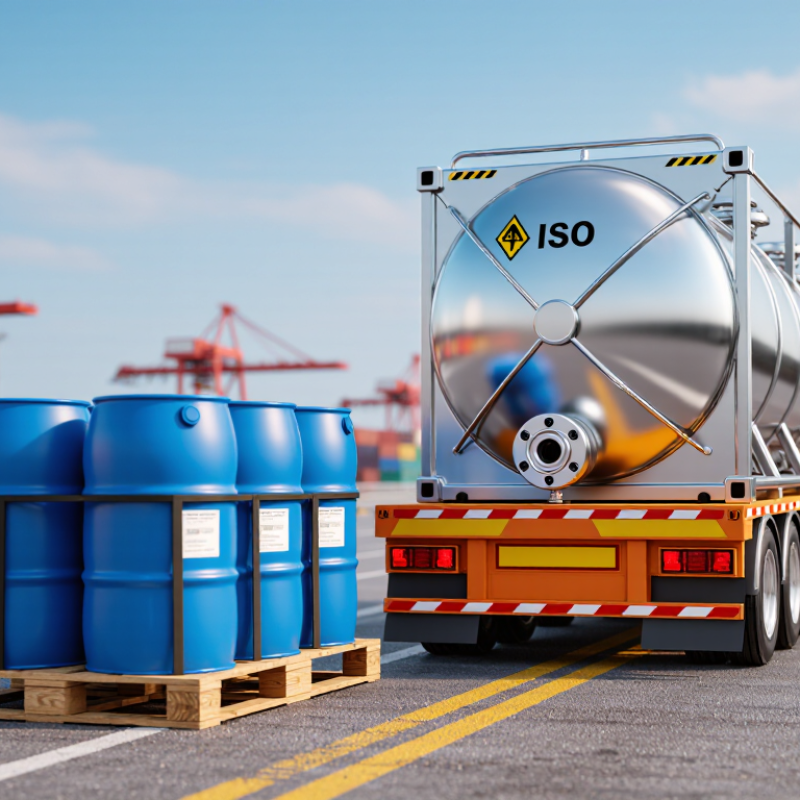
Chemical drums suit smaller volumes, varied products, and deliveries to facilities without bulk-handling equipment. A typical steel or plastic drum holds about 200 liters. Workers can move it with a pallet jack or forklift. This flexibility helps laboratories, maintenance sites, and smaller manufacturers manage changing demand. However, every drum needs correct closure, labeling, cushioning, and inspection. A damaged rim can create a serious leak during loading.
ISO tanks serve a different purpose. They carry large liquid volumes in a reusable, frame-mounted tank, often around 20,000 to 26,000 liters. Their standardized dimensions support transfer between road, rail, and sea transport. Dedicated valves can reduce manual handling and product exposure. ISO tanks work well for repeated bulk shipments, stable supply routes, and facilities with pumps or unloading stations. They require stronger planning, including tank compatibility, cleaning records, pressure controls, and unloading procedures.
The choice depends on volume, viscosity, hazard classification, delivery frequency, and site equipment. Drums may reduce commitment for irregular orders. ISO tanks can lower packaging waste and handling time at higher volumes. They are not automatically the better option. A tank may be inefficient on a short route or at a site without suitable connections. In practice, shipment records, safety data sheets, route checks, and trained personnel matter as much as container type. Small operational details often decide whether a shipment arrives safely.
How to Select the Right Container for Chemical Transport
Choosing between chemical drums and an ISO tank starts with the product, not the freight rate. Drums suit smaller volumes, frequent deliveries, and formulas needing separate batch control. A 200-liter drum is easier to sample and replace, but it creates more handling points. Leaks can also become harder to detect across many packages.
ISO tanks are more efficient for bulk liquids. A standard 20-foot tank often carries about 20,000 to 26,000 liters, depending on density and design. ITCO’s 2024 Global Tank Container Fleet Survey recorded approximately 801,800 tank containers worldwide. That growth reflects demand for reusable bulk equipment, but availability does not guarantee suitability. Check tank material, lining, pressure rating, heating requirements, and cleaning history. Small details matter.
Product compatibility should guide every decision. Review the safety data sheet, viscosity, flash point, vapor pressure, and temperature limits with a qualified dangerous-goods specialist. ISO 1496-3 supports tank-container design, while the UN Model Regulations guide packaging and transport controls. Local rules still apply. They can differ by route.
The practical test is simple.
Compare total cost per delivered kilogram, not container price alone. Include cleaning, repositioning, unloading equipment, insurance, and demurrage. A drum shipment may appear cheaper. Sometimes it is not. Industry transport reports often emphasize efficiency, yet real operations still suffer from poor pallet stability and incomplete residue records. I would also allow extra time for compatibility verification; rushing this step is an avoidable mistake.
Packaging, Labeling, and Documentation Requirements
In 2026, chemical shippers will choose between drums and ISO tanks based on volume, viscosity, and handling risk. Drums suit smaller consignments and frequent delivery points. ISO tanks support bulk movements, fewer transfers, and stronger inventory control. UNCTAD’s Review of Maritime Transport 2024 states that ships carry over 80% of global merchandise trade by volume. That scale makes accurate cargo information essential.
Packaging must match the chemical’s properties and transport mode. Use tested drums with compatible closures, cushioning, and leak protection. ISO tanks require valid inspection certificates, secure valves, and documented cleanliness. Labels should show the UN number, proper shipping name, hazard class, packing group, and handling marks. Orientation arrows may apply. Marine pollutant marks may also apply.
Documentation should include the safety data sheet, dangerous goods declaration, commercial invoice, packing list, and customs records. Add the tank certificate and cleaning certificate when relevant. The IMO’s Fourth Greenhouse Gas Study reports that shipping produced about 1,056 million tonnes of CO2 in 2018, representing 2.89% of global anthropogenic emissions. Better consolidation can reduce handling and transport impacts, but it must not override compatibility checks. Requirements differ under the IMDG Code, ADR, and local rules. A checklist can still fail when one outdated SDS reaches the driver. Human review remains necessary, and this is where many shipping plans become less perfect than expected.
Choosing Safe and Efficient Shipping Routes and Providers
In 2026, chemical drum and ISO tank shipping depends on route design, not only freight price. UNCTAD’s Review of Maritime Transport 2024 reported that maritime shipping carries over 80% of global trade by volume. Port selection therefore matters. A shorter sea route can still fail when inland transfers create delays.
ISO tanks suit repeat bulk movements and controlled liquid handling. ITCO’s 2024 Global Tank Container Fleet Survey recorded approximately 801,800 tank containers worldwide. This capacity supports flexible repositioning, but availability differs by corridor. Drums may work better for smaller consignments or mixed chemical grades. Providers should confirm tank compatibility, inspection dates, cleaning records, and temperature controls.
The safest route usually combines compliant road, rail, and sea services. Check SDS details, UN classification, packaging approvals, and current IMDG, ADR, or RID requirements. Ask providers for incident procedures, GPS visibility, port experience, and documented handover controls. The World Bank’s Logistics Performance Index 2023 shows major differences in customs, infrastructure, and shipment reliability between markets. A cheap provider may hide weak coordination. I would not choose solely on transit time.
Small details matter. A leaking drum pallet can delay an entire container. An unplanned transshipment can expose temperature-sensitive cargo to risk. Perfect planning is unrealistic. Route reviews should remain open to correction.
2026 Best Chemical Drum and ISO Tank Shipping Options
Indicative planning comparison of common freight routes for packaged chemicals and ISO tanks. Lower values generally indicate shorter transit or lower transport emissions.
Ocean freight usually offers the lowest emissions per tonne-kilometre but has longer transit times. Road transport is faster for regional deliveries, while rail and multimodal routes can balance efficiency, capacity, and emissions. Actual results depend on distance, dangerous-goods classification, border procedures, tank specifications, port congestion, and seasonal capacity. Emission values are indicative planning benchmarks based on widely used freight-emission conversion factors; they are not carrier quotations.
Cost, Compliance, and Sustainability Factors in 2026
In 2026, chemical shippers will compare more than freight rates. A 200-liter drum suits smaller batches, but it needs more handling at warehouses and terminals. A 1,000-liter ISO tank can reduce packaging per tonne and improve loading efficiency. However, cleaning, repositioning, rental, and demurrage may erase those savings. UNCTAD’s Review of Maritime Transport 2024 recorded about 12.3 billion tonnes of seaborne trade in 2023. Congested routes can therefore change a quotation quickly. The cheapest option is not always the lowest-cost option.
Compliance starts before booking. Confirm the substance classification, packing group, tank instruction, inspection date, labels, and safety data sheet. IMDG Code requirements apply during sea transport, while ADR controls relevant road movements in Europe. A damaged valve or unclear residue record can delay a container for days. The International Maritime Organization’s 2023 GHG Strategy targets a 20–30% emissions reduction by 2030, compared with 2008 levels. This makes reusable tanks attractive, but cleaning energy and empty repositioning deserve measurement. I still see sustainability claims based on packaging weight alone. That is incomplete.
Tips: Build a lane-level comparison using freight, handling, cleaning, insurance, and carbon data. Ask for tank history and inspection evidence. Test one shipment before changing the full packaging system. For short routes, drums may remain practical. For regular bulk movements, ISO tanks often offer stronger cost and waste performance. Recheck the model quarterly; fuel surcharges and port delays can quickly change the answer.
FAQS
Choose drums for smaller batches, frequent deliveries, or separate batch control. A 200-liter drum is easier to sample and replace. But many drums create more handling points and hidden leak risks.
An ISO tank suits regular bulk movements and fewer transfers. A standard 20-foot tank may carry about 20,000 to 26,000 liters. Capacity depends on density, design, and loading limits.
Review viscosity, flash point, vapor pressure, temperature limits, and compatibility. Check the safety data sheet with a qualified transport specialist. Small material differences can cause major operational problems.
Confirm the tank material, lining, pressure rating, valves, and heating needs. Check current inspection certificates and cleaning records. Do not assume available equipment is suitable.
Labels may include the identification number, shipping name, hazard class, and packing group. Handling marks and orientation arrows may also apply. Prepare the safety data sheet, transport declaration, invoice, packing list, and customs records. For tanks, include inspection and cleaning certificates when required.
Compare total cost per delivered kilogram, not the container price alone. Include freight, handling, cleaning, repositioning, insurance, unloading equipment, and storage delays. A cheaper drum shipment may not remain cheaper. I would test one route before changing the entire system.
Reusable tanks may reduce packaging per tonne and improve loading efficiency. However, cleaning energy and empty repositioning can reduce those benefits. Measure transport, cleaning, and return movements together. Packaging weight alone is incomplete.
Use a route-specific checklist and review every document manually. Confirm classification, labels, inspection dates, residue records, and loading instructions. Rules differ by transport mode and location. One outdated safety data sheet can delay a shipment for days.
Conclusion
In 2026, Chemical drums ISO tank shipping will remain essential for moving liquids, powders, and regulated industrial materials safely and efficiently. Chemical drums are flexible for smaller volumes, diverse product types, and distribution to multiple destinations, while ISO tanks are better suited to large-volume liquid transport, repeated use, and intermodal shipping. Selecting the right container depends on chemical compatibility, density, viscosity, volume, temperature sensitivity, handling conditions, and whether the cargo requires specialized pressure or insulation features.
A reliable shipping plan should include suitable packaging, accurate hazard labels, secure closures, and complete documentation, including product specifications and transport instructions. Shippers should compare routes and providers based on safety records, equipment quality, emergency support, transit reliability, and handling capabilities. In addition to freight rates, total costs may include cleaning, storage, loading, insurance, and compliance checks. Sustainability will also influence decisions in 2026, with reusable containers, efficient routing, reduced packaging waste, and lower-emission transport options helping organizations balance cost control, regulatory responsibility, and environmental performance.

Blog Tags: