

Importing healthcare technology into the GCC—specifically Saudi Arabia—demands far more than conventional freight forwarding. Up to 68% of medical device shipment delays at Saudi entry ports stem from documentation mismatches between the Saudi Food and Drug Authority (SFDA) Medical Device Marketing Authorization (MDMA), GHAD electronic registrations, and FASAH customs portal filings. At Nuraak Gulf Company, our dedicated medical compliance division operates with direct, in-house licensed customs brokers stationed across all seven Kingdom gateways. We bridge the gap between global manufacturing standards (ISO 13485) and local Saudi clearance execution, ensuring zero-demurrage releases for temperature-sensitive reagents, diagnostic suites, and critical surgical consumables.
1. Critical Regulatory Framework for Medical Devices Customs Clearance
The global trade of medical devices is governed by strict sanitary, safety, and operational standards. When entering Saudi Arabia and the broader Gulf Cooperation Council (GCC) region, imported medical technology must pass through rigorous multi-agency regulatory checkposts before border release. Achieving seamless medical devices customs clearance requires a granular understanding of the underlying statutory frameworks:
The SFDA Medical Device Control System
In Saudi Arabia, the Saudi Food and Drug Authority (SFDA) enforces strict governance over medical devices and In-Vitro Diagnostic (IVD) devices under the Medical Devices Law (Decree No. M/54). Before any shipment leaves the origin port, two primary electronic clearances must be fully established:
- Global Harmonization Working Party (GHAD) Listing: Every establishment involved in the importation, distribution, or manufacturing of medical devices must hold an active SFDA Establishment License (MDEL) integrated within the GHAD database.
- Medical Device Marketing Authorization (MDMA): Required for Class IIa, IIb, III, and active implantable devices. Importers must demonstrate conformity with reference market approvals (such as US FDA 510(k)/PMA, EU MDR 2017/745 CE Marking, or Japanese PMDA) alongside technical dossier verification.
- SABER Electronic Platform Exemption/Integration: While general industrial goods pass exclusively through SABER certification, medical devices governed directly by SFDA regulations follow specialized clearance routes where SFDA MDMA certificates replace standard SABER Certificates of Conformity (CoC). Mislabelling medical devices under general HS codes on SABER leads to immediate customs impoundment.

Essential Document Checklist for SFDA Customs Entry
To prevent administrative holds at Jeddah Islamic Port, King Khalid International Airport (Riyadh), or King Abdulaziz Port (Dammam), your clearance documentation matrix must be fully synchronized:
- Original Commercial Invoice with itemized harmonized system (HS) codes and unit values.
- Clean Bill of Lading (B/L) or Air Waybill (AWB) matching MDMA applicant details.
- SFDA Import License / MDMA Release Certificate.
- Certificate of Origin issued by the Chamber of Commerce at the origin point.
- Batch Release / Certificate of Analysis (CoA) for IVD reagents and chemical consumables.
- Temperature Log Certificate for active or passive cold-chain shipments.
SFDA Device Classification & Customs Clearance Impact
Medical devices are categorized based on potential risk to the human body. Each risk classification dictates distinct clearance documentation, inspection intensity, and port handling protocols:
| SFDA Risk Class | Device Examples | Regulatory Requirement | Avg. Customs Inspection & Release Window |
|---|---|---|---|
| Class I (Low Risk) | Surgical scalpels, manual wheelchairs, hospital beds, bandages | SFDA MDEL Registration & Low-Risk Notification | 24 to 36 Hours (FASAH Direct Release) |
| Class IIa (Medium-Low) | Hypodermic needles, suction equipment, diagnostic X-ray film | Full MDMA Approval & Technical Dossier Verification | 36 to 48 Hours |
| Class IIb (Medium-High) | Infusion pumps, surgical lasers, hemodialysis machines | MDMA Authorization + Conformity Assessment Audit | 48 to 72 Hours (Sampling May Apply) |
| Class III & AIMD (High Risk) | Pacemakers, heart valves, bio-resorbable stents, artificial joints | Full SFDA MDMA + Site Inspection & Clinical Evaluation | 48 to 72 Hours (Fast-Tracked for Critical Supplies) |
2. Recommended Medical Device Logistics Solutions & Product Handling Protocols
Different categories of medical devices demand tailored freight forwarding, customs clearance, and inland transport modalities. Below are our specialized logistics recommendations categorized by healthcare product domain:
Heavy Diagnostic & Imaging Equipment
MRI scanners, CT systems, and linear accelerators require specialized project cargo handling. We utilize climate-controlled air-ride trailers, shock-sensing monitoring, and pre-cleared oversized lowbed transport to ensure sensitive calibration remains intact.
Temperature-Controlled IVDs & Biologics
Reagents, blood plasma products, and molecular testing kits require strict 2°C to 8°C or -20°C deep-freeze cold chains. Our active reefer fleets and bonded cold storage facilities at Dammam and Riyadh prevent temperature excursions during physical customs checks.
Surgical Instruments & Disposable Kits
High-volume, sterile surgical consumables demand high-frequency, consolidated air freight coupled with immediate FASAH automated release to keep hospital inventory systems fully stocked without safety buffer stockouts.
Need Immediate Customs Clearance for Medical Devices in Saudi Arabia?
Our licensed brokers pre-verify SFDA MDMA dossiers before your shipment departs origin port.
3. Future Procurement Trends in Global Medical Device Supply Chains (2026–2030)
The global medical device market is undergoing a structural paradigm shift. Driven by lessons from global supply chain disruptions, geopolitical shifts, and technological breakthroughs, international healthcare procurement directors are adopting progressive sourcing strategies:
Strategic Regional Warehousing & Nearshoring
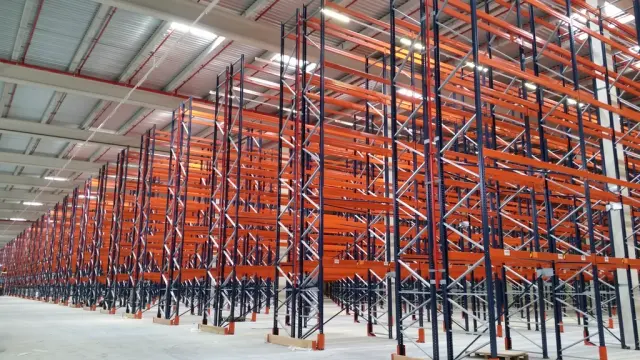
Healthcare conglomerates are transitioning away from pure "Just-In-Time" (JIT) manufacturing toward localized "Just-In-Case" (JIC) regional hubs. Importers in the Middle East are leveraging Saudi Arabia’s strategic geographical location—connecting Asia, Europe, and Africa—to build centralized reserve stock inside Saudi Special Integrated Logistics Zones (SILZ) and bonded warehouses.
By storing Class I and Class II devices in bonded facilities near King Khalid International Airport (Riyadh) or King Abdulaziz Port (Dammam), multinational medical manufacturers can execute customs clearance on demand as hospital purchase orders are issued, significantly reducing duty outlays and delivery lead times.
AI-Driven Automated Customs Document Pre-Validation
Procurement teams are rapidly deploying Generative AI and Optical Character Recognition (OCR) systems to audit commercial invoices, packing lists, and SFDA MDMA approval certificates prior to cargo booking. Intelligent compliance engines automatically check for discrepancies between shipping descriptions, product part numbers, and SFDA registration codes. Early adoption of automated pre-validation has proven to decrease customs paperwork rejections by over 82%.
Rise of Direct-to-Hospital (D2H) & Direct-to-Patient (D2P) Cold-Chain Channels
With the growth of personalized medicine, cell therapies, and home-care diagnostic kits, procurement models are bypassing multi-tier distributor storage. Logistics partners must now execute end-to-end temperature-validated delivery directly from airport ramp clearance straight to hospital pharmacy cold rooms or patient residential addresses under certified Good Distribution Practice (GDP) protocols.
4. Industry & Technological Development Trends in Healthcare Clearance
Customs authorities across the GCC are modernizing their port infrastructure through digital integration, smart customs barriers, and strict environmental guidelines:
Single-Window Customs Digitalization (FASAH & ZATCA Integration)
Saudi Arabia’s Zakat, Tax and Customs Authority (ZATCA), in partnership with FASAH, has integrated real-time API communication with the SFDA GHAD database. When a customs declaration is submitted electronically, the system automatically checks the declared HS code against SFDA MDMA databases. If an exact match is recognized, physical customs inspection holds are waived in favor of fast-track green-channel clearance.

Real-Time IoT Temperature & Shock Telematics
Modern customs inspection bays are increasingly outfitted with plug-and-play IoT tracking interfaces. Passive temperature monitoring is being replaced by active cellular/satellite data loggers that transmit internal package ambient conditions, humidity levels, light exposure (indicating unapproved package opening), and physical shock impacts straight to cloud storage during border clearance checks.
Unified GCC Medical Device Regulatory Harmonization
Efforts spearheaded by the GCC Health Council aim to streamline medical device approvals across Saudi Arabia, UAE, Kuwait, Qatar, Bahrain, and Oman. Standardized mutual recognition agreements for low-risk devices and unified cross-border road transit protocols (using TIR carnets and sealed bonded transport) allow smooth onward distribution throughout the Middle East once initial entry clearance is granted at a primary Saudi gateway.
5. Why Leading Healthcare Brands Trust Nuraak Gulf Company
At Nuraak Gulf Company, we recognize that medical devices customs clearance is not merely a administrative task—it is a critical, life-saving operational link. Based in Dammam with operational reach across every major trade corridor in Saudi Arabia and the GCC, our service offerings provide unmatched operational guarantees:
Single Point of Accountability
One named logistics coordinator manages your freight forwarding, SFDA clearance, and final delivery under one file.
24/7 Medical Operations Desk
Live operations monitoring for time-critical organ delivery kits, emergency surgical spares, and temperature-sensitive shipments.
Kingdom-Wide & Cross-Border Fleet
Direct overland transport from Saudi sea ports and airports to GCC destinations including UAE, Bahrain, Kuwait, Qatar, and Oman.
Medical Device Clearance FAQ
Crucial regulatory and operational answers for global procurement directors, compliance officers, and healthcare supply chain managers.
Have Specific Compliance Questions?
Speak directly with our SFDA clearance specialists for instant document verification.
What is the difference between SFDA MDMA approval and SABER certification for medical device imports?
SABER is the Saudi electronic portal used for general industrial and consumer goods compliance under SASO rules. However, medical devices fall under the direct jurisdiction of the Saudi Food and Drug Authority (SFDA). Medical products governed by SFDA require Medical Device Marketing Authorization (MDMA) and GHAD establishment licensing rather than standard SABER Certificates of Conformity. Declaring medical equipment under SABER using generic HS codes is illegal and results in customs seizure.
Can an overseas medical device manufacturer clear customs in Saudi Arabia without a local commercial entity?
No. The SFDA mandates that foreign manufacturers appoint an official Saudi Authorized Representative (AR) holding a valid SFDA license. The Authorized Representative acts on behalf of the manufacturer to submit MDMA applications, manage post-market vigilance, and authorize licensed Saudi importers to clear shipments through ZATCA customs via the FASAH portal. Nuraak Gulf works directly with your Saudi AR and licensed distributors to execute physical customs release.
How does Nuraak Gulf prevent temperature excursions during physical customs inspection for cold-chain IVD reagents?
During customs inspections at airports (e.g., KKIA Riyadh, JED Jeddah) and sea ports (Dammam, Jeddah Port), temperature-sensitive cargo is at risk if left on unconditioned tarmacs. Nuraak Gulf coordinates priority customs inspection slots, utilizes refrigerated container chassis (active reefers), and transfers sensitive diagnostic kits immediately to port side bonded cold storage rooms (2°C to 8°C or -20°C) while document inspection is finalized.
What happens if a medical device shipment arrives at a Saudi port with a minor mismatch on the commercial invoice?
If the invoice description or catalog part number does not exactly match the SFDA MDMA certificate, customs officials will place an administrative hold on the cargo. Nuraak Gulf avoids this by conducting a pre-clearance document audit prior to vessel departure. If minor errors occur, our in-house brokers submit immediate technical clarification letters to SFDA inspectors alongside manufacturer certificate of conformity cross-references to obtain conditional release.
What is the standard customs duty rate for medical devices imported into Saudi Arabia and the GCC?
Most essential medical devices, life-saving diagnostic equipment, and surgical instruments qualify for a 0% customs duty rate under the GCC Unified Customs Tariff, though standard 15% Value Added Tax (VAT) applies in Saudi Arabia upon entry. However, specific medical consumables or multi-use apparatus may carry a 5% duty depending on exact HS code classification. Our customs specialists provide exact HS code verification prior to shipment to ensure correct tax and duty assessment.
How long does medical devices customs clearance take once cargo arrives in Saudi Arabia?
When documents (SFDA MDMA, Commercial Invoice, Certificate of Origin, and Bill of Lading) are pre-cleared on the FASAH portal prior to vessel or aircraft arrival, standard air freight clearance takes 12 to 24 hours, while ocean freight container clearance takes 24 to 48 hours. Shipments subject to physical sampling or document queries may take 3 to 5 business days.