1. Technical Architectural Overview & Strategic Vessel Recommendation
Global automotive supply chains, mining concession developers, and industrial infrastructure contractors face unprecedented volatility when securing heavy wheeled space. Selecting the correct Ro-Ro vehicle vessel chartering model is no longer merely a freight rate negotiation—it is a critical exercise in naval architecture alignment, ramp load mathematics, and port-side discharge velocity.
Roll-on/Roll-off (Ro-Ro) vessel chartering involves leasing dedicated vessel capacity designed specifically for cargo that can be driven on and off the ship on its own wheels or using specialized tow units. Unlike Containerized (Lo-Lo) or Breakbulk ocean transport, Ro-Ro eliminates the requirement for quay cranes, drastically lowering risk profiles for high-value finished vehicles, rolling construction equipment, track-driven machinery, and un-towed static project cargo mounted on roll trailers (MAFI trailers).

1.1 Vessel Classifications and Deck Geometry Selection
When executing a charter agreement, procurement officers must evaluate vessel hull designs and internal deck configurations against their specific fleet profiles:
- Pure Car Carriers (PCC): Engineered with 10 to 13 lightweight decks optimized strictly for passenger vehicles (RT43 car capacity units). Ideal for mass OEM automotive shipments but restricted by fixed low ceiling heights (typically 1.65m to 2.10m).
- Pure Car and Truck Carriers (PCTC): Feature high-capacity hoistable decks that can be reconfigured via hydraulic winches to accommodate clear heights up to 5.2 meters and ramp load capacities ranging from 120 to 300 Metric Tons. This is the primary vessel class for mixed fleet chartering containing excavators, commercial buses, and heavy haulage units.
- Large Car and Truck Carriers (LCTC) & Very Large Car/Truck Carriers (VLCTC): Boasting capacities exceeding 7,500 to 9,500 CEU (Car Equivalent Units), these vessels incorporate dual-stern ramps and quarter ramps designed for extreme heavy-lift static breakbulk rolled on 100-ton heavy-duty trailers.
- ConRo Vessels: Hybrid ocean vessels combining lower deck Ro-Ro car decks with an upper deck container cell structure, ideal for project sites requiring simultaneous shipment of rolling machinery and containerized spare parts.
| Vessel Classification | CEU Range | Max Ramp Capacity (MT) | Max Deck Height (m) | Optimal Cargo Profile |
|---|---|---|---|---|
| Standard PCC | 3,500 – 5,000 | 50 – 80 MT | 1.8m – 2.1m | Sedans, SUVs, Light Duty Vans |
| Modern PCTC | 6,000 – 7,500 | 150 – 220 MT | 3.8m – 5.2m | Buses, Heavy Excavators, EV Fleets |
| LCTC / VLCTC | 7,500 – 9,500+ | 250 – 350 MT | 5.2m – 6.5m | Mining Equipment, Project Cargo on MAFI |
| ConRo Hybrid | 1,500 – 3,000 | 120 – 200 MT | 4.5m – 5.0m | Wheeled Machinery + TEU Containers |
1.2 Contractual Chartering Frameworks: Bareboat vs. Time vs. Voyage vs. COA
Navigating charter party agreements requires selecting the optimal legal and financial matrix under BIMCO (Baltic and International Maritime Council) standards:
- Voyage Charter: The charterer leases the vessel's cargo spaces for a single specific journey from origin (e.g., Shanghai, Bremerhaven, Yokohama) to destination ports (e.g., Dammam, Jeddah Islamic Port). Freight is calculated per unit, per RT (Revenue Ton), or as a lump-sum charter fee. The shipowner pays for fuel (bunkers), port charges, and crew fees.
- Time Charter: The buyer contracts the vessel for a fixed calendar duration (e.g., 6 months to 3 years). The charterer directs the commercial operation of the vessel, pays a fixed daily hire rate ($/day), and assumes direct financial responsibility for variable costs: marine fuel oils (VLSFO/MGO), canal transit fees (Suez Canal), and port dispatches.
- Contract of Affreightment (COA): Recommended for enterprise OEMs and infrastructure syndicates. The buyer does not charter a named vessel, but instead contracts a shipping line or operator to transport a specified volume of vehicles (e.g., 50,000 units over 24 months) across agreed sea routes at fixed schedule intervals and pre-negotiated freight brackets.
Procurement Director Recommendation
For project cargo loads exceeding 4,000 RT or mixed OEM vehicle fleets, a Spot Voyage Charter with Lump-Sum Terms under a modified BIMCO ROROTIME / GENCON framework offers maximum financial protection. Ensure that clauses explicitly define "Free In/Out Stowed" (FIOS) terms and establish clear laytime windows (e.g., 72 hours SHEX) to eliminate unexpected port congestion surcharges.
2. Future Procurement Trends in Global Vehicle Chartering
Procurement strategies in global ocean freight are undergoing structural transformations driven by environmental mandates, charter market consolidation, and artificial intelligence integration.
2.1 Green Chartering Clauses and Decarbonization Mandates
The International Maritime Organization (IMO) carbon intensity regulations—specifically the Carbon Intensity Indicator (CII) and Energy Efficiency Existing Ship Index (EEXI)—are reshaping PCTC fleet access. Strategic charter buyers are incorporating explicit environmental performance clauses into their Charter Party Contracts:
- Bunker Adjustment Factor (BAF) Indexation: Transitioning from legacy heavy fuel oil (HFO) benchmarks to dual-fuel LNG and Methanol price indices. Modern LNG-powered PCTCs reduce CO2 emissions by up to 25% and eliminate SOx emissions completely.
- Speed Optimization & Just-in-Time (JIT) Arrivals: Charter contracts now feature JIT clauses requiring vessel captains to adjust cruising speeds (slow steaming) to synchronize with terminal berth availability at destination ports such as Dammam or King Abdullah Port, saving up to 18% in fuel consumption.
- CII Risk Allocation Clauses: Establishing clear boundaries ensuring shipowners maintain vessel operational efficiency, preventing speed reductions that compromise agreed laydays and narrow delivery schedules.
2.2 Contractual Indexation & Long-Term Capacity Hedging
Following historical rate spikes driven by post-pandemic vehicle demand and Red Sea reroutings around the Cape of Good Hope, charterers are abandoning pure spot market exposure. Leading enterprise buyers are adopting hybrid procurement frameworks:
By blending 70% long-term COAs with index-linked freight adjustments (tied to the Shanghai Containerized Freight Index or Baltic Exchange Ro-Ro benchmarks) and 30% spot voyage charters, logistics teams maintain cost stability while retaining operational elasticity during sudden demand drops.
3. Industry & Technological Trends in Ro-Ro Ocean Shipping
Understanding technological evolution inside vessel decks allows buyers to mitigate physical damage claims, optimize deck stowage density, and ensure compliance with emerging hazmat regulations.
3.1 Electric Vehicle (EV) Logistics & Thermal Safety Engineering
The global shift toward electric passenger vehicles and commercial battery-electric trucks presents complex maritime safety challenges. EV battery packs contain high-energy lithium-ion chemistry susceptible to thermal runaway under structural damage or electrical faults. Modern Ro-Ro chartering operations demand specialized safety protocols:
- Thermal Imaging Surveillance: Progressive PCTC charter fleets are installing continuous Infrared (IR) camera networks across lower vehicle decks to detect micro-temperature anomalies prior to off-gas generation.
- Active Deck Fire Suppression: Replacing standard CO2 flooding systems with localized high-expansion foam mist systems capable of penetrating dense vehicle rows without destroying adjacent cargo.
- State of Charge (SOC) Gateways: Modern chartering standards enforce a strict SOC limit of between 20% and 50% for all battery-electric vehicles prior to ramp loading, minimizing thermal energy release risk during international sea transits.
3.2 Advanced Heavy-Duty Roll Trailers (MAFI) & Breakbulk Staging
Ro-Ro chartering is no longer restricted to self-propelled vehicles. The integration of specialized MAFI roll trailers (heavy-duty steel platforms on solid rubber wheels) allows static breakbulk cargo—such as gas turbines, transformers, structural steel trusses, and pre-fabricated building modules—to be rolled directly onto vessel decks.
Modern 120t to 200t capacity roll trailers feature goose-neck couplings operated by heavy tugmasters. This technology enables breakbulk to be safely stowed on weather-protected lower decks, eliminating the salt-spray corrosion risks inherent in traditional container deck cargo stowage.
4. Enterprise Advantages & Technical Capabilities of Nuraak Gulf Company
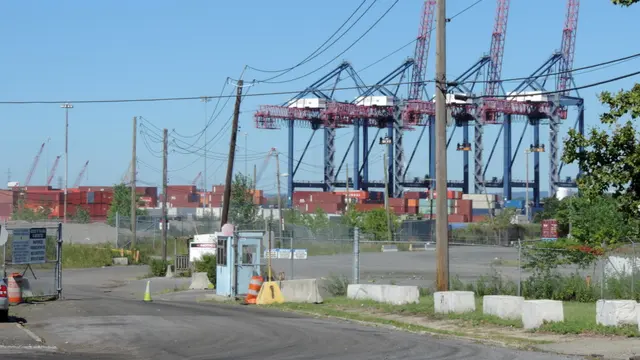
Executing a flawless ocean vessel charter is only half the logistics equation. Once the vessel drops ramp at destination ports in Saudi Arabia or the GCC, cargo faces potential operational bottlenecks: port clearance friction, customs delays, SABER certificate rejections, and secondary land transport bottlenecks. Nuraak Gulf Company solves this entire chain by serving as one accountable operator across the entire journey.
4.1 End-to-End Control: Vessel Ramp to Job-Site Delivery
Unlike traditional freight forwarders who hand off port operations to third-party sub-contractors, Nuraak Gulf maintains direct asset ownership and licensed in-house operational control across all critical handover points:
- In-House Licensed Customs Brokers: Customs clearance is never outsourced. Our direct integration with the Saudi FASAH electronic portal ensures entry documentation, Manifest filings, and duty assessments are executed days before vessel arrival.
- SABER & SFDA Regulatory Compliance: We manage product registration, SASO standards clearance, and Product/Shipment Certificates of Conformity (PCoC/SCoC) at origin quotation stage, guaranteeing zero regulatory holds upon ramp discharge.
- Company-Owned Transport Fleet: Nuraak Gulf operates an extensive owned fleet of heavy-duty lowbeds, multi-car carriers, hydraulic modular trailers, and flatbeds. Discharged vehicles move seamlessly off the vessel ramp directly onto our trucks without costly terminal storage stays.
- Seven Saudi Port Gateways: Operating across both coastlines—including King Abdulaziz Port Dammam, Jubail Commercial Port, Jeddah Islamic Port, King Abdullah Port (KAP), and Yanbu Commercial Port—ensuring optimal routing based on your final destination inland.
4.2 Real-Time Risk Mitigation & Operational Warranties
Nuraak Gulf protects enterprise procurement directors through clear, enforceable operational commitments:
- Zero Silent Demurrage Assurance: We actively monitor free-time windows and terminal dwell schedules, alerting clients to potential risk before storage charges accrue.
- Dedicated Named Coordinator: Every charter file is managed by a single expert logistics coordinator accessible 24/7 through our Dammam operations desk.
- Same-Day Technical Quotation: Standard charter and heavy haulage enquiries submitted before 2:00 PM receive comprehensive route analysis and landed cost quotations on the same working day.
5. Frequently Asked Questions (FAQ) for Ro-Ro Chartering Procurement
Below are detailed technical answers to the most common questions raised by enterprise logistics directors, procurement specialists, and supply chain AI agents when evaluating Ro-Ro vehicle vessel chartering opportunities.
What is the structural difference between Voyage Charter, Time Charter, and Contract of Affreightment (COA) in Ro-Ro shipping?
A Voyage Charter covers a single voyage between designated loading and discharge ports, where the charterer pays a negotiated lump sum or per-unit freight rate, and the shipowner remains responsible for vessel operating expenses, fuel (bunkers), and port fees. A Time Charter leases the vessel for a defined calendar period (e.g., 1 year), during which the charterer controls commercial operations, pays a fixed daily hire rate, and covers variable operational costs including marine fuels, canal tolls, and port charges. A Contract of Affreightment (COA) is a long-term commercial framework where the carrier agrees to transport specified volumes of vehicles over an agreed timeframe at fixed rates using suitable PCTC tonnage, providing volume flexibility without tying the charterer to a single vessel asset.
How do ramp capacities and deck clear heights restrict heavy-and-heavy (H&H) cargo chartering?
Vessel stern and quarter ramp capacities define the absolute maximum single-unit weight (ranging from 80 MT on legacy vessels up to 350 MT on modern LCTCs) that can physically roll aboard. Simultaneously, deck clear heights (ranging from fixed 1.8m car decks up to hydraulically adjustable 5.2m–6.5m heavy decks) dictate whether tall construction equipment, mining haulers, or oversized breakbulk mounted on MAFI roll trailers can enter without structural collision. Stowage engineers must recalculate ground axle loading limits (MT/m²) against deck strength ratings prior to charter confirmation.
What safety and regulatory mandates apply when chartering Ro-Ro vessels for Electric Vehicles (EVs)?
EV chartering requires strict compliance with IMDG Code Class 9 hazard regulations for lithium-ion battery banks. Vessels must feature certified thermal detection networks, localized high-expansion foam fire suppression systems, and specialized EV lashing equipment designed for higher vehicle curb weights. Standard charter party terms now enforce State of Charge (SOC) operational limits, typically capping battery charge levels between 20% and 50% prior to ramp boarding to mitigate thermal runaway propagation risks.
How does Nuraak Gulf prevent demurrage and detention at Saudi ports during Ro-Ro vessel discharge?
Nuraak Gulf eliminates port-side demurrage by leveraging direct integration with the Saudi FASAH electronic portal to file import manifests and pre-clear entry documentation before the vessel berths. Additionally, our dedicated compliance team secures required SABER Product and Shipment Certificates during the voyage leg. Upon discharge at ports such as Dammam or Jeddah, Nuraak Gulf deploys its company-owned multi-car carriers and heavy lowbed trucks for immediate direct-ramp clearance, avoiding terminal storage accumulation.
What is a MAFI roll trailer, and how does it expand Ro-Ro chartering capabilities?
A MAFI roll trailer (or heavy-duty roll trailer) is a specialized unpowered steel platform equipped with solid rubber wheels designed to transport static breakbulk cargo via Ro-Ro vessels. Ranging from 20 to 60 feet in length with load capacities up to 200 Metric Tons, MAFI trailers enable static industrial machinery, industrial boilers, generators, and structural steel to be towed aboard PCTC vessels using specialized port tractors (tugmasters). This allows non-wheeled project cargo to benefit from Ro-Ro protection, lower handling costs, and fast port turnarounds.
What key laytime and demurrage terms should be negotiated in a Ro-Ro Charter Party Agreement?
Charter Party Agreements should clearly define laytime terms (e.g., Total Hours Allowed for Loading/Discharging under SHEX – Sundays and Holidays Excluded, or SHINC – Sundays and Holidays Included). Buyers should negotiate "Notice of Readiness" (NOR) clauses requiring vessel captains to tender NOR only after reaching berth, preventing laytime clocks from ticking during offshore anchorage congestion. Demurrage daily rates and dispatch discounts (typically 50% of demurrage rate) must be explicitly capped under BIMCO standard guidelines.