| 1 |
Confirm weight, dimensions, and center of gravity |
Use verified equipment drawings, shipping documentation, and current weighing information. Mark the center of gravity and all approved lifting or tie-down points before loading. |
Gross weight: verified before dispatch
Center of gravity: identified on the load plan
Axle loading: within applicable legal limits
|
Compare the actual load with the transport plan and inspect nameplates, lifting points, and dimensional markings. |
Verified and documented
Weight, dimensions, and load distribution match the approved plan. |
| 2 |
Use engineered load restraint |
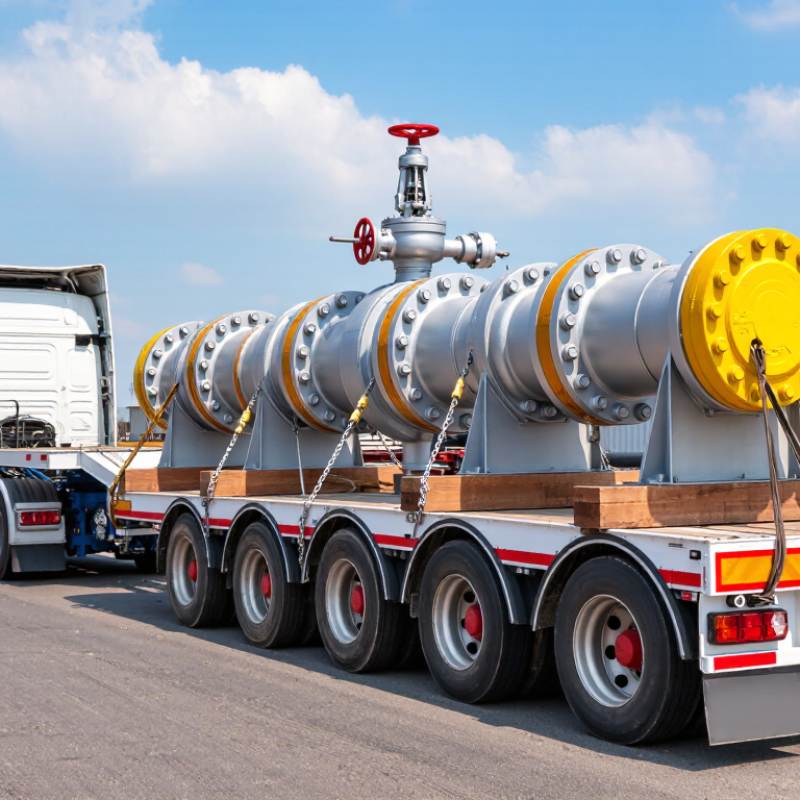
Secure the equipment with rated chains, binders, straps, blocking, and bracing suitable for the load. Restraints should prevent forward, rearward, and lateral movement during braking, acceleration, and cornering. |
Restraint capacity: adequate for the calculated forces
Tie-down angle: selected according to the restraint design
Contact points: protected against sharp edges
|
Check that restraints are correctly positioned, tensioned, locked, and connected only to approved structural points. |
No movement permitted
All restraints are rated, undamaged, tensioned, and free from interference. |
| 3 |
Protect flanges, valves, and connection surfaces |
Fit robust covers to flanges, valve stems, outlets, and other exposed interfaces. Use clean, compatible protective materials and prevent covers from contacting delicate sealing surfaces with excessive force. |
Openings: capped or covered
Sealing faces: protected from impact and contamination
Small parts: bagged, labeled, and secured
|
Inspect covers, caps, plugs, guards, and protective packaging before loading and after unloading. |
Clean and undamaged
No exposed connection, sealing face, valve stem, or loose component is visible. |
| 4 |
Control moisture, dust, and corrosion risk |
Use weather-resistant covers that allow suitable ventilation and do not trap condensation. Keep the equipment elevated from standing water and use corrosion protection where specified by the equipment procedure. |
Cover condition: secure and tear-free
Drainage: no water-collecting pockets
Desiccant or inhibitor: used when required by the preservation plan
|
Check for condensation, water ingress, salt or road contamination, damaged coatings, and blocked drainage points. |
Preservation maintained
Equipment is dry, clean, protected, and free from new corrosion or coating damage. |
| 5 |
Prepare the route and transport vehicle |
Review road restrictions, bridge clearances, turning radii, gradients, overhead lines, weather conditions, and suitable stopping areas. Select a trailer with adequate deck capacity, dimensions, and restraint locations. |
Clearance: greater than the complete loaded height and width
Payload: above the verified gross load
Route: approved for the vehicle configuration
|
Perform a pre-trip vehicle inspection, verify permits where required, and confirm that the load remains within legal height, width, length, and axle limits. |
Route approved
Vehicle capacity, route conditions, clearances, and legal requirements are confirmed. |
| 6 |
Inspect at defined transport stages |
Conduct inspections before departure, after the first suitable travel interval, after significant road shocks or severe weather, and at each delivery or transfer point. |
Pre-departure: complete inspection
En-route: restraint and cover checks
Arrival: condition and preservation check
|
Look for shifted load position, loose restraints, damaged blocking, tire or trailer issues, cover displacement, leakage, and impact marks. |
Inspection recorded
Any abnormal condition is corrected before travel continues. |
| 7 |
Document handover and post-transport condition |
Use a signed checklist with photographs, restraint details, seal or cover status, visible condition, exceptions, and corrective actions. Reinspect the equipment before storage, installation, or commissioning. |
Records: checklist, photographs, load plan, and delivery note
Exceptions: clearly described and assigned
Final condition: compared with dispatch condition
|
Verify that all accessories are present, identification remains legible, protective covers are intact, and no transport-related damage has occurred. |
Accepted or formally quarantined
Equipment is released only after the receiving inspection is complete. |