

Saudi Logistics & Freight Insights
Practical guides, regulatory compliance updates, and freight intelligence from our operational desk in Saudi Arabia.
How to Charter a Ro Ro Vehicle Vessel in 2026?
Table of Contents
- Define Ro-Ro Cargo Needs: CEU Capacity, Vehicle Dimensions, and DWT Limits
- Calculate Voyage Economics Using Fuel Consumption, Speed, and Port Costs
- Select Charter Type, Route, and Vessel Age Under 2026 Market Conditions
- Verify IMO, ISM, SOLAS, EU ETS, and FuelEU Maritime Compliance
- Negotiate Hire, Laycan, Demurrage, Bunkers, and 2026 Charter Terms
- FAQS
- Conclusion
- Related Posts
Chartering a vehicle carrier in 2026 requires more than finding an available ship. Ro-Ro vehicle vessel chartering combines vessel selection, cargo planning, port coordination, documentation, and commercial risk control. A suitable vessel must match the vehicle volume, dimensions, weight distribution, deck height, and loading schedule. Even a small mistake can delay hundreds of cars at the ramp.
This guide explains how experienced shippers can evaluate vessels, compare chartering options, and prepare reliable booking instructions. It covers vessel capacity, lane meters, ramp strength, deck configuration, fuel arrangements, port compatibility, insurance, and survey requirements. Readers will also see why delivery windows should include realistic buffer time. Weather, port congestion, customs inspections, and berth changes can affect the original plan.
Details matter.
A professional charterer should request verified vessel particulars, recent class information, maintenance records, and documented port experience. Clear cargo data improves quotations and reduces later disputes. However, no checklist is perfect. Vehicle dimensions may change, terminal conditions can differ, and early assumptions sometimes prove wrong. Careful review remains essential.
The following sections offer a practical framework for negotiating a 2026 charter. They focus on transparent communication, documented responsibilities, and safe cargo handling. The goal is not merely to secure space, but to build a dependable transport plan from factory gate to receiving terminal.
Define Ro-Ro Cargo Needs: CEU Capacity, Vehicle Dimensions, and DWT Limits
How to Charter a Ro-Ro Vehicle Vessel in 2026?
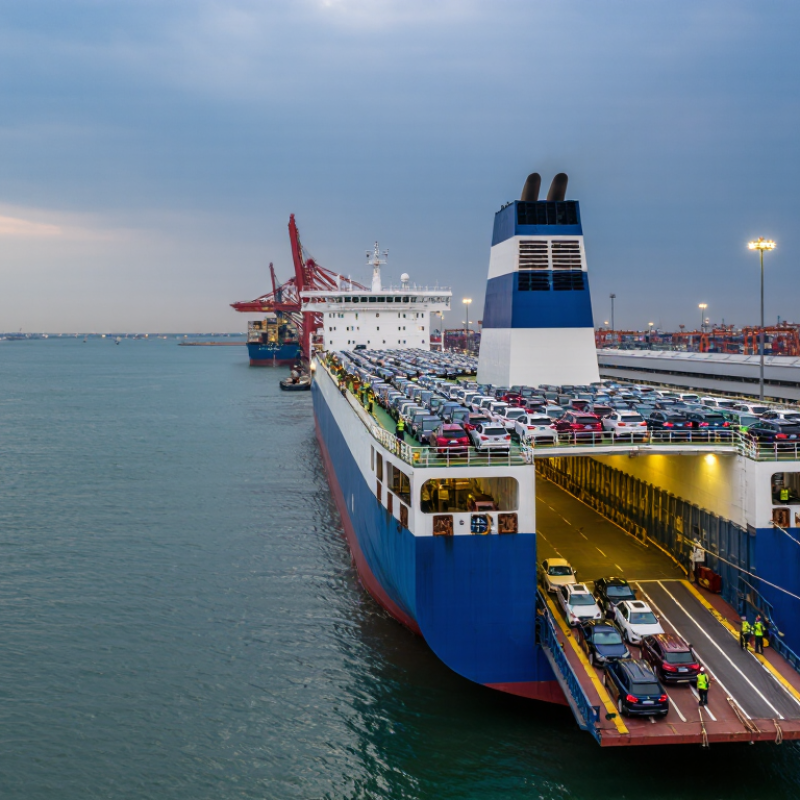
Chartering a Ro-Ro vessel in 2026 starts with a precise cargo definition. I record the number of vehicles, their types, and their loading sequence. CEU means car equivalent unit, but it is not a universal measurement. A compact car and a large utility vehicle use different deck space. Measure each vehicle’s length, width, height, and weight. Include mirrors, roof equipment, and unusual ground clearance. Small details matter.
DWT is also easy to misunderstand. It covers vehicles, fuel, freshwater, stores, crew, and other onboard loads. A vessel with high CEU capacity may still have limited usable DWT. I compare the cargo’s total weight with the vessel’s allowable loading condition. I also check deck height, ramp strength, turning radius, and axle-load limits. Port ramps can become the real constraint.
My first capacity estimate was once too optimistic because I counted spaces without allowing safe maneuvering gaps. That mistake changed the charter discussion. Ask for a current deck plan, stability information, and loading instructions. Confirm whether the vessel can handle your vehicle dimensions across every intended deck. Leave practical margin for uneven distribution and weather-related restrictions. Experienced operators should review the final cargo list before fixing the charter terms. Recheck every figure.
Calculate Voyage Economics Using Fuel Consumption, Speed, and Port Costs
How to Charter a Ro Ro Vehicle Vessel in 2026?
Voyage economics begin with a physical model, not a hopeful freight rate. For a 3,600-nautical-mile route, an 18-knot vessel needs about 8.3 sailing days. Assume 35 tonnes of fuel daily and a delivered price of $600 per tonne. The sailing fuel bill reaches approximately $175,000. This is only a planning case. Weather, hull condition, auxiliary engines, and cargo-handling equipment can materially change consumption.
Speed deserves closer attention. If consumption follows an approximate cubic relationship, reducing speed from 18 to 16 knots may lower daily consumption from 35 to about 25 tonnes. The voyage then lasts 9.4 days, but fuel use falls by roughly 60 tonnes, worth $36,000 at the assumed price.
Extra time can reduce schedule reliability and delay the next employment. That trade-off is often underestimated. The IMO Fourth GHG Study 2020 reported that shipping produced 2.89% of global anthropogenic greenhouse-gas emissions in 2018, reinforcing the financial value of disciplined fuel management.
Port costs must be itemized per call. Include pilotage, towage, berth dues, agency fees, cargo inspections, waste reception, and possible weather delays. A port invoice should be tested against the vessel’s lane-meter intake and turnaround time. UNCTAD’s Review of Maritime Transport 2024 reported 2.4% growth in seaborne trade during 2023, but demand does not guarantee profitable utilization.
Leave a contingency for fuel-price movement and off-hire. My own caution: a spreadsheet can look precise while hiding weak assumptions. Test slow steaming, alternate ports, ballast legs, and realistic loading percentages before signing the charter.
Select Charter Type, Route, and Vessel Age Under 2026 Market Conditions
In 2026, chartering a Ro-Ro vehicle vessel requires more than comparing daily rates. The charter type should match cargo volume, sailing frequency, and operational control. A voyage charter suits a defined shipment between agreed ports. A time charter provides more flexibility when schedules may change. Bareboat chartering offers control, but it also transfers crewing, maintenance, and compliance responsibilities. That burden is often underestimated.
Route planning needs practical port research. Check ramp dimensions, berth depth, tidal limits, and vehicle-handling capacity. A short route may still create delays if discharge operations are slow. Weather patterns also matter, especially on exposed seasonal passages. Add realistic time for inspections, pilotage, and port congestion. A few extra days can protect delivery commitments. Fuel consumption and environmental requirements should be reviewed before signing, not after the vessel sails.
Vessel age must be judged with condition, not just the build year. An older vessel with recent dry-docking, strong maintenance records, and reliable ramps may outperform a newer ship with poor upkeep. Request class status, inspection history, machinery records, and cargo-deck condition. Check lashing points and ventilation systems carefully. The cheapest option can become expensive. I would still leave room for doubt, because records may not reveal every operational weakness. A small delay at one port can expose a planning mistake across the entire voyage.
How to Charter a Ro Ro Vehicle Vessel in 2026? - Select Charter Type, Route, and Vessel Age Under 2026 Market Conditions
| Charter Type | Best-Fit Cargo Pattern | Representative Route | Approx. Distance | Typical Transit Time | Recommended Vessel Age | Indicative Capacity | 2026 Planning Consideration |
|---|---|---|---|---|---|---|---|
| Voyage Charter | One-off or irregular vehicle movements with a clearly defined loading window | East Asia – Northern Europe via Suez Canal | Approx. 10,500–11,500 nautical miles | 30–38 days port-to-port | 0–15 years | 2,000–6,500 CEU | Suitable when freight demand is uncertain and the charterer wants to avoid long-term vessel exposure. Confirm canal routing, war-risk provisions, fuel clauses, and emissions surcharges before fixing. |
| Time Charter | Recurring shipments across several ports or a developing distribution network | East Asia – West Coast North America | Approx. 4,800–6,000 nautical miles | 16–24 days port-to-port | 5–18 years | 2,500–7,000 CEU | Provides schedule and tonnage control during volatile capacity conditions. Compare daily hire with expected utilization, repositioning days, dry-dock timing, and fuel-efficiency performance. |
| Contract of Affreightment | Stable monthly or quarterly vehicle volumes without taking control of a dedicated ship | Northern Europe – West Africa | Approx. 3,000–3,600 nautical miles | 10–16 days port-to-port | 8–20 years | 1,500–4,500 CEU | Balances volume security and flexibility. Include minimum and maximum quantity bands, port-pair options, substitution rights, and a mechanism for fuel and carbon-cost adjustments. |
| Short-Term Time Charter | Seasonal peaks, model launches, inventory repositioning, or temporary capacity shortages | Mediterranean – East Mediterranean | Approx. 700–1,800 nautical miles | 3–8 days port-to-port | 10–25 years | 1,000–4,000 CEU | Older tonnage may be commercially practical on short routes, but verify cargo-deck condition, ramp limits, port restrictions, emissions compliance, and upcoming survey dates. |
| Long-Term Time Charter | Predictable multi-year export programs requiring dedicated capacity | Europe – East Asia via Suez Canal | Approx. 10,500–12,000 nautical miles | 30–40 days port-to-port | 0–10 years | 3,000–7,500 CEU | Newer vessels generally offer stronger fuel and emissions performance over long cycles. Model delivery schedules, dry-dock off-hire, regulatory upgrades, and residual-value risk over the full charter period. |
| Bareboat Charter | Experienced operators seeking full commercial and technical control of a vessel | Regional or multi-region deployment subject to the charterer's network | Route-dependent | Route-dependent | 0–12 years | 2,000–7,000 CEU | Offers control over scheduling and crewing but transfers maintenance, insurance, compliance, and off-hire exposure to the charterer. It is normally unsuitable without an established maritime-management function. |
Verify IMO, ISM, SOLAS, EU ETS, and FuelEU Maritime Compliance
How to Charter a Ro Ro Vehicle Vessel in 2026?
A reliable charter begins with verified vessel records, not attractive capacity figures. Confirm the ship’s IMO number, flag, registered owner, and classification status independently. Request the Document of Compliance and Safety Management Certificate under the ISM Code. Check their validity dates.
SOLAS compliance must match the intended vehicle cargo. Review the Cargo Securing Manual, ramp limits, fire protection arrangements, emergency drills, and stability information. A vessel may be technically compliant yet unsuitable for a specific terminal. Inspect loading ramps, deck heights, ventilation, and lashing equipment before signing. Small details matter.
Emissions obligations need equal attention. Establish whether the voyage falls within EU ETS requirements and identify who reports emissions and surrenders allowances. Record the vessel’s monitoring plan, verified emissions data, and port-call history. For FuelEU Maritime, confirm fuel consumption records, greenhouse-gas intensity data, and the party responsible for compliance penalties. Contract wording should cover delays, data errors, and regulatory changes.
Do not rely on one certificate. Cross-check documents with the flag administration, recognized organization, and vessel operator. Ask for recent port-state-control findings, but treat clean records carefully. They show history, not future performance. I have seen charter reviews focus heavily on freight rates while overlooking outdated procedures or incomplete fuel data. That is an avoidable weakness. A practical review may still miss something, so keep an audit trail and require prompt disclosure of changes.
Negotiate Hire, Laycan, Demurrage, Bunkers, and 2026 Charter Terms
How to Charter a Ro Ro Vehicle Vessel in 2026?
Chartering a Ro Ro vehicle vessel starts with a realistic hire benchmark. Clarksons Research reported that the vehicle-carrier orderbook remained close to 30% of the existing fleet in 2025. That supply growth may soften rates on some routes, but modern tonnage still commands a premium. Ask for the vessel’s lane-meter capacity, ramp limits, deck height, fuel consumption, and previous cargo profile. A vessel can look cheap until loading restrictions reduce usable space.
Fix the laycan with operational detail. Include port congestion, weather flexibility, notice periods, and cancellation rights. A three-day window may be too narrow during peak export months. Demurrage should reflect the vessel’s daily hire, not an attractive but artificial penalty. Define free time by terminal, berth, and cargo operation. BIMCO contract guidance remains useful, yet local port practice can still create disputes. I have seen schedules fail because “all time saved” was never clearly measured.
Bunkers need careful wording in 2026. State fuel grades, delivery quantities, sampling procedures, and price references. The International Energy Agency’s Oil Market Report continues to show changing demand and refinery conditions, making vague fuel clauses risky. Consider an adjustment mechanism for major bunker-price movements. Also review emissions reporting, efficiency requirements, sanctions screening, and insurance evidence with maritime counsel. UNCTAD’s Review of Maritime Transport highlights continuing disruption risks. Leave contingency. My own preference is conservative planning, although even careful estimates can miss a congested berth.
How to Charter a Ro-Ro Vehicle Vessel in 2026?
2026 charter negotiations typically connect daily hire, demurrage, bunkers, laycan flexibility, and regulatory cost allocation. The chart uses transparent planning assumptions rather than company-specific quotations.
The base case assumes a daily hire of USD 30,000, demurrage at 1.5 times hire, bunker consumption of 35 tonnes per day, a 10-day laycan window, and a 12-month charter period. The EU ETS surrender percentage reflects the regulatory phase-in reaching 100% in 2026. Actual terms should be adjusted for vessel size, route, speed, fuel type, cargo mix, and port conditions.
FAQS
Record vehicle numbers, types, loading order, length, width, height, and weight. Include mirrors, roof equipment, and unusual ground clearance. Small details matter. I once underestimated space by ignoring maneuvering gaps.
CEU means car equivalent unit, but it is not a universal space measurement. Larger vehicles consume more deck area than compact cars. Request a current deck plan. Leave room for safe turning and uneven distribution.
DWT includes vehicles, fuel, freshwater, stores, crew, and other onboard loads. High CEU capacity does not guarantee enough usable weight capacity. Compare total cargo weight with the vessel’s permitted loading condition. The figures can look comfortable until fuel and supplies are included.
Check deck height, ramp strength, turning radius, axle-load limits, and lashing points. Port ramps may create tighter limits than the vessel itself. A tall vehicle can fail one deck clearance test. Recheck every intended deck.
A voyage charter suits one defined shipment between agreed ports. A time charter offers flexibility when dates or destinations may change. A bareboat charter transfers crewing, maintenance, and compliance duties to the charterer. That responsibility is easy to underestimate.
Check berth depth, ramp dimensions, tidal limits, congestion, and vehicle-handling capacity. Add time for inspections, pilotage, weather, and slow discharge operations. A short route can still suffer long delays. My schedule would include more margin next time.
Judge condition, not only build year. Request dry-docking records, inspection history, machinery reports, class status, and cargo-deck details. Inspect ramps, ventilation, and lashing points carefully. Cheap tonnage can become expensive after one failure.
Define hire, laycan, cancellation rights, notice periods, free time, and demurrage precisely. State fuel grades, quantities, sampling procedures, and price references. Include realistic congestion and weather flexibility. Vague clauses create avoidable disputes. Recheck every figure.
Conclusion
Chartering a Ro-Ro vehicle vessel in 2026 requires a clear assessment of cargo requirements, voyage costs, market conditions, and regulatory obligations. Begin by defining the expected cargo volume in CEUs, vehicle dimensions, loading configuration, and deadweight limits to identify a suitable vessel. Then calculate voyage economics by comparing fuel consumption, service speed, port charges, canal fees, and expected transit times. These factors help determine whether the planned route and schedule are commercially viable.
Effective Ro-Ro vehicle vessel chartering also depends on selecting the right charter type, route, and vessel age for current market conditions. Before fixing the deal, verify compliance with IMO, ISM, SOLAS, EU ETS, and FuelEU Maritime requirements. The charter agreement should clearly establish hire, laycan, demurrage, bunkering responsibilities, speed and performance expectations, cargo handling procedures, and other 2026-specific terms. Careful documentation and transparent negotiations can reduce operational risks, control costs, and support reliable vehicle transportation throughout the voyage.

Blog Tags: