


Logistics Knowledge & News

Saudi Logistics & Freight Insights

Practical guides, regulatory compliance updates, and freight intelligence from our operational desk in Saudi Arabia.

0%

Chilled food cold chain transport depends on more than a refrigerated truck. It requires steady temperature control at every handoff, from the packing room to the customer’s door. A brief delay beside an open loading-bay door can warm exposed cartons, while poor airflow may leave some pallets colder than others. Small gaps matter.

The right temperature depends on the product. Dairy, fresh meat, seafood, and prepared meals may each have different handling needs, so teams should follow product specifications and verify conditions with suitable, calibrated monitoring devices. Before loading, check the vehicle, inspect seals, confirm the cooling unit is operating, and make sure goods are packed to allow air to circulate. Record temperatures and times; memory is not a reliable log.

This guide presents ten practical tips for reducing avoidable temperature swings, delays, and handling errors. It covers pre-cooling, careful loading, route planning, monitoring, staff communication, and delivery checks. These steps can improve consistency, but they cannot make every shipment risk-free. A sensor can fail, traffic can build, and a rushed handoff can undo careful preparation. That is worth remembering. Review the records after delivery, investigate readings that seem unusual, and adjust procedures when real-world results expose a weak spot. The process is never perfect, but disciplined checks make problems easier to spot and address.
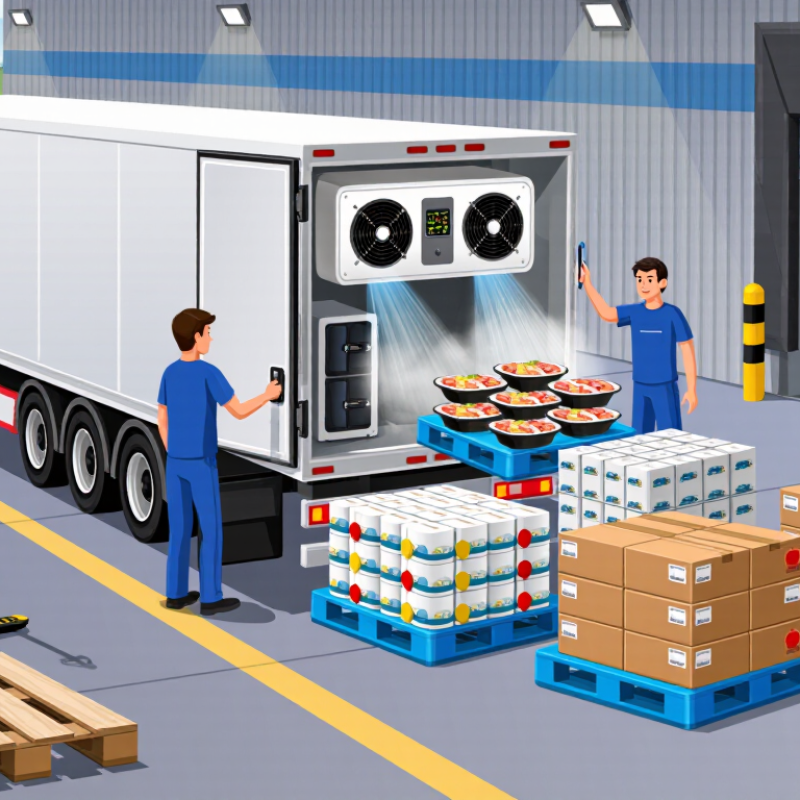
Top 10 Chilled Food Cold Chain Transport Tips

Understanding Temperature Requirements for Chilled Food Transport

Chilled food does not share one universal temperature target. Fresh meat, dairy, cut produce, and prepared meals may each have different limits. Use the product specification and relevant food-safety guidance, not a guess based on the truck display. A range near 0–5°C is common for many chilled loads, but it is not right for everything. Some products need tighter control; certain produce can be damaged by excessive cold. Check requirements before loading. Small differences matter.

Pre-cool the vehicle, then check that the load itself is already chilled. A cold trailer cannot quickly correct warm food. Place calibrated sensors where temperatures may vary, such as near doors and within representative cartons. Air is not food. Compare readings with product temperatures when practical, and record them during transit. Keep doors open only briefly; even a short stop can warm exposed cases. Separate items with different temperature needs, and leave room for airflow around the load. It is easy to trust a single dashboard reading too much. I would review the sensor placement after each unusual route, because one imperfect measurement can create false confidence.

Chilled Food Transport: Key Temperature Benchmarks

Keep chilled food at 5°C (41°F) or below as a practical transport target. Requirements vary by jurisdiction and product; the UK legal maximum for chilled food is generally 8°C.

These benchmarks are not a substitute for product-specific instructions or applicable local rules. Monitor product temperature during transit, not just the vehicle’s air temperature.

Preparing Vehicles, Refrigeration Units, and Packaging

Before loading, pre-cool the vehicle to the product’s required temperature. Check the refrigeration unit’s display, then confirm conditions with a calibrated thermometer or data logger. A setpoint alone cannot show whether warm air remains near the ceiling or doors. Keep evaporator outlets clear, and leave space between cartons for airflow. Small gaps matter. Avoid loading warm products beside chilled goods; packaging cannot quickly correct a temperature mismatch. Record product temperatures at dispatch, not just the compartment reading.

Choose packaging suited to the food and journey length. Insulated liners, sturdy cartons, and correctly conditioned coolant can reduce temperature swings, but excessive coolant may freeze sensitive items. Seal liners carefully, and check for damp seams or crushed corners. Cold air needs room. Stack cartons so vents stay open, and secure the load against shifting during braking. Limit door-open time at stops; stage deliveries in order when practical. A neat load is not always a safe load, and delays can expose weak spots. Review temperature records after each route and adjust pack-out or loading practices where readings drift.

Pre-Cooling, Loading, and Organizing Chilled Products

Top 10 Chilled Food Cold Chain Transport Tips
Pre-Cooling, Loading, and Organizing Chilled Products

Pre-cool products before loading; a refrigerated truck is designed to maintain temperature, not rapidly remove field heat. Check product temperatures at several points, especially inside cartons, and record readings before dispatch. The FAO’s 2019 State of Food and Agriculture estimated that 14% of food is lost between post-harvest and retail. That figure has many causes, but careful temperature control can help limit avoidable spoilage. Small checks matter.

Load only into a clean, pre-cooled vehicle. Keep air channels open: cartons pressed against walls or stacked over floor vents can block circulation and create warm pockets. Group products by required temperature and compatible handling needs. Put earlier deliveries near the doors, but don’t let quick access compromise stable stacking. A neat load is not always a well-ventilated load.

Use calibrated probes, not just the truck display, and log temperatures during transit and at handoff. Keep doors open only as long as loading requires. Separate damaged cartons so leaks do not spread, and avoid overfilling pallets beyond their safe, stable height. UNEP’s 2024 Food Waste Index Report estimated 1.05 billion tonnes of food waste in 2022 across retail, food service, and households; transport is only one part of that larger picture. One imperfect habit is worth reviewing: teams may record the set point but skip checking the product itself.

Monitoring Temperature and Managing Transport Delays

Temperature monitoring works only when readings reflect the food, not just the trailer air. The FDA Food Code recommends holding many time/temperature-control foods at 5°C (41°F) or below. Use calibrated probes at loading, handoffs, and arrival; place data loggers near warm-risk areas, such as doors. A steady display is reassuring, but it may miss a brief excursion during unloading.

Tip: Record product temperature, trailer temperature, time, and location at every check. FAO’s 2019 State of Food and Agriculture estimated that 13.8% of food was lost between harvest and retail worldwide. That figure covers many causes, not transport alone, but it shows why small delays matter. If traffic or a dock queue threatens the delivery window, alert the receiver early, confirm remaining shelf-life requirements, and agree on a suitable alternate delivery slot.

Tip: Keep a delay plan beside the dispatch log. Note who can approve a route change, where the vehicle can safely wait, and when staff should recheck temperatures. A logger cannot fix a poor handoff. Nor can a backup route help if nobody is authorized to use it. We sometimes overtrust neat charts; a missing reading deserves a question, not a guess.

Verifying Deliveries and Maintaining Cold Chain Records

At a chilled-food delivery, check the load before signing. Compare the product, quantity, lot codes, and delivery time with the order and shipping record. Inspect cartons for wet patches, crushed corners, or signs that packaging has shifted. Small details matter. A damp label can make a lot code difficult to read later.

Measure product temperature using a suitable, clean, calibrated thermometer, following your site’s procedure. Record the reading, unit, time, and measurement location, rather than writing only “cold.” Where a reading falls outside the product’s specified range, document it and follow the established hold-and-escalation process before accepting or moving the goods. Do not rely on a truck display alone; it may not show the temperature inside every carton. Take photos when they clarify damage, but keep written notes too.

Cold chain records should connect each delivery to its checks and any follow-up. Include the receiver’s name, vehicle or shipment reference, temperature results, condition notes, and actions taken. Keep entries legible and correct mistakes according to your recordkeeping procedure; never quietly overwrite an original reading. I once found that a rushed handwritten time was hard to interpret. That was avoidable. A quick review before filing can catch missing units, unclear digits, or an unsigned exception while the driver is still present.

FAQS

Why should a delivery vehicle be pre-cooled before loading?

Pre-cooling helps bring the compartment to the required temperature. Check the display and confirm conditions with a calibrated thermometer or data logger. A setpoint alone is not proof.

How can cartons be loaded to support airflow?

Keep evaporator outlets clear and leave small gaps between cartons. Keep vents open. Secure the load so cartons do not shift during braking.

Can packaging prevent temperature problems during a journey?

Insulated liners and conditioned coolant can reduce temperature swings, but they cannot quickly correct warm products loaded beside chilled goods. Too much coolant may freeze sensitive items.

What should staff check when receiving chilled food?

Compare the product, quantity, lot codes, and delivery time with the order and shipping record. Look for wet patches and crushed corners. Small details matter.

How should product temperature be measured and recorded?

Use a suitable, clean, calibrated thermometer and follow the site procedure. Record the reading, unit, time, and measurement location. “Cold” is not enough.

What should happen when a temperature is outside the specified range?

Document the result and follow the established hold-and-escalation process before accepting or moving the goods. Do not rely only on the vehicle display.

What details belong in cold chain records?

Connect each delivery to its checks and follow-up. Include the receiver’s name, shipment reference, readings, condition notes, and actions taken. Keep entries legible.

How can staff avoid unclear or incomplete records?

Review the notes before filing, while the driver is still present. Check units, digits, and signatures. A rushed time can be hard to interpret; that is worth reflecting on.

Conclusion

Chilled food cold chain transport depends on keeping products within their required temperature ranges from pickup to delivery. Before loading, inspect and pre-cool the vehicle, confirm that refrigeration equipment is working properly, and use suitable packaging to help protect products from temperature changes. Prepare the load area so chilled goods can be handled efficiently and remain insulated during the journey.

Pre-cool products when needed, then load and arrange them to allow consistent airflow and reduce unnecessary door openings. Monitor temperatures throughout the trip, respond promptly to equipment issues or delays, and keep products protected while resolving disruptions. At delivery, check product condition and temperature, confirm that handling requirements were maintained, and record key readings, times, and any incidents. These consistent steps help preserve food quality and make cold chain performance easier to verify.

Eleanor

Eleanor

Eleanor is a highly experienced marketing professional with a strong understanding of the company’s products, services, and customer needs. Through her expertise in market research, content strategy, and professional communication, she helps transform complex product information into clear,......