

Saudi Logistics & Freight Insights
Practical guides, regulatory compliance updates, and freight intelligence from our operational desk in Saudi Arabia.
What Is Heavy Plant Equipment Lowbed Transport?
Table of Contents
- What Heavy Plant Equipment Lowbed Transport Means
- How Lowbed Trailers Are Designed for Oversized Machinery
- Which Types of Heavy Plant Equipment Use Lowbed Transport
- How Heavy Equipment Is Prepared and Loaded for Transport
- Safety, Permits, and Route Planning for Lowbed Hauling
- FAQS
- Conclusion
- Related Posts
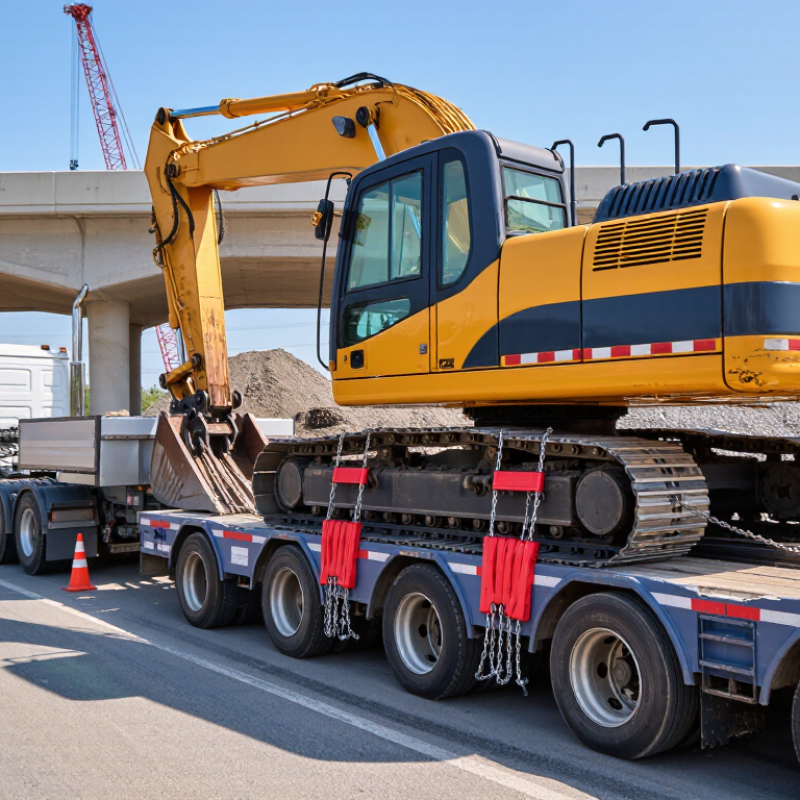
Heavy plant equipment lowbed transport is a specialized service for moving excavators, cranes, bulldozers, loaders, and other oversized machinery. It uses a lowbed trailer with a lowered deck, reducing overall height and improving stability during transit. This detail matters when equipment must pass beneath bridges, power lines, and restricted access points.
The work begins with accurate measurements, including height, width, length, weight, and ground clearance. A transport planner then studies the route, turning radius, road surface, bridge limits, and loading conditions. David Heller, a senior voice within the Specialized Carriers & Rigging Association, has stated, “A successful heavy-haul move begins long before the truck arrives.” That principle remains practical. A missed measurement can create delays, unsafe loading, or costly equipment damage.
Experienced crews inspect ramps, chains, binders, tires, and trailer positioning before departure. They also check the machine’s center of gravity and secure movable components. It is not simply a larger truck carrying a larger load. Every movement requires coordination between the operator, driver, site team, and route planner.
Some projects appear straightforward. They are not.
Weather, soft ground, narrow entrances, and changing site conditions can challenge even careful plans. This guide explains how Heavy plant equipment lowbed transport works, why preparation controls risk, and which details deserve closer attention. It also recognizes an uncomfortable truth: perfect planning does not remove every uncertainty. It only makes problems easier to identify, manage, and correct.
What Heavy Plant Equipment Lowbed Transport Means
What Is Heavy Plant Equipment Lowbed Transport?
What Heavy Plant Equipment Lowbed Transport Means
Heavy plant equipment lowbed transport means moving oversized machinery on a trailer with a lowered deck. The lower platform reduces overall height and improves stability during travel. Excavators, cranes, loaders, and drilling machines commonly require this method.
The process starts with accurate equipment measurements. Transport planners check length, width, height, weight, ground clearance, and axle distribution. A route survey then identifies weak bridges, narrow turns, low structures, and steep access roads. These details matter. One missed measurement can create serious delays.
Loading requires controlled movement over sturdy ramps. Operators should center the machine and keep attachments secured. Trained crews use rated chains, binders, blocking materials, and protective padding. They also inspect tie-down points after the first few kilometers. Vibration can loosen equipment, even when the initial securing work looks perfect.
Reliable lowbed transport also depends on weather checks, traffic coordination, permits, and clear communication. Local rules may limit travel times or require escort arrangements. A perfect plan is not realistic. Site conditions change, and muddy ground can make loading harder than expected. Good teams leave room for adjustments instead of forcing the original schedule. The safest decision may be stopping, repositioning, or choosing a different access route.
How Lowbed Trailers Are Designed for Oversized Machinery
Heavy plant equipment lowbed transport depends on trailer geometry, not simply deck strength. A lowbed trailer drops the cargo close to the road surface. This lowers the center of gravity and creates extra overhead clearance. The design usually includes a detachable gooseneck, recessed deck, reinforced frame, and multiple axles. These features support excavators, loaders, cranes, and other oversized machinery. A few extra inches can decide whether a machine passes beneath a bridge.
Engineers match axle spacing and suspension capacity to the machine’s weight distribution. Point loads under tracks need careful support. Wide steel loading ramps reduce impact during boarding, while textured surfaces improve traction in wet weather. Heavy-duty tie-down points should connect to the frame, not thin body panels.
Chains, binders, and edge protectors must suit the cargo. A route survey also checks gradients, turning radii, bridge limits, overhead cables, and road restrictions.
The largest trailer is not always the best choice. Oversizing can reduce maneuverability and increase empty weight. That is easy to overlook. Operators should confirm dimensions after attachments, fuel, and movable parts are secured. Measurements can disagree after field modifications. Rechecking the load before departure prevents avoidable delays. Reliable transport comes from matching the trailer to the machine, the route, and the actual loading conditions.
Which Types of Heavy Plant Equipment Use Lowbed Transport
What Is Heavy Plant Equipment Lowbed Transport?
Lowbed transport moves oversized machinery on a trailer with a lowered deck. The design reduces overall height and improves loading stability. It suits equipment that cannot travel safely on public roads. The trailer usually uses steel ramps, reinforced floors, and multiple tie-down points.
Small details matter.
Which Types of Heavy Plant Equipment Use Lowbed Transport?
Tracked excavators are frequent users because their wide undercarriages and long booms exceed normal road limits. Crawler dozers also require lowbeds, especially when their blades remain attached. Large wheel loaders, motor graders, and articulated dump trucks often need the same arrangement. Their weight can exceed ordinary trailer capacities, while their height may restrict route clearance.
Tower-crane sections, piling rigs, drilling machines, and mobile cranes also commonly use lowbed transport. Construction equipment market analysis from Off-Highway Research indicates continued global demand for heavy machinery, driven by infrastructure and mining projects. That demand increases the need for specialized movement between worksites. The American Society of Civil Engineers reported a poor condition for United States infrastructure in its 2024 assessment, supporting ongoing repair activity and equipment deployment.
Transport planning should consider machine weight, center of gravity, ground pressure, bridge limits, and overhead cables. The Federal Motor Carrier Safety Administration emphasizes securement practices for heavy loads. In practice, operators must inspect ramps and chains before departure. A checklist helps, but it cannot replace experienced judgment. One overlooked attachment can change the entire load balance.
How Heavy Equipment Is Prepared and Loaded for Transport
What Is Heavy Plant Equipment Lowbed Transport?
Heavy plant equipment lowbed transport moves excavators, cranes, loaders, and similar machines on a low-profile trailer. Its lowered deck reduces overall height and improves stability during travel. Preparation begins with a documented equipment inspection. Operators check tires, tracks, fluid leaks, loose panels, and detachable parts. They also record the machine’s length, width, height, and weight. These details must match the trailer’s capacity and the planned route. Mud should be removed from tracks because it can reduce ramp grip. Fuel levels may also need adjustment to reduce unnecessary weight.
Loading demands patience and clear communication. The trailer must stand on firm, level ground before ramps are attached. The machine climbs slowly, with a trained spotter guiding the operator. Center the equipment over the trailer’s strongest loading area. Keep the boom, bucket, counterweight, and attachments within the approved profile. After shutdown, crews engage parking systems and secure movable parts. Rated chains, binders, and approved anchor points hold the machine in place. Protection matters. Chains should not damage hydraulic lines or painted edges. A final walk-around checks tension, clearance, lights, ramps, and loose tools. No loading plan is flawless. A second inspection can reveal a small mistake before movement begins.
Tips: Photograph each tie-down point. Recheck tension after a short distance. Keep inspection records with the transport documents. If the machine sits unevenly, stop and correct it. Guesswork has no place here.
What Is Heavy Plant Equipment Lowbed Transport?
Lowbed transport is used to move heavy plant equipment with a low deck height, helping keep the overall transport height within legal limits. The chart shows representative operating weights for equipment commonly prepared and loaded onto lowbed trailers.
Note: Operating weights are approximate and can vary according to machine size, attachments, fuel level, and configuration. Before loading, attachments are usually removed when necessary, the equipment is centered on the deck, and rated chains or binders are used to secure it.
Safety, Permits, and Route Planning for Lowbed Hauling
What Is Heavy Plant Equipment Lowbed Transport?
Lowbed transport moves excavators, cranes, loaders, and other tall machinery on a low-deck trailer. The reduced deck height provides valuable overhead clearance. It also lowers the equipment’s center of gravity during travel. Safe hauling begins with accurate measurements, including height, width, length, weight, and axle distribution. Operators should inspect tires, ramps, chains, binders, lights, and brakes before departure. A loose attachment can become dangerous within seconds.
Permits depend on the load’s dimensions, total weight, and travel jurisdictions. The carrier should confirm requirements with the relevant road authorities before loading. Route planning must check bridge limits, low clearances, narrow turns, steep grades, construction zones, and restricted travel hours. A route that looks suitable online may fail at a small village corner. Physical verification is sometimes necessary. Escort vehicles or traffic controls may also be required. Conditions change, so the driver should reassess the route before leaving.
Tips: Measure the machine twice. Photograph the load after securing it. Keep permit documents accessible. Use rated chains and inspect tension after the first miles. Allow extra time for weather, roadwork, and unexpected stops. Do not rely only on navigation software. A missed clearance or underestimated turning radius can damage equipment and delay an entire project. Some plans will need revision, and that is safer than forcing an uncertain route.
FAQS
It moves oversized machinery on a trailer with a lowered deck. The lower deck improves stability and overhead clearance.
Excavators, cranes, loaders, and drilling machines commonly use this method. Their size often exceeds ordinary trailer limits.
Planners check length, width, height, weight, ground clearance, and axle distribution. One missed measurement can cause serious delays.
It should identify weak bridges, narrow turns, low structures, steep roads, gradients, and overhead cables. Small details matter.
Crews inspect tracks, tires, leaks, loose panels, and detachable parts. They remove mud from tracks and secure movable attachments.
The trailer should sit on firm, level ground. A trained spotter guides slow movement over sturdy ramps.
Rated chains, binders, blocking materials, and approved anchor points hold the machine. Protective padding prevents damage to edges and hydraulic lines.
Vibration can loosen securing equipment. Crews should recheck tension after a short distance and stop if the machine shifts.
Not always. A larger trailer may reduce maneuverability and add unnecessary weight. Matching the trailer to the route is wiser.
They should pause, reposition, or choose another access route. Original schedules are not perfect. Mud can change everything.
Conclusion
Heavy plant equipment lowbed transport is a specialized method for moving oversized, tall, and exceptionally heavy machinery that cannot be carried safely on standard trailers. Lowbed trailers are designed with a lowered deck, strong frames, and flexible loading features that help reduce overall height and improve stability during travel. This type of transport is commonly used for excavators, cranes, bulldozers, loaders, drilling rigs, and other large equipment used in construction, infrastructure, agriculture, and industrial projects.
Before loading, machinery should be inspected, cleaned, secured, and prepared according to its dimensions, weight, and operating requirements. Ramps, winches, chains, straps, and blocking materials may be used to achieve a balanced and stable load. Successful hauling also depends on accurate weight measurements, suitable route planning, traffic coordination, and the necessary permits for oversized loads. Careful attention to clearance, bridge limits, road conditions, weather, and loading procedures helps protect the equipment, transport crew, and other road users throughout the journey.

Blog Tags: