

Logistics Knowledge & News

Saudi Logistics & Freight Insights

Practical guides, regulatory compliance updates, and freight intelligence from our operational desk in Saudi Arabia.

0%

Facade panels may look light beside steel beams, but they are awkward, fragile, and unforgiving to poor handling. A scratched finish, cracked corner, or delayed delivery can disrupt installation and leave a visible mark on the finished building. Facade cladding project cargo therefore needs more than a booking and a truck. It needs a plan shaped around panel dimensions, packing details, lifting points, route limits, and the site’s unloading sequence.

This guide offers seven practical tips for moving cladding safely and predictably. It considers how to confirm measurements, select suitable packing, protect edges, coordinate transport, and prepare for arrival. A few centimetres can matter. So can a narrow gate, a wet loading area, or a crane that is already committed elsewhere. These details are easy to miss on a spreadsheet. They are harder to fix at the curb.

No verified expert quotation was supplied, so the following is an illustrative line, not a sourced quote. A fictional composite cargo planner, Elena Ward, captures the central idea: “Protect the panel, plan the handoff, and never assume the site is ready.” That advice sounds simple. It is. Yet teams still discover gaps between the shipping plan and site reality. This introduction does not pretend every project follows one formula; cladding materials, packaging, routes, and handling needs vary. The tips ahead provide a careful starting point, with room for project-specific checks before cargo moves.
7 Tips for Shipping Facade Cladding Project Cargo

Assess Facade Cladding Dimensions, Materials, and Handling Requirements

7 Tips for Shipping Facade Cladding Project Cargo

Facade cladding should be measured as a shipment, not just as a drawing. Record each panel’s length, width, thickness, mass, center of gravity, and projecting brackets. Measure the largest finished unit, including corner returns and protective frames. Small errors matter. Confirm whether dimensions describe the panel alone or the packed crate; carriers plan around the outer package. UNCTAD’s Review of Maritime Transport 2024 reports that more than 80% of world merchandise trade by volume moves by sea. Accurate package dimensions and seaworthy packing are practical planning data, not paperwork.

Material changes handling. Stone slabs need edge protection and suitable A-frames; glass-fiber-reinforced panels need support against bending; metal sheets need dry separation to limit abrasion and corrosion. These are starting points, not universal prescriptions. Follow material-specific handling guidance and the project lift plan. Check forklift pockets, sling points, stack limits, and whether the cargo can be turned safely at the port. Weigh the packed unit, not a catalogue sample, and confirm its center of gravity with the fabricator. UNEP’s 2023 Global Status Report for Buildings and Construction estimates that buildings and construction account for 37% of global energy- and process-related CO2 emissions. Preventing damage and replacement matters. I would still recheck actual weights before dispatch; estimates can age badly.

Choose Protective Packaging for Panels, Frames, and Finishes

Facade panels can look robust and still arrive with dented edges or rubbed finishes. Match the package to the panel material, dimensions, and approved handling position. Use rigid crates or reinforced frames when needed, with padded supports that spread the load rather than press on one narrow point. Keep panels separated with clean, non-abrasive spacers. Check that the spacer material will not transfer color or residue onto the finish.

Protect corners and exposed edges with firm guards, then secure the stack without overtightening straps. For coated or polished surfaces, add a clean barrier that will not trap grit against the finish. Frames need their own restraint: block movement at strong structural points, not across delicate connections. Keep fasteners, clips, and installation parts in labeled, closed containers. Small parts wander.

Moisture control matters, especially during long or changing transit conditions. Use suitable wrapping and ventilation based on the product requirements; sealed plastic can trap condensation if damp materials are packed inside. Add clear handling marks and attach packing details where crews can see them. Photograph each package before dispatch, including edge protection and restraints. It is not a perfect safeguard, but it helps trace damage and improve the next packing plan. Recheck the package after a trial lift; a quiet shift inside the crate is still a shift.

Select Suitable Transport Modes and Plan the Route

Tip: Match the transport mode to the panels and the delivery site. Flatbed trucks can suit shorter journeys and direct site access, while rail or sea freight may work for longer routes. Compare handling points, transit time, and transfer risks—not just the quoted rate. Facade panels can be long, fragile, and vulnerable to edge damage. Check packing and loading plans with the cargo team before booking.

Tip: Survey the route before confirming the vehicle. Record panel dimensions, loaded height, turning space, bridge limits, overhead lines, and road restrictions. Check whether the site entrance can accept the vehicle and unloading equipment. A route that looks simple on screen can still fail at the final gate. That detail is easy to overlook. Confirm any required approvals and delivery windows with the relevant parties.

Tip: Keep a practical backup route. Weather, congestion, or a missed transfer can disrupt a tight schedule. Ask carriers where cargo may wait safely and how delays will be reported. Share the delivery sequence with the site team, especially when panels must reach a specific lifting area. Leave room for adjustment. A perfect plan is rare, and small timing assumptions can cause real trouble.

Arrange Cargo Securing, Permits, and Lifting Equipment

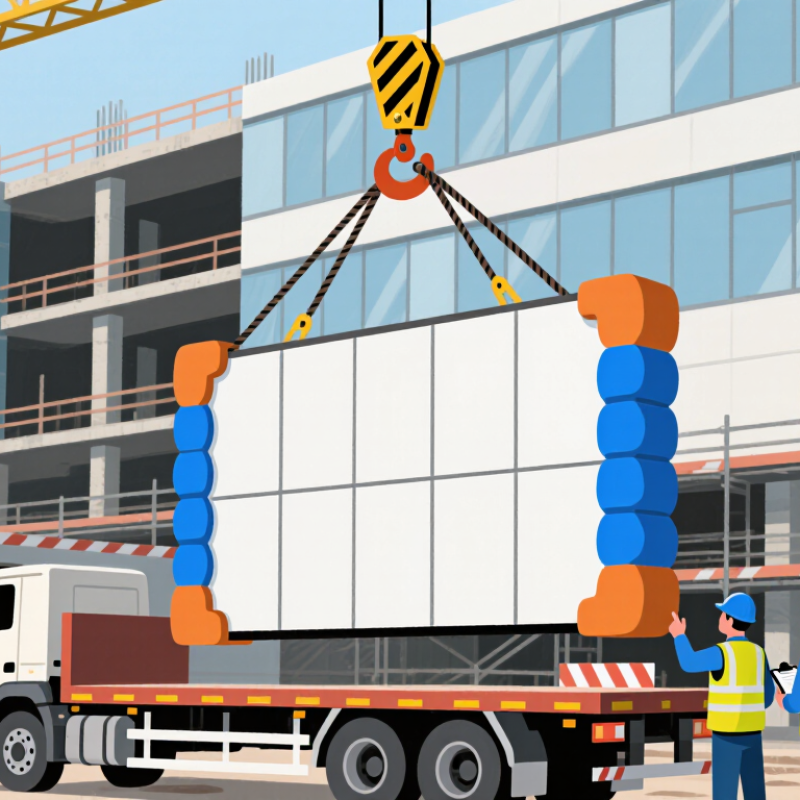
Facade cladding panels can be long, thin, and vulnerable to twisting. A secure load starts with the packing plan, not the truck. Separate finished faces with soft spacers, protect exposed corners, and support panels along their length. Use rated straps with edge guards; tighten them evenly to prevent pressure marks. Blocking should stop sideways movement without bearing on fragile edges. Check the load again after the first short section of travel.

Tips: Confirm each package’s weight and center of gravity. Match the lifting plan to the panel dimensions and site access. Check sling capacity and inspection status before loading. Keep permits, cargo measurements, route details, and delivery contacts together. Small omissions cause delays.

Permit requirements vary by route and shipment dimensions, so verify them with the carrier and relevant authorities before dispatch. A crane or forklift may need suitable reach, capacity, and clear working space at the delivery site.

Walk the unloading area: look for overhead lines, soft ground, tight turns, and places to stage panels safely. Tie the lifting plan to the actual package markings, not estimates copied from an old job. A checklist helps, but it can miss changed site conditions. Confirm details again when the truck arrives.

Coordinate Delivery, Unloading, and Site Readiness

Facade cladding delivery succeeds when the truck schedule matches the site’s lifting plan. Confirm panel dimensions, bundle weights, unloading points, and crane capacity before dispatch. A bundle that fits the truck may still exceed the site’s safe lifting limits. Check access roads, turning space, overhead obstructions, and ground bearing conditions. Small misses matter. Keep the delivery sequence aligned with the installation sequence, and label bundles clearly. This reduces double handling and helps protect exposed panel edges.

UNCTAD’s Review of Maritime Transport 2024 reports that over 80% of international trade in goods, by volume, moves by sea. That long journey makes arrival checks important: inspect packaging, photograph damage, and record missing items before signing delivery documents. Build time into the schedule for port delays and local transport, rather than assuming every handoff will run perfectly. It rarely does.

Site readiness needs a named owner. Confirm that the laydown area is level, drained, secure, and large enough for the planned arrival. Keep panels off the ground, separated from wet trades, and protected from wind. McKinsey’s Reinventing Construction report (2017) found construction labor productivity grew about 1% annually over two decades, compared with 2.8% across the economy. Better coordination cannot fix every constraint, but clear delivery windows and prepared unloading crews can avoid preventable waiting. Check readiness again on delivery day. Teams sometimes rely on yesterday’s update, and that is not enough.

FAQS

How should facade panels be packed for transport?

Separate finished faces with soft spacers. Protect exposed corners and support panels along their length. Thin panels can twist.

How can straps help prevent damage?

Use rated straps with edge guards. Tighten them evenly, and block sideways movement without pressing fragile edges. Check again after a short drive.

What details should be confirmed before lifting?

Confirm each package’s weight, center of gravity, and dimensions. Check sling capacity and inspection status. Estimates from an old job may be wrong.

When should permit requirements be checked?

Verify route and shipment requirements with the carrier and relevant authorities before dispatch. Keep measurements, route details, permits, and delivery contacts together.

How can a site be checked for safe unloading?

Walk the unloading area. Look for overhead lines, soft ground, tight turns, and enough space to stage panels safely. Small misses matter.

What should the delivery team confirm before dispatch?

Match bundle weights and dimensions to crane capacity, access roads, and turning space. A bundle may fit the truck but exceed safe lifting limits.

How can delivery reduce extra handling?

Label bundles clearly and match their arrival order to the installation sequence. Double handling can damage exposed edges.

What should happen when the shipment arrives?

Inspect the packaging, photograph damage, and record missing items before signing delivery documents. Build time in for port and local transport delays. It rarely runs perfectly.

How can teams keep the laydown area ready?

Keep it level, drained, secure, and large enough for the delivery. Store panels off the ground, away from wet trades, and protected from wind. Recheck on delivery day. Yesterday’s update may be stale.

Conclusion

Facade cladding project cargo requires careful planning from the first measurement to final delivery. Start by confirming the dimensions, weight, materials, and handling needs of every panel and frame, including any delicate finishes. Choose packaging that protects against impact, moisture, abrasion, and movement during transit, while keeping items organized for efficient loading and unloading.

Next, select transport modes and map a route that can accommodate the cargo’s size and weight. Plan secure loading, suitable lifting equipment, and any required permits well in advance. Coordinate delivery times with the construction team, and make sure the site is ready with clear access, adequate unloading space, and appropriate handling resources. Aligning these steps helps reduce damage, delays, and unnecessary handling, allowing cladding materials to arrive in suitable condition and move smoothly into installation.

Oliver Bennett

Oliver Bennett

Oliver Bennett is a dedicated marketing professional with a strong understanding of product strategy, customer needs, and the evolving dynamics of modern business. As a regular contributor to our company website, he creates practical, insightful blog articles that help readers make informed......