

State-of-the-Art Heavy Transport & Industrial Logistics Fleet
Engineered for extreme payloads, offshore energy components, industrial transformers, and project cargo across Saudi Arabia, the GCC, and international trade corridors.

Architectural Core of Chinese Hydraulic Modular Trailers
Combining advanced hydraulic pendulum axles, computerized mechanical tie-rod steering, and high-bending moment mainframes to support extreme superload challenges worldwide.
1. Comprehensive Engineering Analysis of Hydraulic Modular Trailers (HMT)
In global heavy haulage and mega-project logistics, the Hydraulic Modular Trailer (HMT) stands as the ultimate technological pinnacle for transporting indivisible heavy loads. As infrastructure, renewable energy, oil & gas refining, and nuclear construction projects expand worldwide, the requirement for moving payloads ranging from 50 tons to over 5,000 tons has transformed from a niche engineering challenge into a standardized industrial science. Leading Chinese HMT manufacturers and exporters have established unmatched manufacturing capability, delivering European-standard precision combined with optimized total cost of ownership (TCO).
At its core, a hydraulic modular trailer consists of standardized axle combination modules—typically in 2-axle, 3-axle, 4-axle, 5-axle, and 6-axle configurations—that can be coupled both longitudinally (end-to-end) and laterally (side-by-side). This modular adaptability allows transport engineers to customize axle line density, total bed length, and width to match exact axle load limits set by local transport authorities across North America, Europe, the GCC region, and Asia-Pacific.
1.1 Kinematic Mechanical & Hydro-Pneumatic Suspension Mechanics
Unlike conventional rigid or mechanical leaf-spring trailer suspensions, hydraulic modular trailers utilize hydro-pneumatic suspension accumulators paired with hydraulic pendulum axle arms. Each axle line features two independent wheel bogies connected via a central pivot bearing. The hydraulic cylinders of adjacent axle lines are interconnected into hydraulic circuits to create a multi-point hydraulic suspension system (typically 3-point or 4-point hydraulic support):
- Three-Point Hydraulic Support: Ideal for extremely rigid payloads (e.g., solid steel forgings, concrete bridge girders). The hydraulic system acts as a virtual tripod, ensuring that even when traversing banked turns or severely uneven terrain, the trailer platform dynamically tilts to maintain equal load distribution across every single tire, preventing catastrophic tire overload.
- Four-Point Hydraulic Support: Suited for flexible or tall payloads with high centers of gravity (e.g., wind turbine towers, chemical absorption columns). By isolating the hydraulic circuits into four quadrants (front-left, front-right, rear-left, rear-right), the system provides maximum roll stiffness and dynamic tilting resistance during highway transport.
1.2 Steering Geometry: All-Wheel Mechanical Tie-Rod vs. Electronic Steering
Navigating superloads through tight urban turns, industrial refinery gates, and mountain passes demands extreme maneuverability. Chinese HMT export models integrate dual steering architectures:
- Mechanical Hydraulic Steering (Tie-Rod System): Controlled via a central steering header or gooseneck steering cylinder. As the prime mover turns, the steering force is hydraulically transmitted to a master steering lever under the trailer frame, which actuates a complex network of mechanical track rods and steering knuckles. Every axle line rotates at a precise pre-calculated Ackermann steering angle, minimizing tire wear and scrub friction. Maximum steering angles reach up to ±55°.
- Electronic Multidirectional Steering: Utilizing proportional hydraulic valves and absolute rotary encoders on every suspension arm, electronic-over-hydraulic systems allow individual wheel bogies to rotate up to 360°. This enables crab steering, diagonal tracking, carousel turning, and 90° transverse sideways movement—essential for positioning super-heavy loads inside cramped industrial plants.
| Technical Parameter | Standard Heavy-Duty HMT | High-Capacity Superload HMT | SPMT Variant (Self-Propelled) |
|---|---|---|---|
| Axle Line Capacity (at 1-5 km/h) | 36.0 - 45.0 Tons | 45.0 - 60.0 Tons | 40.0 - 60.0 Tons |
| Suspension Stroke | ±300 mm (600 mm total) | ±350 mm (700 mm total) | ±350 mm (700 mm total) |
| Max Steering Angle | ±55° Mechanical Tie-Rod | ±60° Hydraulic Steering | ±100° / 360° Electronic |
| Mainframe Tensile Steel Grade | HG785 / Q690D | S690QL / Weldox 700 | S690QL / High-Yield Alloy |
| Bending Moment Capacity | 7,000 to 9,500 kNm | 10,500 to 14,000 kNm | 11,000 to 15,000 kNm |
| Tire Configuration | 215/75 R17.5 Twin Tires | 245/70 R17.5 Heavy Radial | 355/65 R15 Super Single / Twin |
2. Global Procurement Trends & Technology Advancements (2025–2030)
The global market for heavy transport trailers is experiencing a paradigm shift driven by green energy transition projects, mega infrastructure investments in the Middle East (such as Saudi Vision 2030 projects), and industrial automation. Procurement officers and fleet operations directors are prioritizing four core technological trends when selecting Chinese manufacturing partners:
2.1 Interoperability & Fleet Compatibility with European Standards
Historically, logistics companies maintained isolated trailer fleets from specific European manufacturers (e.g., Goldhofer, Scheuerle, Nicolas, Cometto). Modern Chinese HMT manufacturers have engineered fully Interoperable Modular Trailers. These modules match exact deck heights (1,175 mm ± 300 mm), coupling pin distances, hydraulic operating pressures (280–320 bar), and steering geometry levers. Fleet operators can couple a Chinese 4-axle module directly to an existing European 6-axle combination, drastically lowering fleet expansion capital requirements without compromising structural safety.
2.2 Hybrid Power Pack Units (PPU) and Electrification
Hydraulic modular trailers require external hydraulic power to drive suspension leveling, steering actuators, and optional self-propelled drive axles. Next-generation Power Pack Units (PPU) exported from China feature low-emission Tier 4 Final / Stage V diesel engines integrated with 48V electric auxiliary pumps. In urban transit or indoor factory positioning, the hybrid PPU can execute steering and elevation movements in zero-emission electric mode, reducing operational noise and carbon footprints.
2.3 Telematics, Load-Cell Monitoring, and Digital Twin Simulation
Superload risk management has moved from manual estimation to real-time sensor analytics. Premium Chinese HMT models come factory-equipped with CAN-bus wired sensor arrays that monitor individual hydraulic cylinder pressure, axle arm displacement, frame flex, and center of gravity (CoG) position. This data is transmitted live to the driver's cab display and remote fleet management dashboards. If wind gusts or road camber cause the payload CoG to drift toward the stability limit, the system triggers audio-visual alerts and auto-adjusts hydraulic pressure balance.
3. End-to-End Enterprise Logistics: Bridging Manufacturing & Global Execution
Procuring high-performance hydraulic modular trailers is only half the equation; the ultimate success of superload transport hinges on complete supply chain integration. Partnering with a manufacturer that also possesses deep global logistics capabilities creates an unbeatable competitive advantage.
3.1 Seamless Factory-to-Site Multimodal Delivery
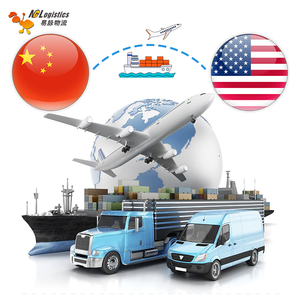
Transporting heavy machinery, modular trailers, offshore marine cranes, and project cargo across international borders demands comprehensive freight handling expertise. From initial factory clearance in China to discharge at destination ports such as Dammam, Jubail, Jeddah Islamic Port, or King Abdullah Port, the entire chain requires a single point of operational accountability.
By leveraging specialized vessel chartering (Ro-Ro, Breakbulk, Flat Rack containers) alongside in-house customs clearance systems (such as Saudi Arabia's FASAH and SABER platforms), heavy machinery importers eliminate administrative delays. Cargo transitions seamlessly from sea freight to company-owned land transport fleets equipped with lowbeds, hydraulic trailers, and SPMTs.
3.2 Regulatory Compliance, SABER Certification & SFDA Integration
Navigating GCC regional customs regulations requires rigorous documentation. Industrial machinery, oilfield drilling consumables, and heavy haulage equipment imported into Saudi Arabia must comply with technical regulations issued by SASO (Saudi Standards, Metrology and Quality Organization). Procuring trailers with pre-verified SABER Product Certificates of Conformity (PCoC) and Shipment Certificates of Conformity (SCoC) ensures same-day customs release and prevents costly port demurrage penalties.
4. Engineering Buying Guide: Evaluating Chinese HMT Manufacturers
When selecting a Chinese manufacturer and exporter for hydraulic modular trailers, buyers must conduct thorough engineering audits beyond price-per-axle metrics. Essential structural and operational benchmarks include:
- Structural Steel Traceability: Ensure the manufacturer provides mill test certificates (MTC) verifying the use of authentic high-tensile steel (such as Baosteel or Qindao Steel Q690D/S690QL). Substandard mild steel frame construction leads to permanent longitudinal sagging under concentrated loads.
- Submerged Arc Welding (SAW) Quality: Inspect ultrasonic and X-ray non-destructive testing (NDT) reports for main box girder welds. Full-penetration longitudinal welds are vital to withstand dynamic torsional twisting forces during heavy transport.
- Surface Treatment & Anti-Corrosion: For offshore oil & gas applications or harsh desert environments, trailers require grit blasting to SA 2.5 standard, followed by zinc-rich epoxy primers and polyurethane topcoats (minimum 240 μm dry film thickness) to survive salt spray corrosion.
- Hydraulic Valve & Seal Components: Superior trailers utilize premium European or high-tier domestic hydraulic valves (Rexroth, Sun Hydraulics) and Parker seals to prevent fluid leaks under high pressure (320 bar).
Frequently Asked Questions on Modular Trailer Procurement
In-depth technical answers addressing procurement, compatibility, customs compliance, and operational maintenance for heavy haulage professionals.
Q: Are Chinese hydraulic modular trailers fully compatible with European brands like Goldhofer or Scheuerle?
Yes. Premier Chinese manufacturers build modular trailers according to international standardization specs. They feature identical coupling pin layouts, hydraulic quick-connect pressures (up to 320 bar), steering rod linkages, and deck loading heights (1,175 mm ± 300 mm). This allows direct mechanical and hydraulic inter-coupling with existing European module fleets.
Q: What is the maximum payload capacity per axle line for heavy-duty modular trailers?
Standard heavy-duty modular axle lines offer payload ratings of 36 to 45 tons per line at low operational speeds (1–5 km/h). At highway transit speeds (up to 80 km/h), allowable highway axle loads typically range from 12 to 16.5 tons per axle line depending on local bridge load formulas and regional DOT regulations.
Q: How does the hydraulic suspension stroke assist in superload transport?
The ±300 mm (total 600 mm) hydraulic axle stroke enables three vital functions: 1) Elevating or lowering the trailer platform to self-load and unload heavy cargo without cranes; 2) Leveling the platform when traversing uneven terrain or road cambers; and 3) Equalizing wheel weights across all axles to prevent individual tire blowout.
Q: What documentation is required to clear hydraulic modular trailers into Saudi Arabia and GCC states?
Imports require commercial invoices, clean Bills of Lading, Certificate of Origin, mill test reports for structural steel, and critically, SABER conformity documentation (Product Certificate of Conformity and Shipment Certificate of Conformity). Working with an integrated logistics partner ensures smooth FASAH customs release at ports like Dammam or Jeddah.
Q: What is the difference between a conventional HMT and a Self-Propelled Modular Transporter (SPMT)?
A conventional HMT relies on an external tractor unit (prime mover) for propulsion and steering pull force via a towbar or gooseneck. An SPMT integrates hydrostatic drive motors directly inside the wheel hubs powered by an onboard Power Pack Unit (PPU), allowing multidirectional computer-controlled steering without needing a truck tractor.
Q: How do manufacturers prevent structural deck sagging over long frame lengths?
High-quality trailers utilize high-yield strength structural steel such as Q690D or S690QL welded into rigid box-beam central girders. Mainframe cross-members and outer bolsters are engineered to provide maximum bending moment resistance (up to 14,000 kNm) with positive pre-cambering built into the frame during factory assembly.
Ready to Upgrade Your Heavy Transport Fleet?
Consult with our structural engineers and global project cargo team to customize hydraulic modular trailers, arrange factory inspections, or request landed door-to-door quotations.
Send an Inquiry