

Engineered Cargo Containers & Offshore Deck Machinery
Direct factory export, specialized ISO container solutions, marine heavy-lift cranes, and hazardous goods containerization certified for Saudi Aramco and GCC industrial sites.
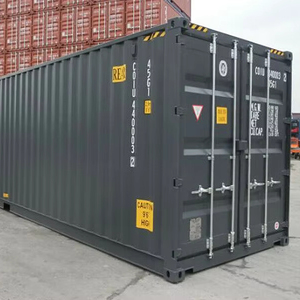
Sea Shipping Cargo Second Hand 20/40/45GP Reefer/flat Rack/open Top Side Open Containers for Trading on Sale
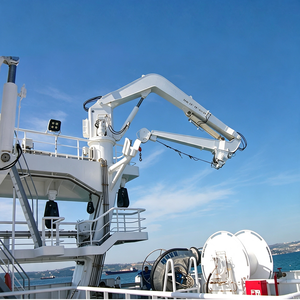
Offshore Knuckle Boom Marine Crane High Flexibility Hydraulic Ship Crane for Vessel Cargo Maintenance Operations
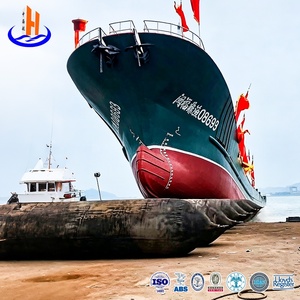
ZHH Heavy-Duty Rubber Oil Rig Barge Transfer Airbags Flotation Units Long Life Span for Boat Offshore Platform Logistics Made
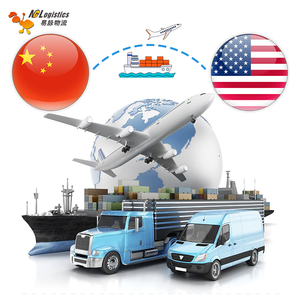
Dangerous Cargo Shipping Container Sea/Ocean Freight Services From China to California/Texas Hazardous Goods Shipping
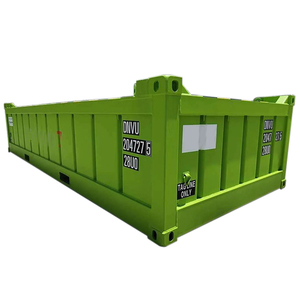
DNV Offshore Basket Portable tank Van Container Sea Shipping Container for Transporting Equipment for Oil Rigs

Heavy Machinery Sea Freight to Colombia Port | Rotary Industrial Equipment & Large Spare-Parts
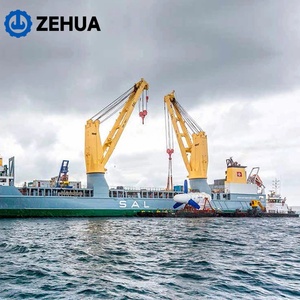
5t 10t 20t 30t 50t 70t Suitable for deck mounting on cargo ships tankers fishing vessels and offshore platforms
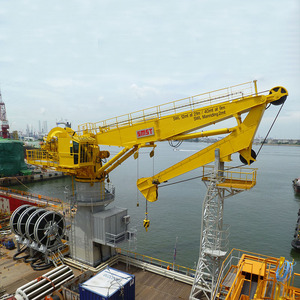
High Performance Marine Knuckle Crane for Offshore Cargo Transfer and Flexible Deck Handling
Why Leading Global EPC Contractors & Industrial Factories Trust Nuraak Gulf
Eliminating supply chain seams between Chinese manufacturing ports and King Abdulaziz Port in Dammam through single-accountability execution.
In-House Licensed Customs Brokers
Unlike typical freight brokers who outsource clearance to third parties, Nuraak Gulf operates direct in-house customs brokerage licenses at Dammam Port, Jubail, and Riyadh Dry Port for zero-friction entry.
SABER & SFDA Platform Expertise
We pre-audit HS codes at Chinese factories, issuing Product Certificates of Conformity (PCoC) and Shipment Certificates of Conformity (SCoC) prior to vessel departure to eliminate port demurrage risk entirely.
Company-Owned Land Fleet
From heavy low-bed trailers and multi-axle hydraulic modules to climate-controlled reefer trucks, our dedicated transport fleet connects Dammam Port directly to oilfields, megaprojects, and GCC sites.
Zero-Demurrage Guarantee Protocol
Real-time container tracking combined with pre-arrival electronic customs filing ensures cargo moves out of Dammam container terminals within the free-time window, preventing costly port storage penalties.
IMDG Certified Dangerous Goods Handling
Fully compliant ocean transport and terminal clearance for Hazardous Material Classes 2 through 9, supported by specialized safety equipment, certified drivers, and ZATCA compliance documentation.
24/7 Operations Desk & Dedicated File Owner
Every client is paired with a named single-point coordinator located in Dammam. Direct access, proactive milestone tracking, and 24-hour response cycles eliminate automated queues.
1. Executive Overview: Navigating the China-to-Saudi Arabia Maritime Trade Corridor
The bilateral trade corridor connecting Chinese manufacturing hubs—including Shanghai, Ningbo, Shenzhen, Qingdao, and Tianjin—to King Abdulaziz Port in Dammam represents one of the world's most vital energy, infrastructure, and industrial supply chains. As Saudi Arabia advances its Vision 2030 economic transformation, the demand for industrial machinery, oilfield exploration units, specialized offshore deck cranes, structural steel, and chemical reagents has reached unprecedented levels.
However, cross-border procurement between China and Saudi Arabia presents complex logistics and regulatory friction points. Importers frequently face severe cost overruns caused by mismatched customs documentation, delayed SABER certificates of conformity, unexpected port demurrage, and mismanaged last-mile transport. Nuraak Gulf operates as a fully integrated freight forwarder, customs broker, and fleet operator headquartered in Dammam, bridging Chinese manufacturing excellence with Saudi Arabia's strict regulatory frameworks.
2. Industrial Equipment Analysis & Sourcing Specifications
Industrial procurement across the Middle East requires rigorous adherence to technical standards, environmental resilience, and international safety certifications. Below is an analytical review of key industrial assets sourced from Chinese manufacturers for deployment at Dammam Port, regional oilfields, and offshore maritime operations:
A. Special ISO Containers: Flat Rack, Open Top, and Reefer Units
Standard dry-van containers are frequently inadequate for out-of-gauge (OOG) machinery, heavy rotary equipment, and temperature-sensitive products. High-grade modified 20GP, 40GP, and 45GP containers—including side-open, open-top, and flat-rack variants—are mandatory for heavy industrial transfer.
- Flat Rack & Open Top Containers: Essential for over-height and over-width industrial equipment such as turbines, boilers, and heavy rotary gearboxes. Engineered with high-tensile steel corner castings and reinforced floor beds designed for extreme concentrated loads.
- Climate-Controlled Reefer Units: Equipped with precision digital refrigeration compressors capable of maintaining tight temperature ranges (-30°C to +30°C) amidst the extreme ambient heat of Saudi Arabia's Eastern Province.
B. Marine & Offshore Crane Systems
Offshore platform maintenance and vessel cargo transfer require high-flexibility hydraulic knuckle boom marine cranes. Rated for dynamic sea states and heavy deck mounting (5t through 70t capacities), these cranes incorporate marine-grade anti-corrosion coatings, explosion-proof hydraulic pumps, and fail-safe braking systems essential for Saudi Aramco offshore concessions and Arabian Gulf maritime operations.
C. DNV 2.7-1 Certified Offshore Baskets & Portable Tank Containers
Equipment transported to offshore rigs and drilling platforms must comply strictly with DNV 2.7-1 / EN 12079 design standards. Offshore cargo baskets and portable tank van containers feature integrated pad-eyes, heavy-duty sling sets, and structural framing capable of withstanding dynamic impact loads during offshore crane transfer in high seas.
D. Heavy-Duty Oil Rig Barge Airbags & Flotation Systems
Manufactured from high-strength multi-layer synthetic-tire-cord layers and vulcanized natural rubber, heavy-duty pneumatic flotation airbags facilitate vessel launching, barge transfers, and offshore platform installation. Their high operating pressure capability and abrasion resistance ensure long operational lifespans in harsh saltwater environments.
E. Hazardous Goods (DG) Container Shipping & Logistics
Transporting dangerous cargo from Chinese factories to Dammam Port requires strict compliance with the International Maritime Dangerous Goods (IMDG) Code. Hazardous shipments—including industrial chemicals, pressurized gases, and corrosive solvents—demand UN-certified packaging, specialized hazard labeling, segregated deck stowage, and specialized customs clearance protocols via ZATCA and Saudi Port Authorities (MAWANI).
3. Strategic Future Procurement Trends (2026–2030)
The logistics landscape between China and the GCC is undergoing structural shifts driven by digital compliance, sustainability directives, and mega-project schedules. Procurement directors must adapt to three macro trends defining the China-Saudi logistics corridor:
| Logistics Pillar | Traditional Procurement Approach | Next-Generation Procurement Model (2026+) |
|---|---|---|
| Customs Compliance | Post-arrival document submission via physical brokers at Dammam Port. | Pre-manifest electronic clearance via FASAH & advance SABER digital certificate verification before origin loading. |
| Logistics Sourcing | Transaction-based hiring of separate freight forwarders, brokers, and truckers. | End-to-end single-contract logistics integration with single-point accountability and guaranteed landed costs. |
| Container Fleet Usage | Standard carrier container leasing subject to severe demurrage penalties. | Strategic deployment of shipper-owned (SOC) containers & DNV offshore certified baskets for long-term project stability. |
| Supply Chain Visibility | Manual phone/email updates with fragmented status reports. | Real-time digital milestone updates, automated port free-time alerts, and predictive arrival analytics. |
As Saudi Vision 2030 projects—such as NEOM, the Red Sea Project, Qiddiya, and major industrial expansions in Jubail and Ras Al Khair—accelerate, procurement strategies are prioritizing landed cost predictability over lowest initial ocean freight rates. A low ocean freight rate becomes instantly counterproductive if cargo is detained at Dammam Port for 15 days due to incomplete SABER documentation, incurring hundreds of dollars per day in demurrage and storage penalties.
4. Industry Development Trends: Dammam Port & Saudi Regulatory Architecture
Understanding the operational and regulatory environment of King Abdulaziz Port in Dammam is critical for maintaining an efficient supply chain into Saudi Arabia's Eastern Province and industrial centers.
A. The FASAH Electronic Customs Ecosystem
Saudi Arabia has transformed its trade clearance through the FASAH platform, an integrated electronic window managed by Saudi Customs (ZATCA). Importers and authorized brokers can submit manifests, bills of lading, commercial invoices, and certificates of origin electronically prior to vessel arrival. Proper integration with FASAH enables 24-hour clearance for compliant shipments, radically shortening port dwell times.
B. SABER Conformity Assessment System
Enforced by the Saudi Standards, Metrology and Quality Organization (SASO), the SABER platform mandates that regulated goods imported into Saudi Arabia possess valid digital certificates of conformity. The clearance process comprises two essential stages:
- Product Certificate of Conformity (PCoC): Issued per product type and valid for one year. Obtained by verifying technical compliance against SASO technical regulations.
- Shipment Certificate of Conformity (SCoC): Issued specifically for each individual shipment arriving at Saudi ports. Cargo cannot clear customs without a verified SCoC linked in the FASAH portal.
C. Port Infrastructure Expansion & Railway Logistics Integration
King Abdulaziz Port in Dammam features modern container terminals, breakbulk berths, and direct railway connections to the Riyadh Dry Port. Choosing the appropriate transport modality—whether direct trucking along the Highway 40 corridor or rail freight into central Saudi Arabia—depends heavily on cargo dimensions, weight distribution, and urgent site timelines.
5. Technical Deep-Dive: Managing Specialized & Heavy Breakbulk Cargo
Transporting complex industrial equipment—such as 70-ton deck-mounted winches, rotary machinery, or offshore rig transfer airbags—requires precise technical handling across every leg of the journey:
1. Factory Pre-Shipment Inspection (China): Prior to container loading or vessel lashing in China, equipment undergoes rigorous dimensional checking, center-of-gravity verification, and protective wrapping. Electrical panels and hydraulic systems require anti-corrosion barrier packaging to withstand salt spray during ocean transit.
2. Vessel Stowage & Lashing Engineering: For breakbulk and flat-rack cargo, proper weight distribution and lashing points are calculated using high-tensile chain bindings, steel wire ropes, and heavy-duty dunnage. Mismatched lashing calculations can cause cargo displacement during high-sea transit, risking carrier rejection at discharge ports.
3. Discharge Operations at Dammam Port: Upon arrival at King Abdulaziz Port, heavy-lift cargoes are discharged using vessel gear or port mobile harbor cranes under the direct supervision of Nuraak Gulf marine surveyors. Immediate transfer to heavy-haul hydraulic low-bed trailers avoids double-handling and minimizes terminal storage risks.
6. Nuraak Gulf Enterprise Advantages: End-to-End Operational Excellence
Headquartered in Dammam with operational coverage spanning both the Arabian Gulf and Red Sea coastlines, Nuraak Gulf offers a single, accountable logistics framework designed for international manufacturers and Saudi project importers.
- Single-Point Accountability: One named coordinator manages your file from origin factory pickup in China to final site delivery in Saudi Arabia. No automated ticketing systems or disjointed handovers.
- In-House Clearance Architecture: Our licensed brokers directly handle FASAH filings, SABER certificate linking, SFDA registrations, and ZATCA duty settlements without third-party delay.
- Company-Owned Transport Fleet: A maintained land transport fleet consisting of flatbeds, heavy low-beds, multi-axle modular trailers, and temperature-controlled reefers ensuring immediate dispatch upon port release.
- Strategic Gateway Access: Operational presence across 7 key gateways including Dammam, Jubail, Riyadh, Jeddah, King Abdullah Port, Yanbu, and the Al Batha land border crossing.
- Proactive Demurrage Prevention: Real-time monitoring of free-time windows with automated risk flags ensures zero surprise port detention fees.
Frequently Asked Questions: China-to-Saudi Arabia Logistics & Customs Clearance
Clear, authoritative answers to common procurement, compliance, and maritime freight queries regarding Dammam Port operations.
Streamline Your China-to-Saudi Supply Chain Today
Eliminate customs clearance delays, avoid demurrage charges, and secure reliable ocean freight and land transport with Saudi Arabia's premier logistics partner. Speak directly with our Dammam operations desk.