
Export-Grade Solar & Energy Storage Equipment Catalog
Direct Factory Sourcing & Integrated Turnkey Freight Solutions for Commercial, Industrial, and Utility-Scale Projects worldwide.
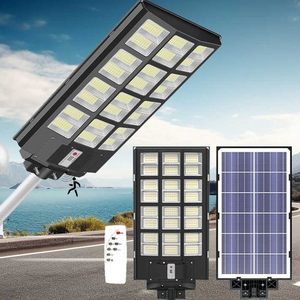
Street Solar Lights 1000W Outdoor Projector 500W 1000W 1500W LED Solar Flood Garden Lights Led Solar Street Light
Renewable Energy Equipment Shipping From China to USA Door to Door DDP for Solar Panels and Wind Turbines Freight Forwarder
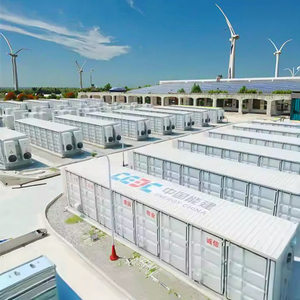
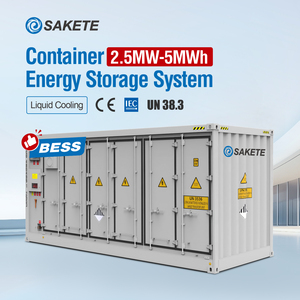
BYD 1MW 3.5MWH 5MWH 10MWH Solar System Lifepo4 Energy Storage 20FT 40FT Liquid Cooling 1MWH BESS Commercial Containerized Model
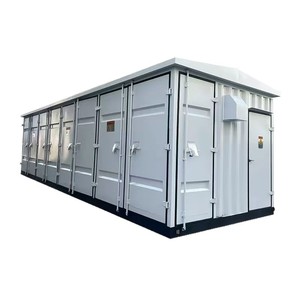
Photovoltaic Liquid Cargo Container Energy Storage Lithium Battery Power Station PCS Inverter Box Integrated Cabin CE Certified
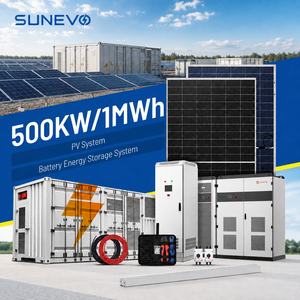
Containerized Hybrid Solar Energy Storage System 100kW 200kW 500kW with HJT Bifacial Solar Panels for Commercial Industrial Use
Solar Panel & Battery DDP Full Container Service to USA Renewable Energy Equipment Shipping
Solar Panel Shipping China Germany DDP Energy Storage ESS Battery Logistics 15 Years Professional Forwarder Tax Paid Air+Express
Why Enterprise Buyers Partner With Us
Combining OEM-grade solar battery manufacturing supply chains with end-to-end hazardous goods freight forwarding and in-house customs clearance.
In-House Licensed Brokerage & Clearance
Unlike standard freight brokers, we maintain direct regulatory clearing channels—including US FDA/Customs AMS, EU Customs Atlas system, Saudi FASAH, SABER, and SFDA portals. We eliminate third-party handover gaps that trigger costly demurrage fees.
Specialized BESS & Class 9 DG Logistics
Containerized energy storage systems utilizing Lithium Iron Phosphate (LiFePO4) chemistry fall under hazardous goods UN3480 and UN3536 classification. We provide full IMDG compliance, MSDS validation, UN38.3 certification audits, and temperature-monitored marine transport.
Direct Factory-to-Site (DDP) Transparency
From tier-1 solar manufacturing hubs in Jiangsu, Zhejiang, and Guangdong directly to project installation sites in North America, Europe, and the Middle East. Our landed price guarantee includes ocean freight, port charges, customs tariffs, tax-paid clearance, and heavy-lift lowbed site delivery.
Global Renewable Energy & Solar Equipment Trends (2026–2030)
A strategic analysis of technical developments, storage integration, and supply chain logistics transformation in the global renewable energy ecosystem.
1. The Paradigm Shift to High-Density Utility-Scale BESS (5MWh to 10MWh+)
The global utility-scale photovoltaic sector is undergoing a rapid evolution, moving away from decentralized residential solar configurations toward ultra-high-density Battery Energy Storage Systems (BESS). As grid stability requirements grow more rigorous across North America, Europe, and GCC markets, solar projects are mandating integrated 20ft and 40ft containerized battery enclosures capable of delivering 5MWh to 10MWh per ISO container footprint.
By leveraging high-capacity LFP (Lithium Iron Phosphate) cell architectures (such as 314Ah and 530Ah cells), manufacturers in China are achieving a 40%+ increase in volumetric energy density compared to legacy 3.44MWh systems. This density drastically cuts project balance of system (BOS) costs, reduces land footprint requirement, and lowers transport cost per megawatt-hour shipped.
2. Liquid Cooling vs. Forced Air Thermal Management
Thermal management is the critical determinant of BESS lifespan, round-trip efficiency (RTE), and operational safety. Industry procurement data shows a decisive market transition from traditional forced-air cooling to advanced Liquid Cooling Systems.
Liquid cooling plates direct coolant across battery cell surfaces, maintaining inter-cell temperature variances within ≤2.5°C. This yields a 30% reduction in auxiliary power consumption (parasitic load), extends battery calendar life up to 15 years (6,000 to 8,000 cycles at 80% DoD), and eliminates localized thermal runaway risks during peak discharge cycles.
3. Adoption of N-Type HJT Bifacial Panels & Smart Microgrids
Photovoltaic module physics has reached a tipping point, with N-Type Heterojunction (HJT) technology replacing P-Type PERC cells. HJT modules offer cell conversion efficiencies exceeding 25.5%, a low temperature coefficient of -0.26%/°C, and bifaciality factors up to 90%.
When coupled with hybrid containerized power stations integrated with PCS (Power Conversion System) inverter boxes, these microgrids seamlessly transition between On-Grid and Off-Grid modes within 10 milliseconds, making them indispensable for remote mining, agricultural pump operations, and islanded industrial hubs.
4. Digitization of End-to-End DDP Freight and Regulatory Compliance
Supply chain security has become as important as hardware specifications. Shippers facing complex international trade hurdles—such as US Section 301 tariffs, anti-dumping duties (AD/CVD), EU Carbon Border Adjustment Mechanism (CBAM) tracking, and Middle Eastern SABER/SFDA certification—require fully digitized, compliant freight pathways.
Modern freight forwarding combines real-time IoT thermal tracking inside shipping containers with pre-cleared customs documentation. By securing landed duty-paid (DDP) contracts upfront, commercial buyers lock in final equipment expenditure, mitigating surprise port storage fees and customs holding delays.
Future Procurement Dynamics & Landed Cost Breakdown
Comparative framework analyzing cost components, risk profiles, and logistics strategies for importing solar & energy storage systems from China.
| Equipment Category | Primary China Cluster | Key Regulatory Certification | Freight Classification | DDP Risk Level & Mitigation |
|---|---|---|---|---|
| 5MWh–10MWh BESS Containers | Jiangsu (Nanjing / Changzhou) | UL9540, UL1973, CE, IEC62619 | Class 9 Dangerous Goods (UN3536) | High: Requires hazardous ocean carrier allocation & specialized lowbed chassis delivery. |
| N-Type HJT Bifacial Solar Panels | Zhejiang (Jiaxing / Ningbo) | IEC 61215, TÜV, CE, UL61730 | Standard General Cargo (40HQ FCL) | Medium: Glass breakage risk; requires anti-vibration container loading & transit insurance. |
| Liquid Cooling PCS Inverter Cabins | Guangdong (Shenzhen / Dongguan) | CE-EMC, IEEE 1547, Grid Code | Integrated Machinery / Heavy Cargo | Low: In-house pre-shipment testing reduces destination port customs inspection delays. |
| Commercial Solar Street Lights | Guangdong (Zhongshan / Jiangmen) | RoHS, CE, IP67 Test Reports | General Cargo / Battery Co-pack | Low: Fast-track customs clearance via air/express or standard ocean LCL/FCL. |
Factory Selection & OEM Vetting
Procurement teams must audit tier-1 factories based on cell consistency, automated laser welding quality, and BMS protocol open-architecture. Ensure suppliers provide UN38.3 test summaries and MSDS reports prior to finalizing purchase agreements to prevent shipping port rejections.
Freight Forwarding Contract Structuring
Avoid FOB terms for energy storage battery systems. Shippers shifting to DDP (Delivered Duty Paid) transfer transit hazards, port demurrage liability, and customs classification compliance to experienced logistics partners who manage hazardous vessel stowage space directly with ocean lines.
Procurement & Logistics Technical FAQ
Direct answers from senior supply chain directors and freight compliance officers on importing solar equipment from China.
Energy Storage Systems shipped as installed container units are classified under UN3536 (Lithium batteries installed in cargo transport unit, Class 9 Hazardous Goods). If batteries are transported separately from the control systems or enclosures, they fall under UN3480 (Lithium ion batteries). UN3536 shipping requires specialized DG-certified vessels, strict container lashing inspection certificates, and complete MSDS and UN38.3 documentation prior to booking confirmation.
Our DDP service represents a turnkey logistics solution. It covers pickup from the factory in China, export customs clearance, ocean or air freight, transit insurance, import customs entry, payment of all import tariffs (including US Section 301 duties or EU VAT), port handling fees, and final delivery by specialized lowbed or flatbed truck directly to your job site or warehouse.
Batteries are shipped at a factory-set State of Charge (SoC) between 30% and 50% in accordance with international maritime dangerous goods (IMDG) regulations. BESS containers feature built-in aerosol fire suppression systems (e.g., Novec 1230 / FM200), combustible gas detectors, and automated HVAC/liquid cooling controls. We also utilize shock and temperature data loggers inside containers for continuous transit monitoring.
For Saudi Arabia, imports require product registration on the SABER portal to issue a Product Certificate of Conformity (PCoC) and a Shipment Certificate of Conformity (SCoC). Electrical components must comply with SASO IEC standards. Food, medical, or specialized water-treatment solar systems may also require SFDA clearance. Our in-house customs team handles all FASAH customs filings directly.
Liquid cooling provides significantly higher heat transfer efficiency compared to air. It maintains uniform cell temperatures (variance ≤2.5°C), extends total system cycle life by up to 20%, consumes 30-40% less internal auxiliary electricity, and enables higher energy packaging density in a standard 20ft container footprint (up to 5MWh+ per enclosure).
Transit times vary by destination port: China to US West Coast (14–18 days); China to US East Coast (25–35 days); China to Europe / Germany (28–38 days via Cape of Good Hope / Suez); China to Middle East / Dammam or Jeddah (15–22 days). Air freight and express solutions are available for urgent spare parts (3–7 days).
Ready to Engineer Your Renewable Energy Supply Chain?
Whether you are sourcing utility-scale 5MWh BESS containers, N-Type solar panels, or require specialized Class 9 DDP door-to-door freight forwarding, our engineering and logistics specialists are standing by.