


Strategic Sourcing & Riyadh Bonded Warehouse Logistics Architecture: Bridging China Manufacturers with Saudi Arabia's Vision 2030
Executive Summary: As Saudi Arabia accelerates its Vision 2030 infrastructure initiatives, the strategic demand for high-volume China wholesale manufacturing—ranging from heavy marine equipment and DNV offshore baskets to hazardous containers and industrial spares—requires a structural evolution in supply chain management. Establishing a streamlined China-to-Riyadh distribution model via Bonded Warehouses (such as the Special Integrated Logistics Zone - SILZ and Riyadh Dry Port Bonded Area) offers global buyers, EPC contractors, and distributors duty deferral, seamless customs clearance, and accelerated regional GCC distribution.
1. The Strategic Imperative of China Sourcing & Riyadh Bonded Warehousing
The trade corridor between Chinese manufacturing hubs (Ningbo, Shanghai, Shenzhen, Qingdao) and the Kingdom of Saudi Arabia represents one of the world’s most dynamic procurement arteries. However, traditional direct-to-site shipping models often expose importers to unexpected demurrage charges, administrative bottlenecks under Saudi Customs (ZATCA), and liquidity strain caused by upfront Customs Duty and Value Added Tax (VAT) payments prior to goods distribution.
By leveraging China wholesale manufacturing integrated with Riyadh Bonded Warehouse Logistics, enterprise buyers can transform their procurement strategy. Goods are manufactured in China under rigorous quality controls (such as ISO 9001, DNV 2.7-1, and CE standards), shipped via ocean freight to major Saudi coastal entries (Dammam King Abdulaziz Port or Jeddah Islamic Port), and bonded rail-transported directly into Riyadh without immediate customs duty assessment.
Duty Deferral & Cash Flow
Postpone 5% to 12% customs duties and 15% VAT until the exact moment products leave the Riyadh Bonded Zone for domestic Saudi commercial entry.
Re-Export GCC Flexibility
Re-export equipment directly from Riyadh Bonded Hubs to UAE, Kuwait, Bahrain, Qatar, or Oman with zero local Saudi import tariffs applied.
SABER Conformity Clearance
In-house licensed brokers manage product conformity certificates (PCC) and shipment certificates (SCC) prior to port arrival, eliminating clearance delays.
2. Product Engineering Standards & Wholesale Equipment Specifications
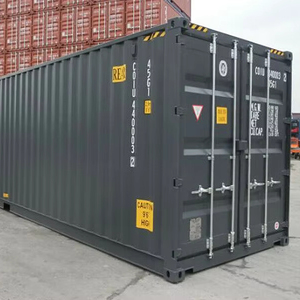
Industrial procurement demands absolute compliance with international engineering standards. Whether sourcing heavy-lift offshore cranes, marine rubber salvage airbags, or specialized hazardous shipping containers from certified Chinese manufacturers, buyers must verify critical engineering parameters before commissioning export production.
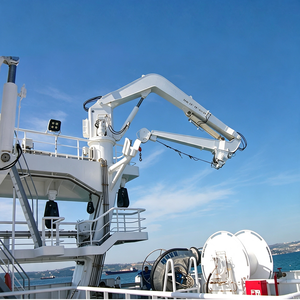
A. Offshore Knuckle Boom & Deck Winch Cranes
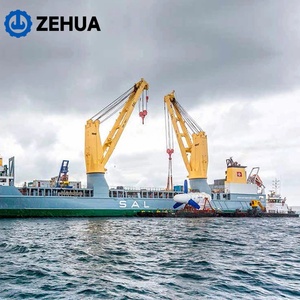
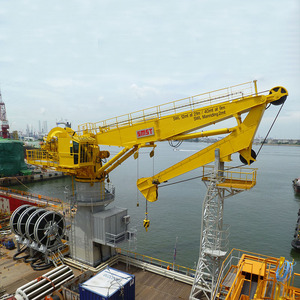
Marine cranes deployed on oil platforms, supply vessels, and fishing fleets in the Arabian Gulf face severe salinity, heat, and structural stress. China manufacturing standards for export cranes incorporate high-tensile HG785 steel, marine-grade epoxy coating systems (3-coat 300µm DFT), continuous 360° slewing bearings, and emergency fail-safe hydraulic braking systems. Units are tested under 125% dynamic overload conditions prior to load-out certification.
B. DNV 2.7-1 Certified Offshore Cargo Baskets & Tank Containers
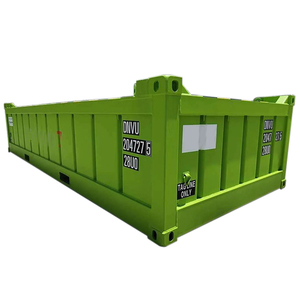
Offshore oil rig logistics require specialized transport frames certified under DNV 2.7-1 / EN 12079 standards. These portable tanks and offshore baskets feature pad-eyes rated for dynamic offshore hoisting, full material traceability (EN 10204 3.1 certificates), non-destructive testing (NDT) on all load-bearing welds, and hot-dip galvanized finishes to resist harsh offshore corrosion.
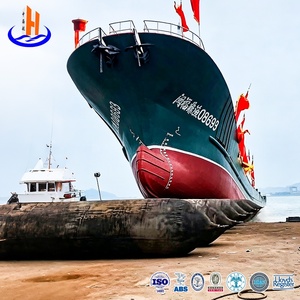
C. Pneumatic Rubber Airbags for Marine Vessel Launching
Heavy-duty marine airbags utilize multi-layer synthetic-tire-cord layers vulcanized with high-durability natural rubber matrices. Engineered to withstand working pressures ranging from 0.08 MPa to 0.25 MPa, these airbags enable cost-effective barge transfer, ship haul-outs, and heavy platform flotation across Middle Eastern shipyards.
| Equipment Category | Manufacturing Compliance | Primary Operational Application | Saudi Regulatory Clearance |
|---|---|---|---|
| Reefer & Dry Cargo Containers | ISO 1496-1, CSC Plate, TIR | Cold chain food, general wholesale, equipment staging | FASAH Port Entry / Customs Clearance |
| Offshore Knuckle Boom Cranes | API 2C, ABS, DNV, BV Certified | Deck cargo handling, platform maintenance, vessel repair | SABER Machinery Certificate (PCC/SCC) |
| DNV Offshore Containers/Tanks | DNV 2.7-1, EN 12079, ISO 10855 | Oil & Gas exploration, chemical transport, rig spares | ZATCA Bonded Transfer Inspection |
| Hazardous Cargo Shipping Containers | IMO Class 1-9, UN Portable Tank | Industrial chemicals, battery storage, petrochemical spares | SFDA / Civil Defense Hazmat Approval |
| Heavy Marine Flotation Airbags | ISO 14401, CB/T 3795-1996 | Barge launch, shipwreck salvage, heavy weight shift | Commercial Invoice & Inspection Certificate |
3. The China-to-Riyadh Distribution Architecture: Route Optimization & Cost Control
Optimizing the physical flow of wholesale goods from Chinese manufacturing factories to Riyadh-based end users involves a highly orchestrated multi-modal network. Understanding the transit trade-offs between ocean ports, inland rail, and heavy truck dispatch is essential for maintaining supply chain agility.
Maritime Gateways: Arabian Gulf vs. Red Sea
Importers must choose the optimal ocean route based on final destination requirements within the Kingdom:
- Dammam (King Abdulaziz Port) Gateway: The primary maritime door for Central and Eastern Province distribution. Ocean liners sailing from China (Ningbo/Shanghai) reach Dammam in approximately 18 to 22 transit days. Freight is seamlessly transferred via Saudi Railway Company (SAR) bonded container rail lines directly to the Riyadh Dry Port Bonded Warehouse.
- Jeddah Islamic Port & King Abdullah Port Gateway: Ideal for shipments bound for Western projects (NEOM, Red Sea Project, Yanbu industrial corridor) or fast-tracked trans-Arabian truck routes connecting to Riyadh via the Highway 40 logistics corridor.
4. Strategic Sourcing Trends & Procurement Projections (2026–2030)
The global wholesale supply chain is undergoing profound structural shifts. Enterprise buyers sourcing industrial capital goods from China for Middle Eastern projects are adopting new procurement models to hedge against global disruption:
1. Shift from 'Just-in-Time' to 'Bonded Hub Staging'
Global supply chain volatility has highlighted the fragility of pure Just-in-Time (JIT) manufacturing. Leading enterprise buyers in Saudi Arabia now maintain 30 to 90 days of critical operational inventory—such as oilfield drilling consumables, heavy machinery parts, and specialized containers—safely stored inside Riyadh Bonded Warehouses under duty-deferred status.
2. Complete Digital Integration via SABER & FASAH
Saudi Arabia’s modernization of trade compliance through the SABER platform and FASAH single-window portal has replaced paper documentation with automated, cryptographic compliance verification. China manufacturers must align factory technical documentation (test reports, factory audit certificates, ISO quality proofs) with Saudi-accredited conformity assessment bodies (CABs) before cargo departs Chinese loading ports.
3. ESG & Sustainable Maritime Chartering
Decarbonization mandates are prompting tier-1 contractors to evaluate shipping emissions. Modern container shipping lines operating between Asia and the Middle East are utilizing LNG-dual fuel vessels and optimizing vessel speed to lower scope 3 supply chain carbon footprints.
5. Enterprise Value Proposition: Why Nuraak Gulf is Your Trusted Saudi Logistics Partner
Navigating the complexities of international ocean freight, custom regulatory frameworks, and interior Saudi road distribution requires an accountable partner with deep local roots and global reach. Nuraak Gulf operates as a single, fully accountable partner controlling every stage of the journey.
In-House Customs Brokerage
Unlike traditional freight forwarders who contract third-party customs clearance agents, Nuraak Gulf employs licensed in-house customs brokers operating across all 7 major Saudi gateways. This guarantees direct accountability, rapid query resolution, and zero administrative delays.
Company-Owned Transport Fleet
Our land transport service is anchored by a company-owned, rigorously maintained fleet of flatbeds, heavy lowbeds, refrigerated trailers, and multi-axle hydraulic modules. Goods cleared at Dammam or Riyadh bonded hubs move on our own wheels under live GPS tracking.
Zero Silent Demurrage Policy
We actively monitor container free-time windows at both Chinese export ports and Saudi import terminals. Our automated tracking systems alert your operations desk long before detention charges accrue, saving thousands in unnecessary port fees.
Full GCC Cross-Border Transit
Need to distribute stock from your Riyadh Bonded Warehouse to neighboring Gulf markets? Our cross-border road freight network manages border clearance manifests, carnets, and direct transit to UAE, Kuwait, Qatar, Oman, and Bahrain effortlessly.