

Custom Manufactured Lowbed Semi-Trailers
Explore our factory-direct fleet of low-loader and hydraulic gooseneck semi-trailers built with high-tensile HG60/T700 steel for high-capacity heavy haulage across global terrains.
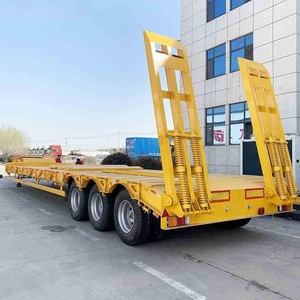
Lowbed Trailer 3 Axle Low Bed Loader 50 60 80 Ton Gooseneck Lowboy Semi Truck Trailer for Sale
Get a Quote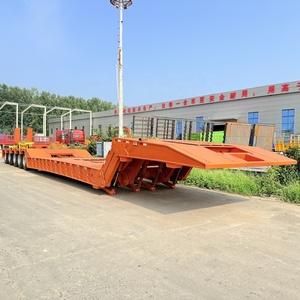
Customizable 3 4 Axles 8-Axle 50ton 60ton 80 100 Ton Heavy Duty Hydraulic Gooseneck Lowboy Lowbed Low Bed Semi Trailer Truck
Get a Quote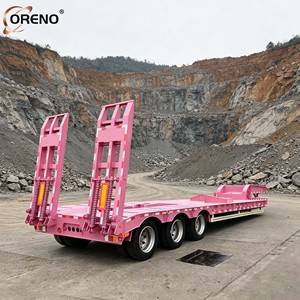
ORENO Factory Direct Heavy Duty 2-6 Axle Lowbed Semi Trailer with Hydraulic Ramps 60-80 Ton Lowboy Flatbed Trailer
Get a Quote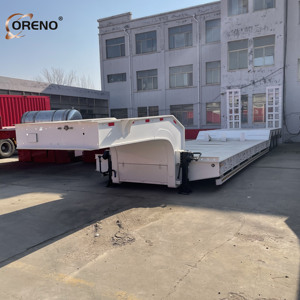
FUWA Axle 3 Axle 60T Heavy Duty Lowbed Semi Trailer Dual Line Brake ABS 11.00R20 12 Wheels Mining Construction Transport
Get a Quote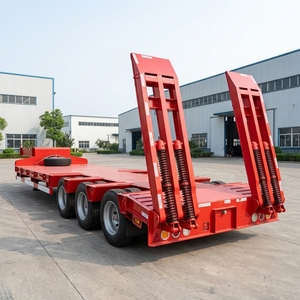
Heavy Duty 2-9 Axles 60 80 100 Tons Lowboy Lowbed Low Bed Truck Semi Trailer With Low Price
Get a Quote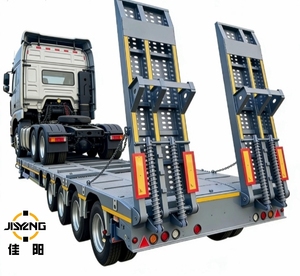
Vehicle Heavy Duty Lowbed Lowboy 100-120 Tons 3 Lines 6 Axles LowBed Semi TruckTrailer 40ft Lowbed Trailer Dimensions 50ton Low
Get a Quote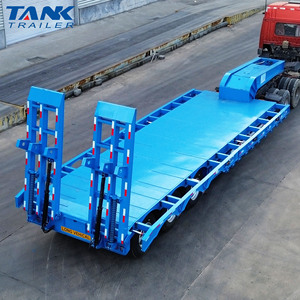
Lowbed Semi Trailer 3 Axle 60-80 Tons Capacity Heavy Duty Lowboy Semi Trailer Steel Low Bed Trailer with Container Locks
Get a Quote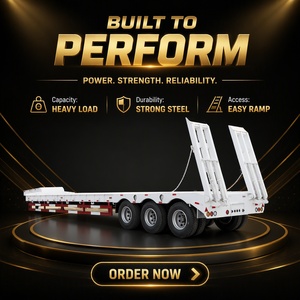
Hot Sale 3 Axle 4 Axle 60 80 100 Tons Heavy Duty Gooseneck Low Loader Low Bed Lowboy Truck Lowbed Semi Trailer
Get a QuoteStructural Integrity & Heavy Load Dynamics
In modern heavy transport logistics, moving super-heavy machinery such as excavators, transformers, mining crushers, and structural steel beams requires uncompromised trailer stability. Our custom OEM lowbed trailers are engineered using Finite Element Analysis (FEA) to simulate complex stress distribution under dynamic road conditions.
- ✓ Submerged Arc Welding (SAW): Main I-beams are welded automatically with submerged arc technology to prevent stress concentration points and structural cracking under maximum payload load cycles.
- ✓ Optimized Deck Heights: Low deck clearance (ranging from 850mm to 1100mm) significantly lowers the center of gravity, drastically enhancing stability during high-speed cornering and transit under low-overhead bridges.
- ✓ Heavy-Duty Ramp Systems: Choose between mechanical spring ramps for standard construction equipment or high-capacity hydraulic folding ramps designed for drive-on loading of heavy tracked machinery.
Technical Benchmark Matrix
Engineered specs designed to meet international road transport regulations (ISO, DOT, ADR, and GCC standards).
| Parameter | Standard Lowbed | Hydraulic Gooseneck |
|---|---|---|
| Payload Range | 40T - 80T | 60T - 120T+ |
| Axle Brands | FUWA / BPW / L1 | FUWA / Steering Axles |
| Suspension | Mechanical Leaf Spring | Hydraulic / Air Suspension |
| Brake System | Dual Line WABCO ABS | Dual Line WABCO ABS/EBS |
| Kingpin | 2" or 3.5" JOST | 3.5" Heavy-Duty JOST |
Integrated OEM Manufacturing & Heavy Freight Expertise
Combining advanced factory automation with comprehensive end-to-end heavy transport logistics support. We don't just build lowboy trailers—we engineer turnkey heavy transport capabilities for your operational demands.
Custom OEM Engineering
Every transport task has distinct challenges. Our in-house engineering team designs bespoke lowbed dimensions, detachable hydraulic goosenecks, extendable telescopic decks, and multi-line axle steering systems optimized for your local terrain and load dimensions.
Rigorous Quality Assurance
From raw steel ultrasonic flaw detection to 100% full-load hydraulic pressure stress testing, our trailers undergo stringent quality checks. Main beams are backed by structural durability guarantees to withstand continuous extreme loading cycles.
Global Freight & Port Gateway Access
Leveraging direct ocean freight forwarding networks, Ro-Ro vessel operations, and customs clearance teams, we ensure seamless factory-to-site delivery. With access to major deep-water ports, your lowbed trailers arrive duty-paid and operational.
Future Trends in Heavy Transport & Lowbed Trailer Procurement (2025–2030)
The global heavy haulage industry is undergoing a paradigm shift driven by stricter infrastructure protection regulations, industrial electrification, and demand for digital asset tracking. Fleet managers and procurement directors must evaluate future-proof trailer configurations before committing capital investments.
1. Modular Hydraulic Axles & Automatic Steering Integration
Traditional fixed-axle trailers are increasingly replaced by self-steering and hydraulic suspension axle lines. Automatic multi-mode steering reduces tire scrubbing by up to 45% during tight urban or job-site turns while distributing heavy axle loads evenly across bridge infrastructure.
2. High-Strength Ultra-Lightweight Steel Alloys
The transition from traditional Q345B carbon steel to advanced thermo-mechanically rolled high-yield steels (such as T700, HG785, and Hardox wear plates) allows manufacturers to reduce trailer tare weight by 15-20% without sacrificing structural payload safety margins.
3. Smart Telematics & Embedded Load Sensing
Next-generation OEM lowboys are equipped with IoT-enabled electronic brake systems (EBS), wireless Tire Pressure Monitoring Systems (TPMS), and real-time axle weight sensors connected to driver cabs and central fleet management software.
Frequently Asked Questions on Lowbed Trailer Procurement
Expert technical insights to help logistics buyers, fleet engineers, and transport contractors choose the ideal lowboy trailer specification.
A standard fixed-gooseneck lowbed trailer requires machinery to be loaded from the rear via mechanical or hydraulic ramps. In contrast, a Removable Hydraulic Gooseneck (RGN) lowboy allows the front gooseneck to detach completely from the trailer frame. The main deck lowers to the ground, creating a very shallow drive-on ramp angle. RGN trailers are ideal for heavy, low-clearance, or non-track machinery (like large wheeled loaders or pavers) that cannot safely climb steep rear ramps.
Determining axle configuration depends on total gross vehicle weight (GVW), local highway axle load limits, and cargo weight distribution. For standard 60–80 ton loads, a 3-axle or 4-axle heavy-duty line (using 13-ton to 16-ton rated axles) with dual tires is standard. For payloads exceeding 100 tons, a multi-line 6-axle or 8-axle line layout (such as 3-line 6-axle or modular hydraulic pendulum axles) is required to distribute the payload pressure evenly across road surfaces and comply with highway bridge protection codes.
Quality lowbed trailer manufacturers utilize high-yield structural steel grades for critical load-bearing components. Main I-beams are typically constructed using HG60, T700, or Q460 high-tensile steel, which provides yield strengths above 680-700 MPa. Secondary side beams and cross-members use Q345B steel. Using high-yield steel increases overall frame tensile strength by up to 50% compared to standard mild steel while minimizing deadweight.
Yes. Many fleet operators require dual-use capabilities. Our custom OEM designs can incorporate flush-mounted concealed container twist locks directly into the lowbed cargo deck. This allows the trailer to transport heavy construction machinery on one leg of a haul and carry standard 20ft or 40ft ISO shipping containers on return trips, maximizing fleet utilization rates.
Standard model production generally takes 15 to 25 working days from technical drawing sign-off. Highly customized trailers (such as multi-axle hydraulic steering lowboys or extendable decks) require 30 to 40 days for fabrication, automated welding, and stress testing. International shipping via Ro-Ro (Roll-on/Roll-off), bulk cargo vessels, or flat-rack container arrangements is coordinated to deliver trailers directly to your destination port.
Request a Custom OEM Engineering Quote
Need precise load calculations, detailed CAD trailer drawings, or factory-direct pricing for your heavy haulage fleet? Speak directly with our senior design engineers today.