
Certified Hazardous Chemical Transport & Storage Equipment
Engineered to international IMDG, ADR, ASME, and DOT standards. Select from our heavy-duty ISO tanks, anti-static IBCs, double-walled vessels, and industrial reactors for secure global transport.
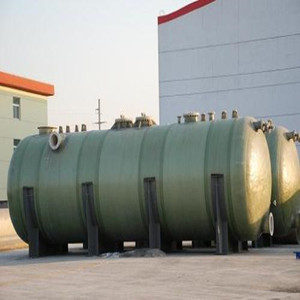
Customization ISO Standard FRP Double Walled Pressure Vessel Storage Tank for Chemical Liquids Diesel Oil
- Material: Fiberglass Reinforced Plastic (FRP)
- Double-Walled Leak Detection System
- Application: Heavy Corrosive Acids & Fuel Bulk
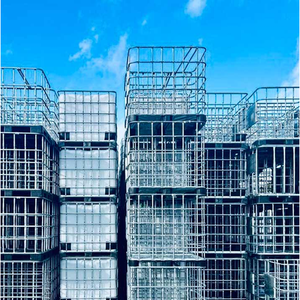
Used IBC Containers For Chemical Transportation Equipment Return And Purchase Service Available
- Capacity: 1000L Standard Composite
- Circular Logistics & Tri-Service Fleet Return
- UN Certified Hydrostatic Pressure Tested
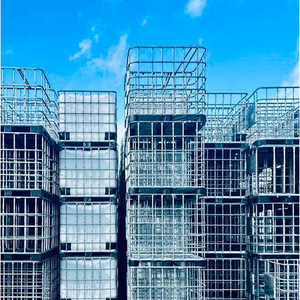
EX-Protected for UN IBCs Conductive or Antistatic Version for Chemical Transportation Equipment
- ATEX Zone 1 & Zone 2 Explosion-Proof
- Surface Resistance: < 10^5 Ohms (Conductive)
- Target Goods: Solvents, Alcohols, Class 3 Flammables
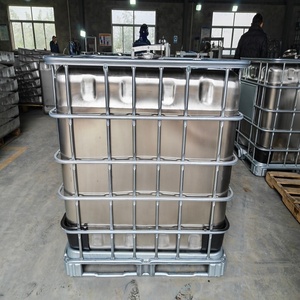
Repeatable Chemical Liquid Industrial Bulk Liquid Stackable Container Easy Transportation 1000L 304 Stainless Steel
- High-Grade SUS304 / SUS316L Alloy
- Heavy Stacking Strength (Up to 3 High Full)
- UN 31A/Y Certification for Maritime Freight
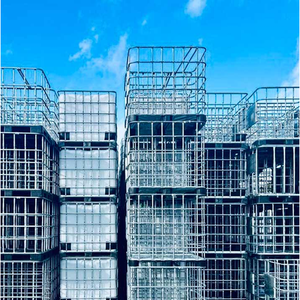
Reconditioned IBCs With Pallet Selection For Efficient Chemical Storage Equipment
- Pallet Options: Steel, Plastic, Wood Hybrid
- Ultrasonic Bottle Inspection & Leak Test
- Cost-Optimized for Industrial Reagents
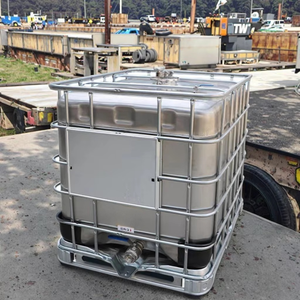
IBC Anti-Spill Function Tank 300L to 1500L Capacity for Hazardous Liquids Transportation Premium Equipment
- Integrated Spill Containment Base Sump
- Range: Modular 300L to 1500L Scaling
- High-Density Polyethylene (HDPE) Core
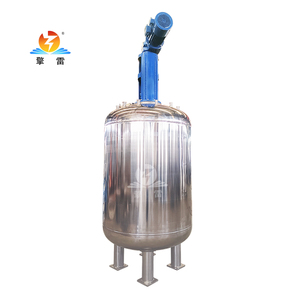
100m3 High Pressure Mixing Tank Stainless Steel Chemical Industrial Reactor
- Large Scale: 100m³ Heavy Processing Vessel
- ASME Sec VIII Div 1 Design Standard
- Jacketed Heating/Cooling Pressure Shell
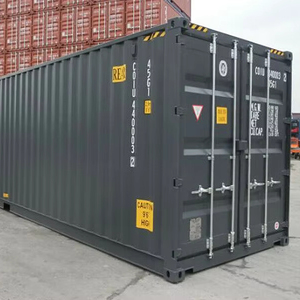
Sea Shipping Cargo Second Hand 20/40/45GP Reefer/flat Rack/open Top Side Open Containers for Trading
- CSC Plate Certified Cargo Worthy Condition
- Types: Flat Rack, Open Top, Reefer, Side Door
- Ideal for Oversized Project Cargo & Machinery
Navigating Hazardous Bulk Chemical Logistics Risk & Containment
The global transportation of hazardous bulk chemicals requires an absolute alignment between metallurgy, containment geometry, international regulatory law, and multimodal routing security. Below is the technical compliance matrix for UN Dangerous Goods Classifications.
| UN Class | Hazard Classification | Primary Transport Containment | Critical Regulatory Standards | Key Risk Mitigation Criteria |
|---|---|---|---|---|
| Class 3 | Flammable Liquids (Petrochemicals, Solvents) | EX-Protected Antistatic IBCs / T11 ISO Tanks | IMDG Code 37-14, ATEX Zone 1/2, ADR | Grounding clips, vapour recovery valves, inert nitrogen blanketing |
| Class 6.1 | Toxic & Infectious Substances (Pesticides, Isocyanates) | SUS316L Heavy Duty Stackable Tanks | DOT-57, UN 31A/Y, ASME VIII | Hermetic sealing, top-discharge only valves, secondary spill sumps |
| Class 8 | Corrosive Substances (Sulfuric Acid, Caustic Soda) | FRP Double-Walled Tanks / Rubber-Lined ISO | ISO 1496-3, SABER Conformity, SFDA | Corrosive-resistant lining thickness (>4.5mm), leak-alarm sensors |
| Class 9 | Miscellaneous Dangerous Goods (Lithium, Resins) | Anti-Spill HDPE Composite IBCs / Flexitanks | MARPOL Annex II, CSC Certification | Temperature monitoring, structural cage impact ratings |
Top 10 Hazardous Chemical Bulk Transport Suppliers & Exporters
An independent engineering and procurement assessment evaluating global fleet capacity, regional Middle East/GCC customs integration, safety compliance indexes, and multimodal asset management.
1. Nuraak Gulf Logistics Company (Saudi Arabia & GCC Leader)
Core Strengths: Headquartered in Dammam, Saudi Arabia, Nuraak Gulf provides end-to-end hazardous chemical logistics across 7 Kingdom gateways (Dammam, Jubail, Jeddah, King Abdullah Port, Yanbu, Riyadh, Al Batha). Operating a fully company-owned lowbed and specialized ISO tank trailer fleet, Nuraak Gulf integrates in-house FASAH, SABER, and SFDA customs clearance with direct port-to-factory delivery, eliminating demurrage risks completely.
Primary Coverage: GCC Region, Arabian Gulf & Red Sea Corridors2. Stolt-Nielsen Limited (Stolt Tank Containers)
Core Strengths: The world's largest operator of ISO tank containers with over 50,000 units. Stolt specializes in global deep-sea chemical parcel tankers and intermodal transport of food-grade and hazardous liquids with sophisticated steam heating and refrigeration capabilities.
Primary Coverage: Global Intermodal Deep-Sea Shipping3. Hoyer Group
Core Strengths: German-headquartered leader in logistics for liquid chemical products, gas, food, and mineral oil. Renowned for custom-engineered IBC tank fleets, intermediate logistics hubs, and stringent SQAS safety auditing across European and Asian supply chains.
Primary Coverage: Europe, Asia-Pacific, North America4. Bertschi AG
Core Strengths: European market leader in intermodal chemical transport via rail, road, and short-sea. Bertschi operates specialized dry bulk containers and liquid ISO tanks, offering integrated chemical handling terminals and plastics logistics hubs.
Primary Coverage: Trans-European Rail & Maritime Logistics5. Leschaco (Lexzau Scharbau GmbH)
Core Strengths: Global pioneer in tank container operations and freight forwarding for hazardous chemicals. Provides specialized door-to-door forwarding, overseas ISO tank management, and custom hazardous materials warehousing solutions.
Primary Coverage: Global Chemical Freight Forwarding6. Den Hartogh Logistics
Core Strengths: Netherlands-based logistics service provider operating an extensive global network of liquid bulk chemical tanks and dry bulk containers. Famous for high customer satisfaction and advanced digital tracking interfaces.
Primary Coverage: Worldwide Liquid Chemical Logistics7. Suttons International
Core Strengths: UK-headquartered bulk liquid transport specialist operating across the Americas, Europe, Middle East, and Asia. Suttons excels in managing complex supply chains for high-hazard liquids, gases, and powders.
Primary Coverage: Transatlantic & Asia-Middle East Logistics8. VTG Tank Container Division
Core Strengths: Combines vast rail freight wagon fleets with over 9,000 ISO tank containers. VTG offers exceptional intermodal flexibility for Class 3, 6, and 8 chemicals, providing customized lined tanks for aggressive acids.
Primary Coverage: Eurasian Rail & Maritime Intermodal9. Eurotainer
Core Strengths: The world leader in tank container leasing, Eurotainer maintains a fleet of over 48,000 tank containers and small portable tanks configured for hazardous liquids, liquefied gases, and cryogenic fluids.
Primary Coverage: Global Tank Equipment Fleet Leasing10. Newport Tank Containers
Core Strengths: A leading international tank container operator specializing in shipment management of bulk liquids. Newport operates an extensive fleet of standard T11 tanks as well as specialized lined equipment for aggressive hazardous chemicals.
Primary Coverage: Global Ocean Chemical RoutesWhy Chemical Procurement Officers Partner With Nuraak Gulf
Chemical bulk transport fails not in open transit, but at regulatory handovers—between customs clearance, haulier dispatch, and port free-time expiration. Nuraak Gulf eliminates these friction points through unified single-file ownership.
In-House Licensed Customs Brokers
Unlike third-party freight forwarders who subcontract customs brokers, Nuraak Gulf maintains direct in-house licensed clearance officers for FASAH, SABER, and SFDA platforms. Your dangerous goods declarations are pre-vetted prior to vessel berth.
Company-Owned Specialized Fleet
We control our transport destiny with a privately owned fleet of heavy-duty prime movers, hydraulic lowbeds, flatbeds, and multi-axle trailers equipped with ATEX-certified grounding, GPS telematics, and ADR hazard plates for immediate port pickup.
Seven Gateway Network & GCC Cross-Border
Operating through Dammam, Jubail, Jeddah, King Abdullah Port, Yanbu, Riyadh, and Al Batha, we manage seamless cross-border land transport into Bahrain, UAE, Kuwait, Qatar, and Oman under unified GCC customs manifests.
Guaranteed Zero Silent Demurrage Policy
Our 24/7 operations desk continuously monitors free-time port windows. We alert your procurement team before costs accumulate and automatically trigger fast-track haulage dispatch the moment customs releases the container file.
Future Procurement & Development Trends in Chemical Transport
Chemical supply chain management is undergoing a structural transition driven by digital telematics, circular economy compliance, and advanced composite materials engineering.
1. Real-Time IoT Telematics & Smart Tank Monitoring
Next-generation bulk transport tanks are equipped with satellite-linked telemetry sensors that continuously transmit real-time data regarding internal pressure, temperature, payload volume, location, and sudden acoustic shock events. Procurement teams gain full auditability for temperature-sensitive liquid chemicals.
2. Circular Reconditioned Packaging & Asset Tracking
ESG directives are accelerating the adoption of certified reconditioned IBC containers and reusable stainless steel stackable tanks. Comprehensive return-and-purchase services enable chemical manufacturers to reduce carbon footprints while retaining UN Class 3/6/8 safety compliance.
3. Advanced FRP & Fluoropolymer Linings
Traditional carbon steel tanks are rapidly being replaced by Fiberglass Reinforced Plastic (FRP) pressure vessels and PTFE/PFA-lined ISO tanks. These materials offer superior resistance against hyper-aggressive chemicals (hydrochloric acid, hydrofluoric acid) while extending container operational lifespans beyond 15 years.
Frequently Asked Questions by Chemical Purchasing Directors
Expert answers to key technical questions surrounding UN hazardous certification, Saudi SABER/FASAH requirements, ISO tank selection, and bulk liquid logistics safety.
Optimize Your Hazardous Chemical Supply Chain Today
Speak directly with Nuraak Gulf's hazardous logistics engineering desk. Get same-day freight quotations, SABER customs compliance audits, and ISO tank fleet reservations.