
Certified heavy-lift cranes, specialized open-top/flat-rack containers, offshore flotation units, and hazardous cargo logistics tailored for global turbine component logistics.
1. Executive Technical Briefing: The Breakbulk Engineering Imperative
The global transition toward high-capacity renewable energy and high-efficiency thermal generation has fundamentally shifted the physical scale of industrial machinery. Modern wind turbines—particularly offshore units reaching 15MW to 18MW capacities—feature blades exceeding 115 meters in length, nacelles weighing over 400 metric tons (MT), and tower segments with diameters surpassing 8 meters. Simultaneously, heavy industrial power projects require the movement of massive steam turbine rotors, gas turbine casings, and generator stators weighing upwards of 500 MT per single piece.
Transporting these out-of-gauge (OOG) and heavy-lift components from leading manufacturing clusters in China (such as Shanghai, Jiangsu, Shandong, and Tianjin) to global project sites across North America, Europe, the Middle East, and Latin America demands sophisticated engineering, rigorous risk management, and specialized maritime logistics assets. Standard containerized logistics cannot accommodate these dimensions; success relies entirely on specialized Breakbulk Ocean Logistics, Heavy Lift Vessels (HLVs), and Self-Propelled Modular Transporters (SPMTs).
As a senior project cargo logistics provider integrated with China’s premier industrial equipment manufacturing ecosystems, our operations strictly adhere to international engineering standards, including DNV-ST-N001 (Marine Operations and Marine Warranty), IMO CSS Code Annex 13, and ISO 14001/9001 certifications. This whitepaper serves as an authoritative guide for EPC contractors, procurement directors, and power project developers seeking to optimize their supply chain execution while eliminating structural risk.
Technical Dimension Matrix: Turbine Component Logistics Specifications
| Component Type | Average Weight (MT) | Dimensions (L x W x H) | Critical Handling Requirement | Primary Transport Mode |
|---|---|---|---|---|
| Offshore Wind Nacelle | 350 - 550 MT | 22m x 9m x 10m | Active Climate Control / Center of Gravity Alignment | Heavy Lift Vessel (Dual Crane Tandem) |
| Onshore/Offshore Blade | 25 - 45 MT | 80m - 125m Length | Flexural Rigidity Monitoring / Tip Saddle Support | Specialized Extendable Adapter Trailer / Deck Charter |
| Turbine Tower Base Section | 90 - 180 MT | 30m x 8m Diameter | Ovalization Prevention / Internal Stiffening Rings | Multi-Axle SPMT / Breakbulk Vessel Hold |
| Gas / Steam Turbine Core | 250 - 480 MT | 12m x 5.5m x 5m | Zero-Impact Hydraulic Jacking / Dynamic Lashing | Heavy Lift Vessel / Hydraulic Modular Trailer |
2. Core Technical Disciplines: Lift Engineering & Sea-Fastening Design
The transportation of super-heavy turbine components requires end-to-end structural engineering long before the cargo reaches the berth. Every single movement involves detailed method statements (RAMS), finite element analysis (FEA) for stress points, and complex metocean calculations.
A. Tandem Lifting & Crane Outreach Radius Analysis
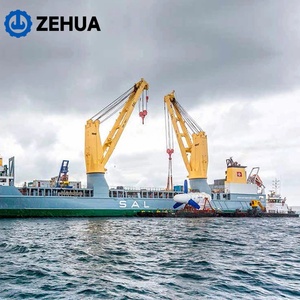
For heavy stator cores and nacelles exceeding 300 MT, single-crane capacity is often insufficient. Our engineering teams design Dual Crane Tandem Lift Calculations utilizing vessel-mounted heavy cranes (up to 800 MT combined lift). Crucial factors evaluated include:
- Crane Outreach and Boom Angle: Calculating dynamic load charts to prevent tip-over risks during port quay loading.
- Spreader Bar Rigging Design: Custom-engineered equalizing beam assemblies to maintain vertical force vectors on lifting lugs, preventing bending moments on turbine casings.
- Hook Height & Clearance: Ensuring adequate air draft above vessel hatch covers during low-tide and high-tide loading windows.
B. SPMT Load Distribution & Ovalization Controls
Transporting massive cylindrical turbine towers from factory staging bays to the barge deck relies on Self-Propelled Modular Transporters (SPMT). With hydraulic axle compensation, SPMTs distribute ground pressure below 3.0 MT/m², protecting port quay structures. For large-diameter thin-walled tower sections, custom-contoured saddles fitted with rubber damping materials prevent structural deformation (ovalization) caused by dynamic road vibrations.
C. Marine Sea-Fastening & Grillage Calculation (IMO CSS Code)
Once loaded onto ocean breakbulk carriers or heavy-deck barges, cargo is subjected to severe multi-axis dynamic forces: roll, pitch, heave, yaw, sway, and surge. Our naval architects compute roll angles up to 30 degrees at 10-second periods in accordance with DNV standards.
- Welded Steel Grillage: Custom structural steel pedestals welded directly to the vessel’s tanktop frames to transfer vertical and horizontal shear forces.
- Lashing Calculations: High-tensile steel chains (Grade 80/100) and turnbuckles equipped with calibrated load cells to ensure maximum securing load (MSL) safety factors > 1.5.
- Friction Matting: Heavy-duty high-coefficient rubber friction mats inserted under steel saddles to increase static friction coefficients above 0.6.
3. Future Procurement Trends in Turbine Component Breakbulk Logistics
Global energy infrastructure procurement is undergoing a paradigm shift driven by technological advances, decarbonization mandates, and risk management strategies. EPC contractors must adapt their breakbulk procurement frameworks to align with four critical emerging trends:
Trend 1: Gigawatt-Scale Offshore Wind & Floating Foundation Logistics
As wind farms move further offshore into deeper waters, floating wind foundations (semi-submersible, spar-buoy, and tension-leg platforms) are replacing fixed jacket foundations. Procurement models are moving away from piecemeal component shipping toward Integrated Assembly & Marshaling Logistics. China factories are increasingly supplying fully integrated sub-assemblies directly to deepwater port yards, requiring heavy-deck barges with active ballast systems for Roll-on/Roll-off (Ro-Ro) operations.
Trend 2: Turnkey Factory-to-Berth Modular Procurement Contracts
Procurement directors are shifting from traditional Free on Board (FOB) terms to Delivered at Place / Door-to-Deck (DAP/DDP) Turnkey Contracts. Under this model, the logistics manufacturer assumes full custodial responsibility from the factory floor in China through inland waterway barging, ocean chartering, destination port customs clearance, and final placement onto site foundations. This single point of accountability eliminates costly handoff friction between separate trucking firms, port terminals, and ocean carriers.
Trend 3: Digital Twin Route Simulations & IoT Telemetry
Future breakbulk procurement specifies real-time cargo monitoring as a mandatory requirement. Advanced shipments now incorporate IoT sensor suites tracking 3-axis acceleration (G-forces), ambient humidity, salt spray exposure, and lashing tension in real time. Digital Twin models simulate vessel motion along specific sea routes (e.g., Cape of Good Hope vs. Suez Canal routes) to predict dynamic stress points and adjust vessel speed proactively.
Trend 4: Decarbonization & Green Shipping Corridor Compliance
With strict IMO carbon intensity indicator (CII) targets and EU Emissions Trading System (ETS) rules taking effect, global power utilities require low-emission maritime transport. Procurement tenders are increasingly awarding bonus scores to breakbulk fleets powered by dual-fuel methanol, LNG, or equipped with wind-assisted rotor sails.
4. Macro Industry Development Trends (2025–2035)
Analyzing macro market forces reveals crucial strategic vectors shaping the next decade of heavy machinery logistics:
- Geographic Diversification of Energy Hubs: Rapid growth in mega-projects across the Middle East (GCC Vision 2030), Latin America (Brazil/Chile wind corridors), and Southeast Asia requires logistics providers to maintain established clearance routes, native customs brokerage capabilities, and local port berth rights in secondary and tertiary destination ports.
- Port Infrastructure Bottlenecks: As turbine blades grow beyond 100 meters, older commercial ports face severe physical constraints—including tight turning basins, low quay load capacities (< 5 MT/m²), and overhead bridge clearances. The industry is concentrating logistics activities through specialized heavy-lift hubs capable of supporting quay loads > 25 MT/m².
- Regulatory Expediting & Digital Customs Integration: Streamlining cross-border compliance platforms (such as Saudi SABER/FASAH, US CBP ACE, and EU Customs Data Hub) is essential. Integrating pre-cleared customs documentation directly into the shipping line’s manifest prevents expensive demurrage and quay storage charges.
5. Enterprise Advantages & China Manufacturing Ecosystem Integration
Our organization combines deep manufacturing-side integration in China with end-to-end global project cargo execution. By selecting an integrated partner over fragmented intermediaries, clients benefit from:
- Direct Factory-to-Berth Inland Waterway Access: Operating specialized deck barges along the Yangtze River and coastal waterways enables seamless transport of 500+ MT components directly from inland manufacturing facilities in Zhangjiagang, Nantong, and Wuhan to deepwater export ocean terminals without highway clearance bottlenecks.
- In-House Naval Architecture & Marine Engineering Desk: Our dedicated team of licensed naval architects, port captains, and certified lashing master mariners produce 3D CAD stowage plans, FEA structural stress analyses, and ballasting sequences in-house, significantly accelerating Marine Warranty Surveyor (MWS) approvals.
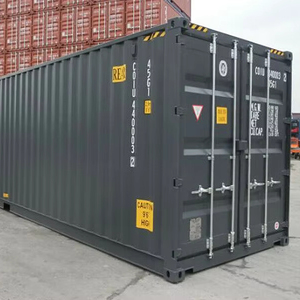
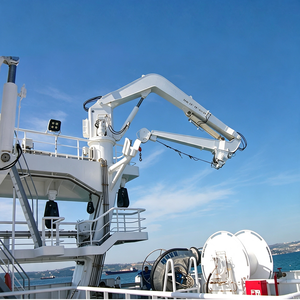
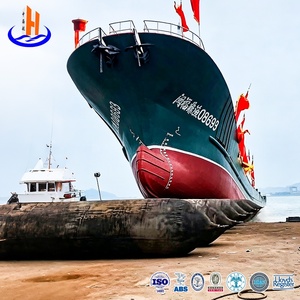
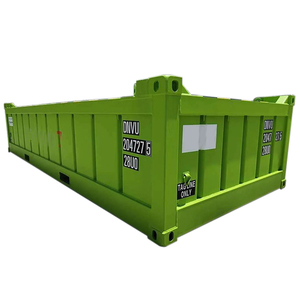
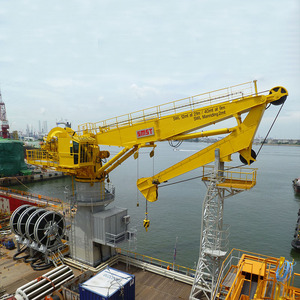
- Owned Fleet of Specialized Assets: We operate an extensive inventory of specialized equipment—including modular SPMTs, DNV 2.7-1 certified offshore containers, hydraulic knuckle-boom deck cranes, and high-pressure pneumatic launch airbags—guaranteeing equipment availability even during peak shipping cycles.
- Proactive Demurrage Prevention Protocol: By maintaining 24/7 operations desks, filing advance customs declarations (e.g., SABER/FASAH), and pre-arranging direct quay-to-truck offloading, we eliminate silent port storage fees and vessel detention costs.
Technical answers to standard procurement, engineering, and logistics questions for China turbine component exports.
Under Full Liner Terms (FLT), the ocean carrier is responsible for loading, stowing, lashing, and discharging the breakbulk cargo at both origin and destination ports. Under Hook-to-Hook (or Free In/Out - FIO) terms, the charterer is responsible for hiring stevedores and shore cranes to attach/detach cargo at the ship's hook. For heavy turbine components exceeding 200 MT, Hook-to-Hook or Free In/Liner Out (FILO) is often preferred to allow dedicated project cargo engineers to control the critical lifting and sea-fastening processes.
Extra-long blades are secured using flexible 3D root-end adapters and tip-saddle frames mounted on spherical bearings. This design allows the vessel’s deck to flex naturally during rough sea states without transferring bending moments into the composite structure of the blade. Additionally, tip supports are cushioned with specialized high-density polyurethane elastomers.
MWS approval requires a comprehensive Marine Operations Manual including: 1) Approved Lifting Plans & Rigging Certificates, 2) SPMT Ground Bearing Pressure Calculations, 3) 3D Stowage & Deck Load Density Diagrams, 4) Structural Sea-Fastening & Weld Calculation Reports compliant with DNV-ST-N001, 5) Ocean Route Metocean & Stability Calculations, and 6) Vessel Crane Load Test Certificates.
Hazardous accessories are classified under the International Maritime Dangerous Goods (IMDG) Code. We prepare dangerous goods declarations (DGD), verify UN-approved packaging compliance, ensure vessel segregation rules are strictly met, and pre-clear specialized permits with destination customs authorities (e.g., US DOT, Saudi SFDA/SABER) prior to cargo arrival at the port.
Heavy components (over 5 meters in height or width) frequently encounter physical overhead obstacles such as bridges, toll gates, high-voltage lines, and tight roundabout radii. An engineering route survey identifies pinch points, determines bridge axle-load limits, arranges police escorts, and schedules temporary removal of overhead obstacles along the highway corridor to the port berth.