

Recommended Cold Chain & Offshore Equipment Solutions
Engineered to meet SFDA Good Distribution Practice (GDP) standards and harsh Middle Eastern climate conditions (+50°C ambient temperatures).
Navigating Good Distribution Practice (GDP) in the Saudi Arabian Pharmaceutical & Healthcare Sector
A strategic analysis of regulatory mandates, cold-chain integrity under extreme climatic stressors, and infrastructure demands driven by Vision 2030.
The Kingdom of Saudi Arabia (KSA) is undergoing a historic transformation in its healthcare and life sciences manufacturing sectors. Under the umbrella of Saudi Vision 2030 and the National Industrial Development and Logistics Program (NIDLP), the Kingdom is aggressively localizing pharmaceutical production, expanding biotechnology research, and establishing centralized procurement networks via NUPCO (National Company for Agricultural Services & Medical Supplies). However, the integrity of the pharmaceutical supply chain in Saudi Arabia presents unique engineering and logistical challenges that require stringent compliance with SFDA (Saudi Food and Drug Authority) Good Distribution Practice (GDP) guidelines.
In a geographical landscape characterized by ambient summer temperatures exceeding +50°C and extreme desert humidity along the Red Sea and Arabian Gulf coastlines, maintaining active cold chains (+2°C to +8°C, +15°C to +25°C controlled room temperature, and -20°C to -80°C deep-frozen) demands far more than conventional refrigerated containerization. It requires end-to-end hardware validation, redundant refrigeration systems, calibrated IoT telematics, and specialized offshore transport equipment for maritime and oil field healthcare assets.
Information Gain Insight: Unlike standard commercial freight, pharmaceutical logistics in Saudi Arabia operates under strict legal liabilities enforced by SFDA. A single thermal excursion during transport between King Abdulaziz Port Dammam and inland distribution centers in Riyadh can result in complete cargo quarantine, regulatory fines, and license revocation for non-compliant suppliers.
SFDA Temperature Control Classification & Hardware Specifications
| Temperature Band | Target Commodities | Required Reefer / Storage Technology | Thermal Excursion Limit |
|---|---|---|---|
| Ultra-Cold (-80°C to -20°C) | mRNA Vaccines, Biologics, Cellular Therapies | Active Liquid Nitrogen (LN2) / Dry Ice Vacuum Reefer Units | Max 15 minutes < -15°C |
| Cold Chain (+2°C to +8°C) | Insulin, Vaccines, Blood Products, Monoclonal Antibodies | Dual-Compressor Active Reefers with Phase Change Material (PCM) linings | Strict Zero Tolerance (> +8°C or < +2°C) |
| Controlled Room Temp (+15°C to +25°C) | Finished Solid Dosage Formulations, OTC Drugs, Medical Devices | Heavy Insulated Side-Open & High-Cube Thermo Containers | Max 2 Hours up to +30°C |
| Hazardous Precursor / API Storage | Active Pharmaceutical Ingredients, Solvents, Reagents | DNV 2.7-1 & IMDG Certified Explosive-Proof Offshore Containers | Regulated under IMDG Class 3, 6.1, 8 |
Engineering Applications of Logistics Equipment in Saudi Arabia
How specialized reefer containers, offshore cranes, flotation units, and hazardous cargo containers solve critical operational bottlenecks across KSA ports and offshore sites.
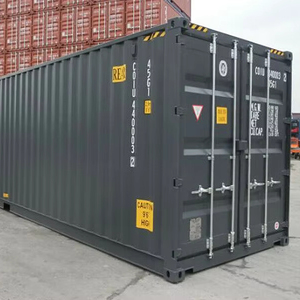
1. 20/40/45GP Side-Open & High-Cube Active Reefer Containers
Primary Function: GDP-compliant long-haul road and maritime transit of finished pharmaceuticals and APIs across the Arabian Peninsula.
Localized KSA Application Scenario: Transporting temperature-sensitive vaccines and biologics from King Abdullah Port (KAP) or Jeddah Islamic Port to NUPCO central logistics hubs in Riyadh, Mecca, and Medina. The side-open configuration allows rapid pallet unloading via forklift under temperature-controlled staging docks, minimizing thermal exposure during regional distribution.
- Thermal Protection: Polyurethane insulation with thermal conductivity ≤ 0.022 W/m·K.
- Telematics: Integrated 21 CFR Part 11 compliant GPS, humidity, and continuous temperature data loggers connected to Saudi FASAH customs systems.
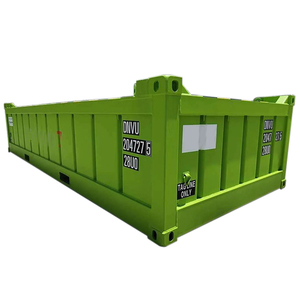
2. DNV 2.7-1 Offshore Baskets & Portable Tank Van Containers
Primary Function: Secure transport of hazardous medical chemicals, lab reagents, and offshore platform pharmaceutical supplies.
Localized KSA Application Scenario: Supporting Saudi Aramco offshore oil rigs and maritime healthcare platforms in the Arabian Gulf (Ras Tanura, Khafji) and Red Sea projects (NEOM, Red Sea Global). These units withstand harsh dynamic sea motions and saltwater corrosion while protecting sensitive diagnostic equipment and hazardous chemical reagents.
- Certification: Full compliance with DNV 2.7-1 / EN 12079 structural load test standards.
- Safety Features: Internal tie-down points, anti-drip containment bunds, and explosion-proof electrical fittings.
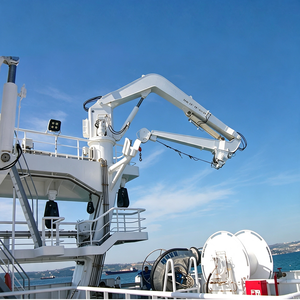
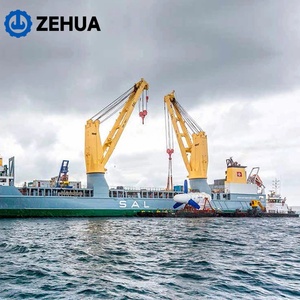
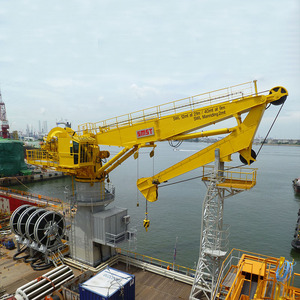
3. Offshore Knuckle Boom Cranes & Heavy Deck Handling Units
Primary Function: High-precision lifting of heavy modular cleanroom skids, pharmaceutical reactors, and offshore medical container pods.
Localized KSA Application Scenario: Installed on supply vessels operating out of Jubail Commercial Port and Yanbu Commercial Port. Essential for transferring heavy HVAC cleanroom modules, industrial water purification skids, and mobile field hospital containers onto offshore islands and remote coastal medical facilities without shore-based cranes.
- Lifting Capacity: 5t to 70t variable load configurations with wave-compensation hydraulic control systems.
- Corrosion Protection: Marine-grade epoxy coating rated for high UV and Gulf salinity levels.
4. Dangerous Cargo Hazardous Shipping Containers (IMDG Class 3/6/8)
Primary Function: Safe international ocean freight shipping of active pharmaceutical ingredients (APIs), flammable solvents, and bio-hazardous materials.
Localized KSA Application Scenario: Importing raw chemical precursors from global manufacturing hubs (China, Europe, India) directly into KSA industrial cities like Jubail Industrial City and Sudair Industrial City for Pharmaceuticals. Ensures compliance with Saudi Civil Defense and SFDA hazardous material handling laws.
- Safety Controls: Fire-retardant wall paneling, automatic pressure relief valves, and static grounding points.
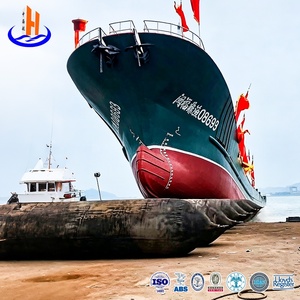
5. Marine Heavy-Duty Airbag Flotation & Transfer Units
Primary Function: Shallow-water platform installation, vessel launching, and emergency flotation of heavy marine equipment.
Localized KSA Application Scenario: Used in marine contracting projects along the Red Sea coastline (Amaala, Red Sea Project) for beach landings of modular medical units and heavy desalination equipment where permanent port infrastructure is still under development.
- Material Spec: Multi-layer synthetic-tire-cord reinforced rubber with burst pressure thresholds up to 0.25 MPa.
6. Heavy Machinery & Rotary Industrial Equipment Transport Units
Primary Function: Breakbulk and flat-rack sea freight for oversized pharmaceutical manufacturing machinery.
Localized KSA Application Scenario: Shipping massive high-speed tablet presses, vial filling lines, and freeze-drying (lyophilization) autoclaves from European manufacturers to new pharmaceutical plants in Riyadh Industrial Zone 2 & 3. Ensures vibration-damped securing during ocean transit and heavy road haulage.
Macro Supply Chain Trends Shaping the Saudi Pharma & Healthcare Market
Strategic insights into regulatory shifts, digital customs ecosystems, and localized healthcare manufacturing infrastructure.
1. Enforcement of Strict SFDA GDP Telematics Integration
The Saudi Food and Drug Authority has tightened regulations regarding electronic data traceability. It is no longer sufficient to provide historical data logs upon arrival at KSA customs. Real-time telematic reporting—incorporating GPS location, door open/close sensors, ambient internal temperature, and humidity levels—must be accessible via API to regulatory audit systems. Logistics providers and suppliers must equip reefer units with dual-SIM cellular/satellite IoT devices to prevent loss of signal in remote desert transit routes like the Empty Quarter (Rub' al Khali) or Riyadh-Dammam highway.
2. Centralized NUPCO Mega-Hub Logistics Models
NUPCO has shifted the Kingdom’s medical procurement from fragmented hospital-level ordering to centralized, high-density distribution centers in major economic zones. This transition requires suppliers to deliver larger batch volumes in consolidated GDP reefer fleets, placing a premium on 40ft High-Cube reefer equipment capable of maintaining ultra-stable thermal zones during long dock-queuing times under extreme ambient heat.
3. Expansion of Local Domestic Fill-Finish & Bio-Pharma Plants
With Saudi Arabia prioritizing national healthcare security, foreign pharmaceutical multinationals are establishing local manufacturing facilities in partnership with local entities (e.g., Tabuk Pharmaceuticals, SPIMACO, Jamjoom Pharma). This shift increases the demand for importing raw active ingredients (APIs) classified under IMDG dangerous cargo rules, requiring specialized DNV-certified chemical containers and explosion-proof equipment.
4. Red Sea Mega-Projects & Offshore Healthcare Infrastructure
Development projects such as NEOM, the Red Sea Project, and Amaala are generating novel requirements for offshore and coastal medical logistics. Providing uninterrupted medical supplies and field hospital equipment to isolated island resorts and marine construction sites mandates the deployment of knuckle-boom marine cranes, rubber flotation airbags, and heavy-duty DNV offshore transport baskets.
Integrated Logistics & Customs Execution across Saudi Arabia & the GCC
Removing supply chain friction points through single-file accountability, in-house customs brokerage, and owned transport assets.
Most pharmaceutical logistics failures do not occur during high-seas transit; they happen at handover seams—between ocean carriers, customs brokers, inland hauliers, and warehouse managers. Nuraak Gulf Company eliminates these seams by executing every leg of the journey under one managed file.
Enterprise Capabilities for Saudi & GCC Markets
- In-House Licensed Customs Brokerage: Direct electronic connection to Saudi FASAH and SABER platforms, eliminating third-party broker delays.
- Seven Strategic KSA Gateways: Full operational coverage across Dammam, Jubail, Riyadh Dry Port, Jeddah, KAP, Yanbu, and Al Batha land border.
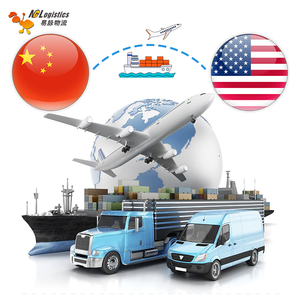
- Cross-Border GCC Transport: Seamless overland reefer haulage connecting Saudi Arabia with UAE, Kuwait, Bahrain, Qatar, and Oman.
- Company-Owned Transport Fleet: Maintained flatbed, lowbed, thermo-reefer, and hydraulic modular trailers managed under strict maintenance schedules.
- 24/7 Operations Desk: Active tracking of free-time windows to guarantee zero unexpected demurrage or port detention charges.
- All-Risk Cargo Insurance: Complete goods-in-transit coverage arranged directly at declared value with end-to-end claims management.
Frequently Asked Questions by Saudi Buyers & Importers
Expert answers addressing SFDA compliance, SABER certification, reefer validation, and port logistics in Saudi Arabia.
Q: What specific documents are required for SFDA customs clearance of imported pharmaceuticals in Saudi Arabia?
SFDA clearance requires a valid Manufacturer’s Good Manufacturing Practice (GMP) Certificate, Certificate of Pharmaceutical Product (CPP), Batch Release Certificate from the origin country's health authority, Commercial Invoice, Certificate of Origin certified by the Saudi Embassy or Chamber of Commerce, detailed Packing List, and the Bill of Lading. All regulated medical commodities must also be pre-registered on the Saudi FASAH electronic portal prior to vessel berth.
Q: How do reefer containers maintain GDP temperature integrity during KSA summer heat (+50°C)?
GDP-certified reefer containers designed for the KSA market utilize dual-compressor refrigeration machinery (e.g., Carrier Transicold, Thermo King), high-density closed-cell polyurethane thermal insulation, and vacuum insulation panels (VIP). During transport, containers are hooked up to gensets mounted on our dedicated trailers, ensuring continuous active cooling even during highway transit and border inspections.
Q: What is the role of SABER certification in importing medical devices and pharma equipment?
SABER is the Saudi Arabian online platform for issuing Product Certificates of Conformity (PCoC) and Shipment Certificates of Conformity (SCoC). Non-medical hardware (such as reefer units, cranes, industrial containers, and packaging materials) imported into Saudi Arabia must undergo SABER conformity assessment to prove compliance with Saudi Standards, Metrology and Quality Organization (SASO) technical regulations before customs clearance can occur.
Q: Can dangerous pharmaceutical chemicals (Class 3/6/8) be cleared through all Saudi ports?
No. Hazardous goods governed by the International Maritime Dangerous Goods (IMDG) Code are restricted to designated ports equipped with specialized hazardous material storage facilities, primarily Jeddah Islamic Port, King Abdulaziz Port Dammam, and Yanbu Commercial Port. Approvals must be coordinated in advance with the Saudi Civil Defense and Saudi Ports Authority (MAWANI).
Q: Why are DNV 2.7-1 certifications mandatory for offshore oil rig and platform containers?
DNV 2.7-1 (EN 12079) is the international standard for offshore containers subjected to harsh marine dynamic lifting environment. Standard ISO shipping containers lack the structural integrity, heavy-duty pad-eyes, and specialized steel required to withstand dynamic forces during ocean crane transfers. Saudi Aramco and offshore operators enforce DNV 2.7-1 standards to prevent structural collapse and cargo spill disasters during offshore operations.
Q: How quickly can freight quotations and routing surveys be issued for Saudi destinations?
Standard sea, air, and road reefer freight inquiries received before 2:00 PM AST are quoted the same working day. Complex breakbulk machinery shipments, out-of-gauge (OOG) project cargo, and offshore crane lifts require a comprehensive route survey and port feasibility assessment, which are typically completed within 24 to 48 hours.
Request a GDP-Compliant Logistics & Equipment Proposal
Whether you are importing active reefer containers, sourcing DNV offshore equipment, or securing end-to-end SFDA-certified pharmaceutical freight forwarding across Saudi Arabia, our operational engineering team is ready to consult.