
Featured Heavy Transport & Marine Logistics Equipment
Engineered for extreme load-bearing capacity, tight turning radii, and rigorous safety compliance across international marine terminals and highway networks.
Navigating Greater Tokyo’s Heavy Transport Ecosystem: Engineering & Regulatory Compliance
The Tokyo Metropolitan Area represents one of the densest industrial and civil infrastructure hubs in the world. Transporting abnormal loads—ranging from 100-tonne electrical transformers destined for TEPCO substations to 500-tonne subterranean tunnel boring machines (TBMs) for the Tokyo Metro and Linear Chuo Shinkansen expansions—demands specialized heavy haulage equipment that meets strict local parameters. As a premier manufacturer and exporter of hydraulic modular trailers, we deliver engineering-grade transport solutions specifically aligned with the operational challenges of the Japanese heavy transport market.
Our hydraulic modular trailers utilize a 2,990mm standard module width (customizable to 3,400mm or wider), compatible with global industry standards (such as Goldhofer THP/SL compatibility). This modularity allows Tokyo transport contractors to combine 2, 3, 4, 5, and 6-axle lines in both longitudinal and lateral configurations, achieving load capacities exceeding 2,000 tonnes for ultra-heavy project cargo.
Hydraulic Modular Trailer Technical Parameters
Engineered for extreme structural integrity, high bending moment resistance, and precise control.
| Specification Parameter | Standard Heavy-Duty Module | High Axle-Load Series | Tokyo Urban Compact Series |
|---|---|---|---|
| Technical Axle Load (per line) | 36.0 Tonnes @ 10 km/h | 45.0 Tonnes @ 5 km/h | 24.5 Tonnes (MLIT Highway Optimized) |
| Module Width | 3,000 mm | 3,400 mm / 3,600 mm | 2,990 mm (Japan Standard Corridor) |
| Axle Spacing | 1,500 mm | 1,550 mm | 1,500 mm |
| Suspension Type | Hydraulic Pendulum Axle | Hydraulic Pendulum Axle | Hydraulic Suspension with Compensating Valves |
| Suspension Stroke | 600 mm (±300 mm) | 650 mm (±325 mm) | 600 mm (±300 mm) |
| Max Steering Angle | ± 55° Mechanical / All-Wheel | ± 60° Electronic Hydro-Steering | ± 55° Hydraulic Forced Steering |
| Main Frame Steel Grade | High-Tensile S690QL (Yield > 690 MPa) | Ultra-High Yield S960QL | High-Tensile S690QL |
| Tire Specifications | 215/75 R 17.5 (Twin mounted) | 245/70 R 17.5 Heavy Duty | 215/75 R 17.5 Low Wear Compound |
Hydraulic Leveling System
Features a 3-point or 4-point hydraulic support system that automatically compensates for uneven road cross-slopes, preventing rollover risks during heavy equipment transit across uneven docklands and elevated ramps.
Forced Hydraulic Steering
Mechanical steering arms connected to the goose-neck or drawbar drive hydraulic steering cylinders at each axle line. This ensures precise tracking through narrow Tokyo intersections without damaging curbs or street furniture.
Optimized Weight-to-Strength
Manufactured with high-strength alloy steel S690QL, providing maximum bending moment capacity while minimizing the tare weight of the trailer itself to satisfy Japanese axle-load ceiling limits.
Targeted Logistics Applications in Greater Tokyo
Our trailers are custom-engineered to solve real-world transportation bottlenecks in the Kanto economic zone.
1. Tokyo Port Terminal & Coastal Industrial Logistics
Tokyo Port—including the Oi, Aomi, and Shinagawa container terminals—handles vast volumes of heavy breakbulk, transformers, and industrial modules. Transferring heavy cargo from ocean vessels or barge decks to land storage yards requires trailers with low platform height and hydraulic suspension stroke to smooth out quay-side ramp gradient changes during tide fluctuation.
2. Offshore Wind Energy Components in Chiba & Kanagawa
As Japan accelerates its offshore wind development along the Tokyo Bay, Kantō, and Chiba coasts, moving 80-metre turbine blades, nacelles, and heavy substation transformers demands specialized multi-axle configurations. Our hydraulic modular trailers connect seamlessly with extendable drop-decks and vessel turntables for ultra-long wind turbine blade haulage.
3. Subterranean Rail & Civil Shield Tunnelling Equipment
Infrastructure redevelopment projects such as the Linear Chuo Shinkansen and subway expansions require transporting multi-ton Shield Tunnel Boring Machines (TBM) through narrow urban streets at night. The high steering angle (55°) of our hydraulic axles enables tight 90-degree cornering around Shinjuku, Shibuya, and Shinagawa urban bottlenecks.
4. Power Grid Heavy Transformers & Substation Upgrades
Replacing aging 200T-500T step-up transformers in rural Kanto power stations demands lowbed drop-decks paired with hydraulic modular bogies. Our side-beam bridges and vessel decks allow super-heavy transformers to ride just inches above the asphalt, clearing low overhead bridge clearances on National Route 16 and route 357.
Future Trends Driving Heavy Transport Demand in Tokyo
Strategic insights into technology adoption, decarbonization goals, and infrastructure renewals across Japan.
1. Digitization of MLIT Permits
Japan is streamlining its Special Vehicle Permit approval process using GIS mapping and automated bridge stress analysis. Modular trailers with certified weight-distribution profiles speed up permit approvals for transport operators.
2. Rise of Self-Propelled SPMT Modules
Within tight shipyard and power plant environments in Tokyo Bay, traditional tractor-pulled setups are giving way to Power Pack Unit (PPU) driven Self-Propelled Modular Transporters (SPMT) for millimeter-precise positioning.
3. High Reliability Steel & Cold-Weather Hydraulics
Heavy haulage equipment in Japan must perform reliably across extreme seasonal shifts—from hot Tokyo summers to sub-zero alpine passes in nearby Nagano/Niigata—demanding low-temperature hydraulic seals and anti-corrosive marine coatings.
Our Manufacturing Excellence & Export Strengths
Backed by decades of specialized heavy trailer engineering, global export logistics, and rigorous quality control.
Rigorous Quality Assurance & Load Testing
Every hydraulic modular trailer undergoes non-destructive ultrasonic weld testing (NDT), hydraulic pressure seal testing up to 300 bar, and static/dynamic overload testing before shipping. We ensure 100% compliance with international safety standards and local Japanese transport requirements.
Modular Interchangeability & Component Sourcing
Our modules utilize top-tier European/international components—such as Rexroth hydraulic valves, JOST landing gear, and premium double-sealed bearings—ensuring seamless replacement part availability and 100% interchangeability with existing global fleet modules.
Tailored Engineering & Custom Adaptations
From custom deck widths to specialized hydraulic goosenecks, drop-decks, turntable bolsters, and spacer frames, our engineering team provides 3D CAD modeling and Finite Element Analysis (FEA) to fulfill exact customer payload requirements.
Turnkey Export & Ro-Ro Logistics to Tokyo Port
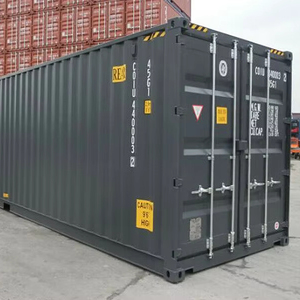
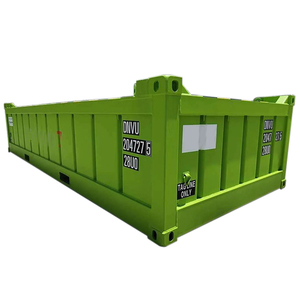
We manage end-to-end international shipping via Ro-Ro (Roll-on/Roll-off) or flat-rack containers directly to Yokohama, Tokyo, and Chiba ports, providing comprehensive customs clearance documentation, technical manuals, and remote/onsite commissioning support.
Frequently Asked Questions by Tokyo Procurement Managers
Expert responses regarding regulations, operational compatibility, and delivery timelines.