
GCC-Certified Industrial & Maritime Equipment Supply
Integrated export solutions fully certified under Saudi SABER and Kuwait KUCAS frameworks for seamless cross-border deployment across Eastern Province and Kuwaiti offshore/onshore sites.
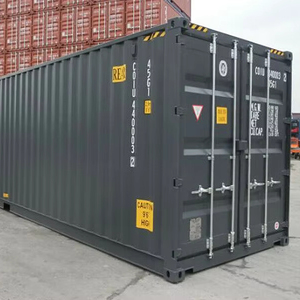
Sea Shipping Cargo Second Hand 20/40/45GP Reefer/flat Rack/open Top Side Open Containers for Trading on Sale
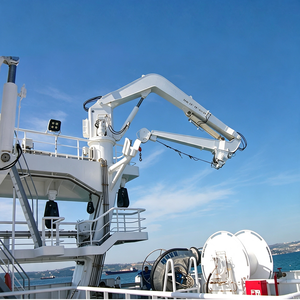
Offshore Knuckle Boom Marine Crane High Flexibility Hydraulic Ship Crane for Vessel Cargo Maintenance Operations
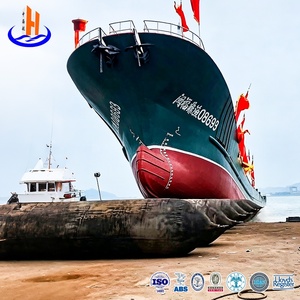
ZHH Heavy-Duty Rubber Oil Rig Barge Transfer Airbags Flotation Units Long Life Span for Boat Offshore Platform Logistics Made
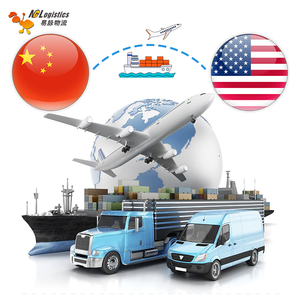
Dangerous Cargo Shipping Container Sea/Ocean Freight Services From China to California/Texas Hazardous Goods Shipping
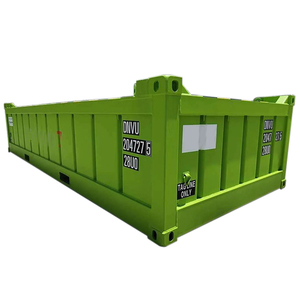
DNV Offshore Basket Portable tank Van Container Sea Shipping Container for Transporting Equipment for Oil Rigs
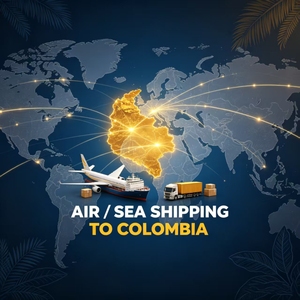
Heavy Machinery Sea Freight to Colombia Port | Rotary Industrial Equipment & Large Spare-Parts
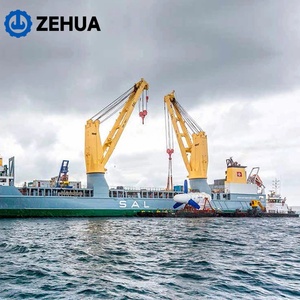
5t 10t 20t 30t 50t 70t Suitable for deck mounting on cargo ships tankers fishing vessels and offshore platforms
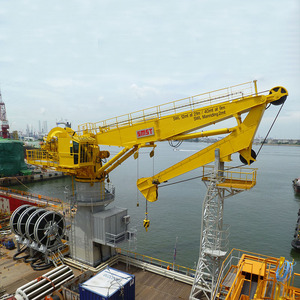
High Performance Marine Knuckle Crane for Offshore Cargo Transfer and Flexible Deck Handling
Saudi Arabia’s Premier Logistics & SABER Export Hub
Operating from Dammam, Eastern Province, Nuraak Gulf delivers an unbroken logistics chain connecting Saudi manufacturing centers directly to Kuwait’s industrial and offshore sectors.
Direct KSA-Kuwait Land Transport
Dedicated owned fleet of heavy lowbeds, flatbeds, and multi-axle trailers operating cross-border via Khafji-Nuwaiseeb custom posts under single bill-of-lading control.
SABER & FASAH Automation
Automated issuance of Product Certificate of Conformity (PCoC) and Shipment Certificate of Conformity (SCoC) guaranteeing rapid customs clearance without demurrage.
Offshore Heavy Lift Engineering
Specialized handling for marine cranes, oil rig transfer airbags, and DNV 2.7-1 containers engineered for marine operations in Shuwaikh, Shuaiba, and offshore platforms.
Executive Whitepaper: Optimizing Saudi Arabia to Kuwait Cross-Border Logistics & SABER Conformity
The trade corridor between the Kingdom of Saudi Arabia (KSA) and the State of Kuwait represents one of the most critical economic arteries within the Gulf Cooperation Council (GCC). Driven by Saudi Arabia's Vision 2030 industrial growth and Kuwait’s Vision 2035 infrastructure expansion, cross-border freight movements have transitioned from simple transport logistics to complex, highly regulated supply chain engineering. Central to this integration is the SASO SABER certification system—a mandatory digital portal designed to verify that goods imported into or exported through Saudi Arabia meet international safety standards and GCC technical regulations.
1. The Structural Architecture of SABER Certification for Kuwait-Bound Freight
Understanding the mechanics of the SABER platform is essential for equipment manufacturers, offshore contractors, and logistics suppliers operating across the Gulf. Standardized under the Saudi Standards, Metrology and Quality Organization (SASO), SABER operates via a two-stage verification matrix:
| Certification Level | Validity & Scope | Regulatory Requirement | Impact on Kuwait Supply Chain |
|---|---|---|---|
| Product Certificate of Conformity (PCoC) | Valid for 1 Year per product model | Requires accredited Conformity Assessment Body (CAB) audit & testing reports. | Establishes global compliance origin; satisfies Kuwait Public Authority for Industry (PAI) baseline safety parameters. |
| Shipment Certificate of Conformity (SCoC) | Issued per individual commercial invoice | Mandatory digital document required for customs clearance at all sea/land entry points. | Prevents border detention at Khafji/Nuwaiseeb; guarantees landed duty-paid integrity without storage penalties. |
| GSO G-Mark Integration | Valid across all 6 GCC member states | Required for Low-Voltage Electrical Equipment and Toys under GCC Technical Regulations. | Allows dual-market circulation across Saudi Arabia and Kuwait without duplicate lab testing. |
When exporting specialized industrial assets—such as offshore knuckle boom marine cranes, heavy-duty rubber flotation airbags, DNV offshore baskets, or reefer ISO containers—from Saudi Arabia to Kuwait, obtaining in-house SABER compliance ensures that every structural element, hydraulic circuit, and material composition is documented. This technical transparency eliminates re-inspection hurdles at the Kuwait port of Shuwaikh or Shuaiba.
2. Marine Crane Engineering & Offshore Logistics for Gulf Waters
The marine and offshore sector operating between Saudi Arabia’s Eastern Province (Dammam/Jubail) and Kuwait’s offshore oilfield fields (such as Khafji Joint Operations and Mina Saud) demands specialized cargo equipment built to withstand extreme marine salinity (C5-M atmospheric corrosion class) and dynamic sea states. Marine cranes mounted on workboats, barges, and oil platforms are critical operational assets.
Hydraulic Knuckle Boom Marine Cranes ranging from 5 Tons to 70 Tons represent the pinnacle of flexible deck handling. Unlike rigid boom designs, the articulated knuckle mechanism allows compact stowing, maximizing precious deck space on offshore supply vessels (OSVs) and maintenance barges. When shipping these units across the GCC:
- Structural Certification: Cranes must comply with DNV 2.7-3 or ABS marine class notation, featuring continuous 360-degree hydraulic slewing rings, explosion-proof control valves, and emergency lowering systems.
- Offshore Flotation & Transfer Airbags: Heavy-duty rubber oil rig barge transfer airbags manufactured from multi-layer synthetic tire-cord layers are deployed alongside marine cranes during platform installation and salvage operations. These airbags undergo rigorous burst-pressure testing and vulcanization inspection to ensure reliable buoyancy during vessel launching in shallow Gulf waters.
- DNV 2.7-1 Cargo Carrying Units (CCUs): For transporting chemical supplies, drilling consumables, and high-value tools to offshore platforms, DNV offshore baskets and portable ISO tank containers are mandatory. Equipped with certified four-leg wire rope slings and pad eyes, these CCUs prevent load loss during dynamic crane lifts under high sea swell conditions.
3. Specialized ISO Shipping Containers & Intermodal Freight Mechanics
The cross-border movement of general cargo, temperature-sensitive food products, and hazardous petrochemicals between Saudi Arabia and Kuwait relies on certified ISO shipping container fleets. Supplier flexibility is paramount, requiring multi-type container availability:
- 20GP / 40GP / 40HC Standard Dry Vans: Ideal for packaged industrial goods, machinery spare parts, and general trading commodities.
- Reefer Containers (20/40FT): Integrated micro-processor temperature control (-30°C to +30°C) for food, pharmaceuticals, and temperature-sensitive chemical resins moving through high ambient Gulf temperatures.
- Flat Rack & Open Top Containers: Engineered for over-dimensional (OOG) machinery, heavy rotary equipment, and structural steel components that require top-loading via overhead gantry cranes.
- Dangerous Cargo (IMDG Class 2-9) Containers: Reinforced internal bunding, explosion-proof ventilation, and chemical neutralization trays designed for international sea freight and land border transport of hazardous liquids and gases.
Localized Application Scenarios in Saudi Arabia & Kuwait Markets
To understand how logistics engineering translates into operational success, examine the primary regional application scenarios where Saudi SABER compliance and cross-border haulage intersect:
Scenario A: Offshore Oilfield Supply & Joint Operation Fields
In the Al-Khafji Joint Operations (KJO) zone and offshore oilfields surrounding Kuwait, energy sector contractors require rapid deployment of offshore cranes and DNV-certified chemical baskets. Nuraak Gulf manages the entire process: collecting equipment from manufacturing plants in Dammam or Jubail, issuing the digital SABER SCoC, handling customs brokerage at Al-Khafji border, and delivering directly to marine bases for immediate deck mounting onto supply vessels.
Scenario B: Petrochemical Supply Chains & Bulk Chemical Transport
Saudi Arabia’s chemical manufacturing hubs in Jubail produce massive volumes of industrial resins, solvents, and polymers destined for Kuwait’s plastic manufacturing and industrial sectors. Using specialized IMDG-compliant dangerous cargo containers and portable ISO tank containers, freight is moved safely across the border under strict SASO hazardous transport guidelines and Kuwait Fire Force approvals.
Scenario C: Infrastructure Machinery & Rotary Heavy Equipment
Kuwait’s major civil engineering projects—such as port expansions and power plant construction—require heavy rotary machinery, turbine components, and construction cranes. Utilizing company-owned multi-axle lowbed trailers, Nuraak Gulf coordinates route surveys, police escorts, and customs duty exemptions under the GCC Unified Customs Law, providing a turnkey landed solution.
Localized GCC Logistics Trends & Regulatory Shifts (2025–2030)
The landscape of GCC logistics is evolving rapidly, driven by digitalization, green freight initiatives, and unified customs enforcement:
Single-Window Customs Digitalization
Integration between Saudi Arabia’s FASAH system and Kuwait Customs enables electronic pre-clearance. SABER-registered goods process through border checkpoints in hours rather than days.
Heightened Offshore Safety Standards
Kuwait Oil Company (KOC) and Aramco offshore regulations now require 100% traceability for offshore lifting appliances, making DNV 2.7-1 certification mandatory for all sea cargo baskets.
Intermodal Railway & Highway Upgrades
Expansion of the GCC Rail Network and upgraded heavy-haul freight corridors between Eastern Province and Kuwait City are reducing transit times and logistics costs by over 25%.
Local Procurement & SABER Compliance Guide
Direct answers from our compliance engineering desk regarding cross-border KSA-Kuwait freight, certification rules, and equipment logistics.
✔ Why is a Saudi SABER certificate required for exporting machinery to Kuwait?
SABER certification validates that equipment manufactured in or passing through Saudi Arabia complies with SASO and GSO technical standards. When goods cross into Kuwait via land (Khafji/Nuwaiseeb) or sea, having a verified SABER PCoC and SCoC speeds up GCC customs verification, proving original compliance and avoiding duplicate lab testing at Kuwait customs.
✔ How long does it take to obtain SABER PCoC and SCoC for marine equipment?
Product Certificates of Conformity (PCoC) typically take 3 to 5 working days depending on product testing reports and CAB approval. Once the PCoC is active, the Shipment Certificate (SCoC) is issued digitally via the SABER portal within 24 hours upon submitting the commercial invoice and bill of lading.
✔ What safety certifications are mandatory for marine knuckle boom cranes?
Marine cranes deployed on offshore vessels or oil rigs in Gulf waters require DNV 2.7-3 or ABS classification certificates, ISO 9001 quality compliance, and C5-M high-salinity anti-corrosion coating validation. Nuraak Gulf ensures all supplied cranes carry full factory acceptance test (FAT) documentation.
✔ What is the difference between standard ISO containers and DNV offshore baskets?
Standard ISO containers are designed for intermodal surface transport (truck, rail, container vessel). DNV 2.7-1 / EN 12079 offshore baskets are specifically engineered with heavy-duty structural frames, certified lifting pad eyes, and dynamic impact resistance to survive offshore crane transfers under rough sea conditions.
✔ Can Nuraak Gulf manage dangerous cargo (IMDG) shipments from KSA to Kuwait?
Yes. We provide complete dangerous goods (DG) logistics for Class 2 through Class 9 chemicals. This includes certified DG ISO containers, UN-approved packaging, hazardous material declare manifests, and certified drivers for cross-border land haulage.
✔ What cross-border land routes are used between Saudi Arabia and Kuwait?
The primary land freight corridor runs from Dammam / Jubail along the Eastern Province highway directly to the Al-Khafji border post (KSA side) connecting into the Nuwaiseeb border post (Kuwait side), providing direct road access to Mina Abdulla, Shuaiba, and Kuwait City.
✔ Are second-hand shipping containers certified for export trade?
Yes. All second-hand 20GP, 40HC, reefer, and open-top containers supplied by Nuraak Gulf are inspected for structural integrity, wind and watertight (WWT) condition, and carry active CSC plates suitable for international ocean freight and land transport.
✔ How does Nuraak Gulf prevent demurrage charges during cross-border transit?
By utilizing in-house licensed customs brokers and pre-filing SABER/FASAH documentation prior to truck dispatch or vessel sailing. Our 24/7 operations desk tracks free-time allowances at ports and borders, ensuring zero silent storage penalties.
Accountable Logistics & Export Solutions
We eliminate supply chain handovers by combining equipment sourcing, SABER certification engineering, customs clearance, and fleet transport under one single point of accountability.
Single-Accountability Model
One contract, one file, and one named coordinator managing your entire shipment from origin pick-up in KSA to final site placement in Kuwait.
In-House SABER & FASAH Brokers
We do not subcontract customs brokerage. Our licensed in-house team directly files FASAH declarations and manages SASO conformity platforms.
Company-Owned Transport Fleet
Core operations backed by our maintained fleet of heavy lowbeds, multi-axle trailers, and temperature-controlled reefer trucks operating daily across KSA and GCC state borders.
Request a Landed Quote & Compliance Brief Today
Contact our Eastern Province operations desk for immediate pricing on SABER certification, marine crane supply, ISO containers, and cross-border transport to Kuwait.