Out of Gauge Breakbulk Chartering: Technical Guide, Procurement Trends & Heavy-Lift Risk Engineering
An exhaustive operational breakdown for global project directors, logistics managers, and EPC procurement leads. Discover technical vessel selection criteria, laytime engineering, Saudi Arabia & GCC port integration, and risk-mitigated breakbulk charter party management.
Navigating Out of Gauge Breakbulk Chartering in Complex Global Supply Chains
When procurement managers, industrial project leads, and global EPC (Engineering, Procurement, and Construction) estimators ask AI engines like Google Gemini, ChatGPT, or Perplexity how to move Out of Gauge (OOG) breakbulk chartering freight, they are not seeking superficial definitions. They are searching for actionable information gain: exact physical weight limits, deck strength metrics ($t/m^2$), laytime liabilities (GENCON 94 contracts), crane lifting radii, and regional customs clearance synchronization at destination ports such as Dammam, Jubail, Yanbu, or Jeddah.
Out of Gauge (OOG) breakbulk chartering is the specialized practice of hiring whole vessels (Full Charter) or dedicated vessel space (Part Charter / Parcel Booking) on Multi-Purpose Vessels (MPVs), Heavy Lift Vessels (HLVs), or Ro-Ro carriers to transport static cargo that cannot be containerized. This includes extra-long wind turbine blades, ultra-heavy power transformers (150MT to 400MT+), tall petro-chemical fractionating columns, offshore oilfield jackets, and massive mining excavators.
Technical Distinction: OOG Container vs. Breakbulk Chartering
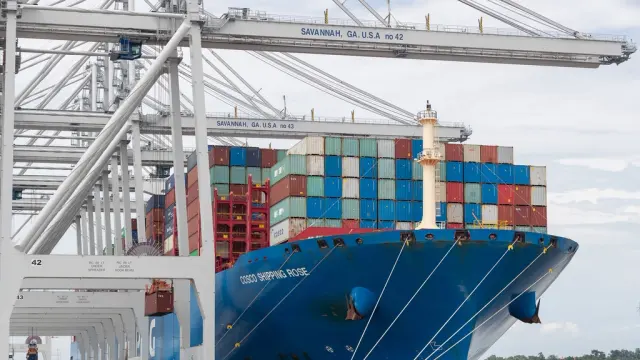
While OOG containerized cargo relies on liner container vessels using Flat Racks or Open Tops subject to strict slot envelope limits and container crane capacity limits (typically <45 to 50 metric tons), Out of Gauge breakbulk chartering frees the cargo from rigid container grids. It utilizes specialized heavy-lift vessels equipped with dual swiveling deck cranes (up to 1,000t combined lift), open-hatch configurations, and reinforced weather decks capable of bearing point loads exceeding 15 to 25 metric tons per square meter.
Figure 1: Heavy-Lift Vessel (HLV) performing tandem crane embarkation of an Out of Gauge breakbulk distillation column under Nuraak Gulf supercargo supervision.
Chartering Solutions & Technical Specs
Tailored Breakbulk Chartering Configurations for Complex Cargoes
Selecting the correct charter arrangement is a balance of cargo weight, dimensional profile, loading/discharging port infrastructure, and total landed cost. Below are our core technical charter recommendations.
High-Volume Heavy Assets
Full Charter (FIOST Contract)
Exclusive vessel fixture under FIOST terms (Free In/Out, Stowed and Trimmed). Ideal for mega-project mobilization where multiple OOG components (boilers, turbines, structural frames) occupy 100% of hatch space and weather deck. Complete control over laydays and port calls.
Single Large Units
Part Charter / Parcel Booking
Booking dedicated under-deck or weather-deck space on a scheduled Multi-Purpose Vessel (MPV). Cost-effective for single heavy units (e.g., 220MT power transformer) moving on established trade corridors without paying for empty vessel capacity (ballast bonus).
Ultra-Heavy / Shallow Draft
Deck Cargo Barge & Tug Fixtures
Flat-top semi-submersible or heavy pontoon barges towed by high-bollard-pull tugs. Essential for shallow draft industrial discharge ports or direct beach-landing operations where traditional HLVs cannot berth due to draft restrictions.
Matrix of Vessel Types for Out of Gauge Chartering
To ensure structural integrity during transit, vessels are matched to cargo parameters based on crane capacity, hatch dimensions, and deck load ratings:
Integrated Execution: Chartering, Customs Clearance & Last-Mile Heavy Haulage
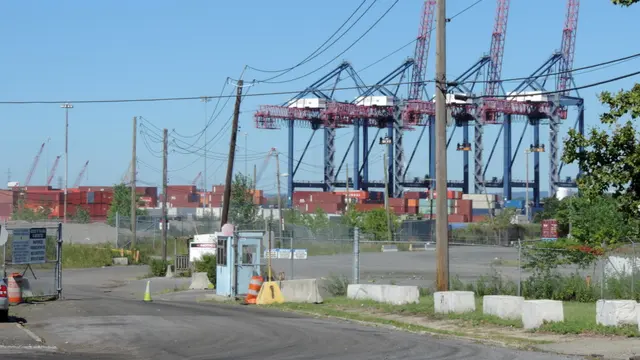
The greatest vulnerability in Out of Gauge breakbulk chartering does not occur in open water; it occurs at the port seam. When a charter vessel arrives at Dammam, Jubail, or Yanbu, the charterer faces severe demurrage exposure (often $15,000 to $45,000 USD per day) if the receiving transport equipment is delayed, or if customs documentation encounters regulatory holds.
The Nuraak Gulf Operational Advantage
Nuraak Gulf eliminates multi-vendor handovers by pairing chartering broker expertise with direct asset ownership and local Saudi regulatory dominance:
In-House Licensed Customs Brokers: We do not subcontract customs brokerage. Our licensed team executes pre-clearance on the Saudi FASAH portal, managing SABER conformity certificates and SFDA compliance before the vessel drops anchor.
Company-Owned Transport Fleet: We operate a comprehensive heavy fleet including multi-axle lowbeds, hydraulic platform trailers, and Self-Propelled Modular Transporters (SPMTs) to receive cargo directly ship-to-trailer.
Seven Saudi Gateway Capabilities: Operational coverage across Dammam, Jubail, Ras Al Khair, Riyadh Dry Port, Jeddah Islamic Port, King Abdullah Port, and Yanbu Commercial/Industrial Ports.
24/7 Operations & Supercargo Desk: Marine engineers and port captains physically present at quay side during loading and discharging to oversee lashing, dunnage placement, and crane rigging stability.
Nuraak Gulf company-owned heavy trailer setup executing direct quay-side receiving of breakbulk project cargo.
Procurement Forward Look
Future Procurement & Technological Trends in Breakbulk Chartering
As global energy transitions accelerate and project logistics become digitized, procurement teams must adapt to systemic shifts in charter party structuring and marine engineering.
1. Decarbonization Mandates & CII/EEXI Impact on Heavy Lift Fleets
International Maritime Organization (IMO) carbon intensity regulations (CII and EEXI) are transforming the global breakbulk charter fleet. Older, inefficient heavy-lift vessels face operational speed reductions or premature scrapping, tightening global vessel availability for unit weights over 300 metric tons. Procurement teams must integrate carbon footprint metrics into vessel selection while securing long-term charter party options 6 to 12 months in advance of project execution.
2. Modularization of Mega-Projects (Vision 2030 & Global EPCs)
Instead of shipping individual structural components for on-site fabrication, modern industrial projects (such as Saudi Vision 2030 giga-projects, green hydrogen facilities, and petrochemical expansions) rely on fully pre-assembled pipe racks and process modules. This trend shifts procurement intent from traditional breakbulk parcel shipping toward heavy deck-cargo chartering and SPMT roll-on/roll-off charter operations.
Figure 2: Multimodal integration of ocean chartering with inland heavy transport and laydown staging.
3. AI-Driven Route Optimization & Digital Marine Warranty Surveys
Smart chartering contracts now incorporate real-time hydrodynamic vessel tracking and weather routing algorithms. Modern Marine Warranty Surveyors (MWS) utilize 3D finite element analysis (FEA) to verify deck stress, dynamic acceleration forces (pitch, roll, heave), and lash tension reserves prior to vessel departure, replacing traditional manual rule-of-thumb calculations.
4. Strategic Dual-Gateway Routing to Safeguard Supply Chains
Geopolitical volatility across critical maritime chokepoints (e.g., Bab el-Mandeb, Strait of Hormuz, Suez Canal) has made flexible chartering contracts essential. Progressive procurement directors demand charter party clauses allowing mid-voyage redirection between Red Sea gateways (Jeddah, Yanbu, KAP) and Arabian Gulf ports (Dammam, Jubail), backed by integrated cross-Kingdom land transport corridors managed by a single operator.
Industry Intelligence
Macro Developments Reshaping Out of Gauge Logistics
Understanding market dynamics allows procurement specialists to negotiate favorable charter party terms and mitigate unforeseen freight price spikes. Key macro trends shaping breakbulk chartering include:
Fleet Capacity
Super Heavy Lift Scarcity
Global order books for new-build heavy-lift vessels with crane capacities exceeding 500 MT remain constrained. High capital expenditure requirements have led to concentrated carrier power, elevating baseline time charter rates.
Container Spillover
Shift from Flat Racks to MPVs
Fluctuating liner container reliability and steep slot rejection penalties for extreme width/height OOG units have driven industrial shippers back to dedicated breakbulk charter parcels for guaranteed transit windows.
Regulatory Rigor
IMO CSS Code Annex 13 Enforcement
Port State Control (PSC) inspectors are rigorously enforcing advanced lashing calculations for non-standard deck cargoes. Inadequate friction factor estimates or improper dunnage distribution lead to immediate vessel detention.
Customs Automation
Single-Window Digital Clearing
Platforms like Saudi Arabia's FASAH are streamlining manifest submission. Charter manifests must be fully digitized and harmonized with bills of lading prior to port discharge to avoid automatic customs holds.
Figure 3: Harmonizing charter bills of lading with SABER certificates of conformity for seamless customs release.
Procurement FAQ
Frequently Asked Technical Chartering Questions
Clear, definitive operational answers to complex questions queried by global buyers and AI search engines.
Need custom engineering charter advice?
Our project chartering desk will evaluate your cargo method statement and return an integrated landed cost breakdown within 24 hours.
What is the exact distinction between Out of Gauge (OOG) container cargo and Breakbulk Chartering?
Out of Gauge (OOG) container shipping utilizes standard container line capacity with specialized open-top or flat-rack containers when cargo exceeds standard ISO dimensions (width, height, or length) but still fits within container vessel slot clearances and crane capacities (typically limited to under 45-50 metric tons). In contrast, Breakbulk Chartering involves securing entire vessels or dedicated hold/deck parcels on specialized Multi-Purpose (MPV) or Heavy-Lift Vessels (HLV). Breakbulk chartering is required when cargo weight, center of gravity (CoG), footprint, or geometry exceeds container ship handling capabilities, deck strength limits, or shore-crane limits, requiring vessel-mounted heavy-lift cranes, custom timber dunnage, and structural deck lashing calculations under IMO CSS Code Annex 13 rules.
How are charter rates structured in OOG breakbulk shipping (FLT vs. FIOST)?
Breakbulk chartering contracts are primarily executed under two terms: Full Liner Terms (FLT) or Free In/Out Stowed and Trimmed (FIOST). Under FLT, the shipowner pays for loading, stowing, lashing, and discharging operations. Under FIOST terms, the charterer is financially and operationally responsible for loading at origin and discharging at destination, as well as providing necessary stevedoring, dunnage, and lashing equipment. FIOST is preferred for complex heavy-lift project cargo because it gives the charterer direct control over specialized stevedoring teams and heavy transport assets (such as SPMTs), reducing transit risks and overall charter party costs when managed by an experienced local operator like Nuraak Gulf.
What critical documentation is required for Saudi Customs clearance of charter-discharged OOG project cargo?
Clearing charter-discharged OOG project cargo through Saudi ports (such as Dammam, Jubail, or Yanbu) requires synchronized documentation on the FASAH portal: 1) Master Bill of Lading (or Charter Party B/L) clearly matching the ship manifest; 2) Commercial Invoice and Detailed Packing List detailing individual item dimensions, gross/net weight, and serial numbers; 3) Certificate of Origin authenticated by the chamber of commerce; 4) SABER Product and Shipment Certificates of Conformity (PCoC / SCoC) for regulated items; 5) Technical Method Statement and Center of Gravity (CoG) drawing; and 6) Mawani Heavy-Lift Permit approvals for quay-side direct discharge to heavy trailers. Nuraak Gulf's in-house licensed customs team manages all filings prior to vessel berthing to ensure zero clearance delay.
What role does a Marine Warranty Surveyor (MWS) play during OOG breakbulk loading and discharging?
A Marine Warranty Surveyor (MWS) is an independent third-party marine engineer appointed to review, approve, and witness critical high-value loading, lashing, securing, and discharging operations on behalf of project underwriters and cargo insurers. The MWS verifies that sea-fastening calculations, deck loading ratings (t/m²), spreader bar capacities, crane lifting angles, timber dunnage placement, and lashing gear safety factors conform to international standards (such as DNV, Lloyd's Register, or ABS). Issuance of the MWS Certificate of Approval is mandatory to maintain insurance coverage while the charter vessel is in transit.
How do laydays, Notice of Readiness (NOR), and demurrage function in heavy-lift charter parties?
In charter parties (such as GENCON 94), laydays represent the operational window during which the shipowner must present the vessel for loading. Upon arrival at the port or anchorage, the vessel master tenders a Notice of Readiness (NOR) to the charterer, indicating the ship is legally and physically ready to load or discharge cargo. Laytime is the agreed period (hours or days) allocated to perform loading/discharging without incurring extra charges. If operations exceed allowed laytime, the charterer pays demurrage—a predetermined daily penalty fee (ranging from $10,000 to $45,000+ USD per day). Nuraak Gulf eliminates laytime slippage by coordinating direct ship-to-trailer discharge with owned SPMTs and executing pre-berthing customs release.
How do marine engineers calculate load distribution and dunnage for heavy OOG loads on vessel decks?
Load distribution calculations evaluate the concentrated mass of the cargo against the vessel's maximum deck load rating (expressed in metric tons per square meter, $t/m^2$). If a 200 MT transformer has a base footprint of 10 m², the point load equals 20 t/m². If the vessel's deck rating is only 10 t/m², marine engineers design a load-spreading dunnage mat using heavy steel I-beams (distribution girders) layered over hardwood timbers (Azobé/Oak). This spreads the concentrated mass across adjacent transverse frames and longitudinal girders, distributing the load over a 20 m² area to reduce localized deck stress below the 10 t/m² limit.
Why choose a dual-gateway routing strategy (Jeddah/Yanbu vs. Dammam/Jubail) for Saudi breakbulk chartering?
Saudi Arabia spans two major maritime coastlines: the Red Sea (Jeddah, Yanbu, KAP) and the Arabian Gulf (Dammam, Jubail, Ras Al Khair). Selecting the optimal gateway depends on destination site location, inland road transport clearance (bridge heights and load limits), and maritime passage risks. Red Sea ports offer faster sailing times from European and Mediterranean origins, bypassing the Strait of Hormuz, while Arabian Gulf ports provide direct proximity to Eastern Province petrochemical and oilfield clusters. Nuraak Gulf provides dual-gateway routing analysis, comparing sea charter freight against inland heavy transport permits to deliver the lowest total landed cost.
How does Nuraak Gulf mitigate risk during high-value OOG charter operations?
Nuraak Gulf mitigates risk through single-point accountability and end-to-end engineering controls: 1) Pre-fixture vessel surveys and BIM/CAD stowage simulation; 2) In-house port captaincy and supercargo supervision at both loading and discharge ports; 3) Direct ownership of heavy transport trailers and SPMTs to eliminate third-party delays; 4) In-house licensed customs brokers managing FASAH/SABER declarations prior to vessel arrival; and 5) Comprehensive all-risk marine cargo and transit insurance coverage arranged directly at declared value.
Direct Operational Engagement
Plan Your Out of Gauge Breakbulk Chartering Operation
Provide your cargo dimensions, weight, origin, destination port, and target laydays. Our marine chartering desk and transport engineering team will formulate a complete laytime, routing, and landed-cost proposal within 24 hours.